

Best Resin 3D Printers for Detailed Models
The best resin 3D printer for detailed models is the Elegoo Mars 5 Ultra for small, affordable prints, while the Elegoo Saturn 4 Ultra is the better all-round choice for larger batches, and the Formlabs Form 4 is the strongest premium option when repeatability and a cleaner workflow matter more than ownership cost.
Quick comparison
| Printer | Resolution and build area | Typical print speed | Best for | Approximate printer price |
|---|---|---|---|---|
| Elegoo Mars 5 Ultra | 9-inch 9K LCD; 18 × 18 micrometre XY resolution; 153 × 78 × 165 mm | Up to about 150 mm/h, depending on resin and settings | Miniatures, busts, jewellery masters, small detailed parts | About $250–$350 |
| Elegoo Saturn 4 Ultra | 10-inch 12K LCD; about 19 × 24 micrometre pixel size; 219 × 123 × 220 mm | Up to about 150–170 mm/h with suitable fast resin | Large miniatures, terrain, props and batch printing | About $400–$550 |
| Anycubic Photon Mono M7 Pro | 10.1-inch 14K LCD; about 16.8 × 24.8 micrometre pixel size; 223 × 126 × 230 mm | Up to about 170–180 mm/h with compatible resin and settings | Fine detail with a larger build volume and automated resin features | About $500–$700 |
| Phrozen Sonic Mighty Revo 14K | 10.3-inch 14K LCD; approximately 16.8 × 24.8 micrometre pixel size; roughly 223 × 126 × 235 mm | About 150–170 mm/h, depending on resin | Frequent users who want detail, durability and production capacity | About $600–$800 |
| Formlabs Form 4 | 50-micrometre XY resolution; 200 × 125 × 210 mm | Up to about 100 mm/h, material and geometry dependent | Professional prototyping and repeatable, supported workflows | About $4,000–$5,000 |
Resolution figures are not directly interchangeable. LCD pixel size affects the smallest features in the XY plane, while layer height affects vertical smoothness. A 14K machine can preserve extremely fine edges, but poor support placement, exposure settings or a badly oriented model can still produce a worse result than a lower-resolution printer used correctly.
Our top picks
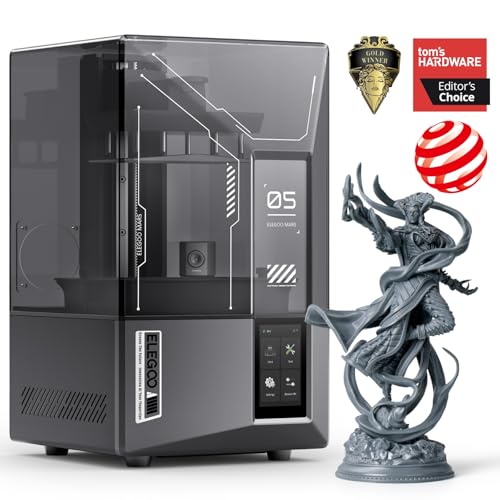 ELEGOO Mars 5 Ultra Resin 3D Printer
- 【9K High Precision Mono LCD】Featuring a 7-inch mono…
- 【Blazing Fast Speed with Tilt Release Innovation】Boasting a…
- 【AI Camera Acts as Your Eyes, Stay in…
 ANYCUBIC Photon Mono 4
- 【7'' 10K High Resolution】Photon Mono 4 boasts an…
- 【Powerful Light Source】The time-tested Anycubic LighTurbo matrix light…
- 【Sufficient Print Size】With a generous maximum build volume…
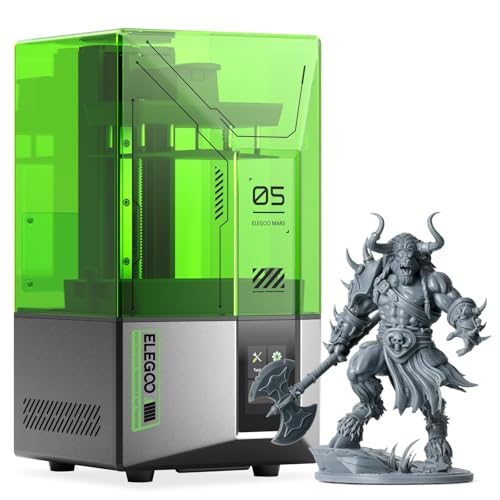 ELEGOO Mars 5 Resin 3D Printer
- 【Effortless Magic with One-Click Automatic Leveling】Effortless precision is…
- 【Print Smarter, Print Worry-Free】With a smart mechanical sensor,…
- 【One-Click Self-Check, Ensuring Reliable Prints】Tired of setup hassles…
| Product | Key specs | |
|---|---|---|
| ELEGOO Mars 5 Ultra Resin 3D Printer | 【9K High Precision Mono LCD】Featuring a 7-inch mono… 【Blazing Fast Speed with Tilt Release Innovation】Boasting a… 【AI Camera Acts as Your Eyes, Stay in… | Check price |
| ANYCUBIC Photon Mono 4 | 【7'' 10K High Resolution】Photon Mono 4 boasts an… 【Powerful Light Source】The time-tested Anycubic LighTurbo matrix light… 【Sufficient Print Size】With a generous maximum build volume… | Check price |
| ELEGOO Mars 5 Resin 3D Printer | 【Effortless Magic with One-Click Automatic Leveling】Effortless precision is… 【Print Smarter, Print Worry-Free】With a smart mechanical sensor,… 【One-Click Self-Check, Ensuring Reliable Prints】Tired of setup hassles… | Check price |
 HeyGears Reflex RS Turbo Resin 3D Printer | 𝐇𝐢𝐠𝐡-𝐬𝐩𝐞𝐞𝐝 𝐩𝐫𝐢𝐧𝐭𝐢𝐧𝐠 𝐚𝐧𝐝 𝐞𝐱𝐜𝐞𝐩𝐭𝐢𝐨𝐧𝐚𝐥 𝐃𝐞𝐭𝐚𝐢𝐥: Specifically engineered for… 𝐀𝐮𝐭𝐨𝐦𝐚𝐭𝐞𝐝 𝐏𝐫𝐞‑𝐏𝐫𝐨𝐜𝐞𝐬𝐬𝐢𝐧𝐠 & 𝐒𝐞𝐭𝐮𝐩 Get printing in one… 𝐈𝐧𝐭𝐞𝐥𝐥𝐢𝐠𝐞𝐧𝐭 𝐅𝐨𝐫𝐜𝐞‑𝐌𝐨𝐧𝐢𝐭𝐨𝐫𝐢𝐧𝐠 𝐒𝐲𝐬𝐭𝐞𝐦 Our proprietary system provides real‑time… | Check price |
As an Amazon Associate we earn from qualifying purchases at no extra cost to you.
Our picks by situation
| Your situation | Best choice | Why |
|---|---|---|
| First resin printer and limited budget | Elegoo Mars 5 Ultra | High detail in a compact machine, with lower resin consumption and easier cleanup than larger printers. |
| You print figures or parts several times a week | Elegoo Saturn 4 Ultra | The larger platform fits more models per job without requiring a professional budget. |
| You want fine detail and automated resin management | Anycubic Photon Mono M7 Pro | High-resolution printing, a generous build area and features intended to reduce interruptions during long jobs. |
| You prioritise recurring production work | Phrozen Sonic Mighty Revo 14K | Large-format detail and a design aimed at more frequent use. |
| You need predictable professional results | Formlabs Form 4 | Strong software, documented materials and a controlled ecosystem reduce setup variables. |
| You have little ventilation or cleaning space | None of the open-resin options | Choose a different printing technology or plan proper extraction and a dedicated work area first. |
Elegoo Mars 5 Ultra: the best compact choice for detailed models
The Mars 5 Ultra is the sensible starting point for tabletop miniatures, small character models and detailed decorative parts. Its 9K screen and approximately 18-micrometre pixel size are more than sufficient for crisp facial features, armour panel lines and small text when the model and exposure profile are well prepared.
Its smaller build volume is both an advantage and a limitation. The vat uses less resin, the printer occupies less desk space, and a failed print wastes less material. However, a large bust or several terrain pieces may require multiple batches. The printer is therefore best for individual models rather than production runs.
Expect roughly $250–$350 for the printer, before adding a wash-and-cure station, resin, gloves, cleaning fluid and replacement film. Budget for ventilation as carefully as for the printer itself.
Elegoo Saturn 4 Ultra: the best balance of detail and capacity
The Saturn 4 Ultra is the strongest choice for most serious hobbyists. Its 10-inch 12K screen provides fine surface detail, while the build area is large enough for several miniatures, a substantial bust or larger mechanical components in one job.
Its tilt-release style printing system can reduce the force needed to separate layers from the film, which may improve speed and reduce some support-related failures. It does not eliminate the need for careful orientation: broad, flat surfaces, sealed cavities and poorly supported islands can still cause failures or suction problems.
The larger vat also raises the cost of mistakes. A failed batch can consume considerably more resin than a failed Mars print, and the heavier build plate produces more drips during removal. Keep a tray, scraper, paper towels and a dedicated washing routine nearby rather than treating the printer as a self-contained appliance.
Anycubic Photon Mono M7 Pro: high resolution with convenience features
The Photon Mono M7 Pro targets users who want a large-format machine with a particularly fine LCD pixel pitch. Its approximately 223 × 126 × 230 mm build volume is comparable to other 10-inch printers, making it suitable for models, props and batches of smaller parts.
Its automated resin-related features can be useful for long prints, especially when they reduce the need to pause and manually monitor the vat. They should be viewed as convenience features, not substitutes for checking resin compatibility, filtering contaminated resin and inspecting the vat after a failure.
This printer makes the most sense when the extra capacity will be used regularly. If you mostly print one 32 mm miniature at a time, the lower-cost Mars 5 Ultra will usually have a lower total operating cost.
Phrozen Sonic Mighty Revo 14K: for frequent detailed printing
The Sonic Mighty Revo 14K is aimed at users who have outgrown a small printer and want high detail without moving to a professional system. The build volume is large enough for repeated batches, while the 14K panel is well suited to crisp edges and small surface features.
It is a good fit for a creator selling models, a hobbyist producing armies or a workshop that needs regular prototypes. For occasional use, however, its purchase price, resin requirements and larger cleanup area may not be justified. A bigger machine is not automatically faster if you rarely fill the platform.
Formlabs Form 4: the premium workflow option
The Form 4 is in a different category. Its value comes less from maximum pixel-count marketing and more from a tightly integrated printer, software and material system. That can make repeatable prototypes and professional handoffs easier, particularly when different operators need similar results.
The trade-off is total cost. The printer costs several thousand dollars, and proprietary or approved materials and accessories can cost more than generic resin. It is difficult to justify for casual miniature printing, but easier to justify when failed prototypes, operator time or inconsistent results are expensive.
Resolution is only one part of model quality
For detailed models, compare these factors together:
- XY resolution: affects the sharpness of edges and small features on each layer.
- Layer height: 0.05 mm is a common detail setting; 0.03 mm can improve curved surfaces but increases print time.
- Light uniformity: uneven exposure can cause inconsistent dimensions across the platform.
- Release mechanics: easier layer separation can reduce failures, but correct supports remain essential.
- Software: reliable orientation, hollowing, drain-hole and support tools can save more time than a small resolution increase.
For a 100-layer model, reducing layer height from 0.05 mm to 0.03 mm does not merely improve detail; it increases the layer count by about 67 percent for the same height. A model that takes 2 hours at 0.05 mm could take roughly 3 hours 20 minutes before changes in exposure and lift settings are considered.
Resin handling, ventilation and cleanup
Resin printers require a dedicated workflow. Uncured resin can irritate skin, and odour and airborne emissions vary by material, temperature and room ventilation. Use nitrile gloves, eye protection when handling splashes, a covered work surface and the resin manufacturer’s safety information. Keep the printer away from food preparation areas, bedrooms and children or pets.
Ventilation should move air outdoors where practical, rather than simply recirculating it through a small room. An enclosure with an appropriate exhaust setup can help, but it must not obstruct the printer or create unsafe heat buildup. A carbon filter may reduce odour without removing every airborne contaminant.
After printing, the usual process is:
- Remove the build plate over a tray to catch drips.
- Scrape the model carefully and remove supports.
- Wash the model using the resin maker’s recommended method and solvent.
- Dry it fully before curing; trapped solvent can affect the surface.
- Cure according to the resin instructions.
- Filter contaminated resin before returning it to the vat.
Do not pour used solvent or liquid resin down a drain. Let contaminated waste cure as appropriate for local disposal rules, and replace washing solvent when it becomes cloudy or leaves a tacky film.
What the total operating cost really includes
Suppose a small model uses 45 g of resin, including supports, and resin costs $25–$40 per kilogram. The material cost is about $1.13–$1.80. Add roughly $0.10–$0.30 for electricity, a portion of washing solvent, gloves and paper products, and the practical cost is closer to $1.50–$2.50 per successful print. If one in five prints fails, divide the consumable cost by 0.8: that same model effectively costs about $1.88–$3.13 before labour.
Larger machines can lower the cost per model when the platform is filled efficiently, but they waste more resin when a full plate fails. Common replacement items include the release film, LCD screen, vat seals, build-plate surface and occasionally the resin pump or heater on machines that include those systems. Check replacement-part availability before buying.
Which one should you buy?
Choose the Elegoo Mars 5 Ultra if you want the lowest-risk entry into detailed resin printing. Choose the Elegoo Saturn 4 Ultra if you regularly print multiple models or larger pieces. Choose the Anycubic Photon Mono M7 Pro or Phrozen Sonic Mighty Revo 14K when you will use the extra volume frequently and value higher-end features. Choose the Formlabs Form 4 when repeatability, support and professional workflow justify a much higher material and equipment budget.






Write Your Review
No reviews yet. Be the first to share your experience!