

The best SLS 3D printers for a small business or lab are the Formlabs Fuse 1+ 30W for an integrated, service-backed workflow and the Sinterit Lisa X for an open materials platform. Both sit in the premium, five-figure class before powder and post-processing gear, so SLS is a workshop tool, not a home-office gadget. If your goal is occasional prototypes, an outsourced print service is often cheaper than buying a machine.
Our top picks
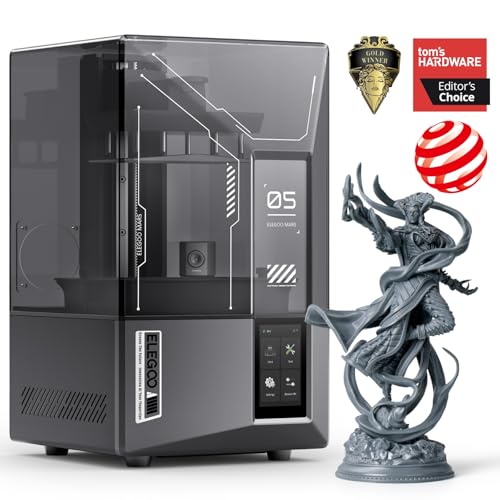 ELEGOO Mars 5 Ultra Resin 3D Printer
- 【9K High Precision Mono LCD】Featuring a 7-inch mono…
- 【Blazing Fast Speed with Tilt Release Innovation】Boasting a…
- 【AI Camera Acts as Your Eyes, Stay in…


As an Amazon Associate we earn from qualifying purchases at no extra cost to you.
Quick comparison of SLS printers
| Printer | Best for | Key specs (per the makers’ pages) | Price range |
|---|---|---|---|
| Formlabs Fuse 1+ 30W | Teams that want a managed, integrated workflow | 165 x 165 x 300 mm build volume, 30W ytterbium fiber laser, nylon powders | Premium |
| Sinterit Lisa X | Labs that want open materials and lower entry cost | 180 x 130 x 330 mm build volume, 0.075 mm minimum layer, 10-14 mm/h print speed, open material platform | Premium |
| Sinterit newer model (reported lower entry price) | Faster throughput at a lower entry price | Reported around 35 percent faster than Lisa X, 30W laser, similar build volume per All3DP | Premium |
| TPM3D CF200 | Cost-conscious buyers who want carbon-fibre-ready powders | Launched with printer price below the Fuse 1+ 30W according to TPM3D | Premium |
| Formlabs Fuse X1 | Production-scale capacity | Larger platform, higher volume, starts at a much higher price | Industrial |
| Sintratec Kit | Historic entry-level SLS | 110 x 110 x 110 mm build, 0.1 mm layer; Sintratec reportedly exited the industry in mid-2024 | Discontinued or hard to find |
Why SLS is different from filament and resin printers
Selective laser sintering (SLS) fuses nylon powder layer by layer with a laser. Unprinted powder supports the part, so you need no support structures, and complex parts such as hinges or interlocking assemblies print in one go. The price is the ecosystem: a powder handling station, a depowdering station, sandblasting or media blasting, and a stock of nylon powder. These extras can double the cost of the printer.
Best integrated workflow: Formlabs Fuse 1+ 30W
Formlabs lists a 165 by 165 by 300 millimetre build volume and a 30-watt ytterbium fibre laser. The company sells the printer as a package that includes service, software and workflow tools. Its own comparison page prices a starter package well above the bare printer and a complete setup with automated depowdering and media blasting roughly double that, so total cost of ownership is the key number. The trade-off is lock-in: Formlabs pushes its own powders, and the system is built around them.
Best open-material platform: Sinterit Lisa X
Sinterit’s Lisa X offers 180 by 130 by 330 millimetres of build volume, a 0.075 millimetre minimum layer and a stated print speed of 10 to 14 millimetres per hour. Sinterit says its new PA12 Eco powder, released in June 2026, needs no refresh and reduces material cost by up to 60 percent, a claim that comes from the maker. The company’s comparisons argue that a Lisa X set costs less than a comparable Fuse package, while Formlabs describes the Lisa X as a more manual workflow with no service plan. Both statements can be true: you pay less up front and spend more time operating it.
Best for speed on a lower entry price: Sinterit’s newer model
All3DP reports a newer Sinterit model that is about 35 percent faster than the Lisa X and priced in a lower tier than the Lisa X in the base configuration. Treat this as a developing story and check Sinterit’s site for current availability and specs.
Best for alternatives: TPM3D CF200
TPM3D launched the CF200 with a stated price lower than the Fuse 1+ 30W. It is worth a quote request if you want carbon-fibre-filled materials, but support and local service networks matter more than a headline price.
What about the Sintratec Kit?
The Sintratec Kit was a well-known entry-level SLS machine with a 110 millimetre cube build volume, but reports note Sintratec left the industry in mid-2024. If you see one, treat it as used equipment with limited support.
How to choose an SLS printer
Total cost, not sticker price
Add the printer, powder handling, depowdering, media blasting, powder stock, spare parts and a service plan. A rule of thumb is to add 30 to 80 percent on top of the printer price for the first year.
Build volume and nesting
SLS machines print many parts at once by nesting them in 3D. A 165 by 165 by 300 millimetre volume holds roughly 20 to 100 small parts per run depending on size. Throughput per day matters more than the build volume number alone.
Material cost and refresh rate
Standard PA12 powder often needs mixing with fresh powder at a refresh ratio of 30 to 50 percent. Lower refresh ratios cut cost per part significantly.
Space and safety
Powder is fine and requires ventilation, respiratory protection and careful handling. Plan a dedicated room with a cleaning routine.
Worked example: cost per part
Imagine the full package (printer, depowdering, blasting, first powder) is amortised over three years at 150 builds a year, or 450 builds. Divide the package cost by 450 to get the equipment cost per build, then divide by the parts per build. With 40 small parts per build, equipment cost per part is the package cost divided by 18,000. Add powder (roughly the part weight multiplied by the powder cost per kilogram, after the refresh ratio) and labour. Compare the result with a service bureau’s per-part quote: if you print fewer than about 50 builds a year, outsourcing is usually cheaper, and above roughly 150 builds a year ownership wins.
Powder handling, safety and facility needs
- Ventilation: fine nylon powder floats, so use a ventilated room and a vacuum designed for fine dust.
- Protective gear: respirator, gloves and eye protection during depowdering.
- Power and floor space: allow for the printer, a powder station, a blasting cabinet and shelves for powder drums.
- Storage: keep powder sealed and dry. Moisture degrades part quality.
Alternatives if SLS is out of reach
Online service bureaus print SLS nylon parts for a per-part fee and ship them in days. For a few prototypes a month this is usually cheaper than owning a machine. Resin and multi jet fusion services are also options. If your parts are simple, a good FDM printer in nylon or carbon-fibre filament can approach the strength you need at a fraction of the cost.
Questions to ask a vendor before buying
- What is the total cost of the complete workflow, including post-processing?
- What refresh ratio does the powder need, and what does it cost per kilogram?
- What does the service plan cover and for how long?
- Which materials are certified for the printer, and can I use third-party powders?
- How long does a typical build take, including cool-down?
Frequently Asked Questions
How much does an SLS printer cost?
Mainstream compact SLS systems sit in the mid five-figure range for the printer alone, with complete workflows costing considerably more. Cheaper options exist but have limited support.
Is there a low-cost desktop SLS printer?
The Sintratec Kit was the best-known low-cost option, but it is discontinued. New machines at the low-cost end are rare, so check current listings carefully.
What can I make with SLS?
Functional nylon parts such as housings, hinges, brackets, jigs and prototypes. Parts are strong and can be dyed after printing.
Do I need a separate post-processing station?
Yes. You need at least a depowdering step and usually a media blaster for a clean surface. Many users buy an automated station to save labour.
Is SLS better than resin printing?
SLS parts are tougher and need no supports, while resin prints have finer surface detail. Pick by the part’s use, not by the technology name.
Write Your Review
No reviews yet. Be the first to share your experience!