

Our Top Picks
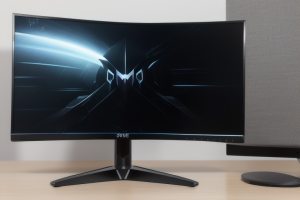
 ASUS ProArt PA279CRV 27 Inch 4K UHD USB-C27 Inch24.1 x 8.46 x 16.07 inches18.25 PoundsCheck on Amazon

Video editing judges a monitor on one thing gaming never tests: whether the colour on screen is the colour your audience sees. At $500, the pick is a face this family has never led with: the ASUS ProArt PA279CRV at $429 — a 27-inch 4K panel with 99% DCI-P3, 99% Adobe RGB, and Delta E under 2, Calman Verified.
Honest flag first: the best screen for video editing under $500 is not a 1440p gaming monitor at all. It is a 4K creator monitor at 60Hz. The ProArt’s catches are real: 60Hz is the slowest refresh here, and DisplayHDR 400 is a checkbox, not real HDR. What it buys is the most trustworthy colour under $500.
Our top picks

Best for: The editor who grades colour for clients
Check price on Amazon
Best for: The editor who grades HDR and games on the same screen
Check price on AmazonBest for: The editor who grades in a dark room
Check price on Amazon
Best for: A desk where an edit desktop and a laptop share one screen
Check price on AmazonBest for: The editor who wants 1440p, 144Hz, and a calibrator inside one $500 budget
Check price on AmazonQuick Picks
| Monitor | Price | Key Spec | Best For |
|---|---|---|---|
| ASUS ProArt PA279CRV | $429.00 | 4K, 99% DCI-P3, Delta E < 2 | Best overall |
| KOORUI S2741LM | $499.99 | 4K Mini LED, HDR1000, 160Hz | Best HDR |
| AOC Q27G4ZD | $329.99–$449 | QD-OLED, 240Hz, 0.03ms | Best OLED |
| BenQ PD2706U | $399.99 | 4K, KVM, 90W USB-C | Best two-machine desk |
| ASUS ProArt PA278CGV | $369 | 1440p, 144Hz, 90W USB-C | Best true 1440p |
How to Choose a 1440p Gaming Monitor for Video Editing Under $500
Colour accuracy is a Delta E number, not a marketing line. Delta E scores colour error; under 2 is the professional bar, and all but one pick here is factory-calibrated to it. Gamut: 100% sRGB covers Rec.709; 95–99% DCI-P3 covers cinema; 99% Adobe RGB covers print.
HDR400 is a checkbox; HDR1000 with local dimming is real HDR. DisplayHDR 400 means 400 nits, no local dimming — HDR highlights bloom across the whole screen. RTINGS calls the ProArt’s HDR picture quality disappointing. True Black 400 on OLED is per-pixel. The only real HDR here is the KOORUI’s 1,152-zone Mini LED at over 1,000 nits.
OLED is the best grading panel and the riskiest editing panel. Per-pixel blacks and a 0.03ms response make OLED the most accurate screen for dark scenes — and a video timeline is the worst burn-in use case: static toolbars and scopes for hours a day. The warranty is the spec: Alienware covers burn-in for three years at $349.99; AOC’s covers bright dots, not burn-in.
Refresh rate stops mattering at 120Hz for editing. Your timeline is 24, 30, or 60 frames per second, so a 60Hz panel shows every frame; 240Hz buys an editor nothing. Pay for colour, not refresh.
USB-C power is a ladder, not a checkbox. 15W trickle-charges a sleeping laptop; 65W charges most ultrabooks; a 15–16-inch laptop needs 90W or more. The ProArt and BenQ clear 90W; the KOORUI stops at 65W.
The calibrator is a real cost, and it breaks the budget. Factory calibration drifts. The cheapest real calibrator is the Calibrite Display 123 at $129; the Display Pro HL reads $199, the SpyderExpress $183.99. Top pick plus calibrator is $558 — $58 over budget.
1. ASUS ProArt PA279CRV — $429.00
Specs: 27-inch IPS, 3840×2160, 60Hz, 5ms GtG, 400 nits peak, 99% DCI-P3 / 99% Adobe RGB / 100% sRGB, Delta E < 2, Calman Verified, hardware LUT calibration, DisplayHDR 400, USB-C (96W PD), DisplayPort in + DisplayPort out (daisy chain), 2× HDMI 2.0, 3× USB-A hub, 3-year warranty.
The colour pick: the only panel here covering 99% of DCI-P3 and 99% of Adobe RGB at once, Delta E under 2 with a hardware LUT — the calibration lives in the monitor, not in a software profile. Amazon reads $429.00, checked November 17, 2026, low $396.69 on October 29 — honest budget $400–$430. The 96W USB-C port charges any laptop over one cable; DisplayPort out daisy-chains a second screen.
Honest flag: 60Hz is the slowest refresh here, and DisplayHDR 400 is a checkbox — grade HDR on the KOORUI. No webcam, no KVM.
Pros: Best colour here — 99% DCI-P3, 99% Adobe RGB, Delta E < 2; 4K, 96W USB-C
Cons: 60Hz; HDR 400 is a checkbox; no webcam or KVM
Best for: The editor who grades colour for clients.
2. KOORUI S2741LM — $499.99
Specs: 27-inch IPS QD-Mini LED, 3840×2160, 160Hz (4K) / 320Hz (FHD dual-mode), 1,152 dimming zones, 1,400-nit peak, DisplayHDR 1000, 99% DCI-P3 / 100% sRGB, Delta E < 2, 2× HDMI 2.1, DisplayPort 1.4, USB-C 65W, 3-year warranty.
The only real HDR here: a quantum-dot Mini LED backlight in 1,152 dimming zones, peaking over 1,000 nits, with a dual-mode panel that drops from 4K at 160Hz to Full HD at 320Hz for gaming. Amazon reads $499.99, checked November 18, 2026 — it fits by exactly $0.01, the cheapest HDR1000 panel this family has listed.
Honest flag: KOORUI is a first-generation budget brand — independent coverage reports uneven QC (backlight uniformity, dead pixels, scaler bugs) and a slow RMA process, so buy from a seller with a real return policy. The price is a spread too: one guide reads $399, another $480, Amazon $499.99 — honest budget $500. The 65W USB-C port will not fully charge a 15–16-inch laptop.
Pros: Only real HDR here — 1,152 zones, over 1,000 nits; 4K at 160Hz, 320Hz dual mode; 99% DCI-P3, Delta E < 2
Cons: Fits by $0.01; first-gen brand, uneven QC, slow RMA
Best for: The editor who grades HDR and games on the same screen.
3. AOC Q27G4ZD — $329.99–$449
Specs: 26.5-inch QD-OLED, 2560×1440, 240Hz, 0.03ms GtG, 99% DCI-P3, 147.6% sRGB, DisplayHDR True Black 400, Adaptive Sync, DisplayPort 1.4, HDMI 2.0, 3-year Zero-Bright-Dot warranty.
The OLED answer for dark-room grading: per-pixel blacks no IPS panel can match, a 0.03ms response, and 99% DCI-P3, released in February 2026. The price is a spread — the Meta Catalog reads $329.99 at an authorized retailer, another read is $419, Tom’s Hardware about $449 — honest budget $400, and the $329.99 read is the one to verify.
Honest flag: AOC’s UK page headlines 280Hz; its own spec table says 240Hz maximum — buy it as a 240Hz panel. And the burn-in question: a timeline is static toolbars and scopes for hours, and AOC’s three-year warranty covers zero bright dots — it does not spell out burn-in cover the way Alienware’s does at the same $349.99. QD-OLED’s triangular subpixels also fringe fine timeline text.
Pros: Cheapest OLED path to 99% DCI-P3; True Black HDR; 240Hz
Cons: Price spread $329.99–$449; 240Hz vs 280Hz confusion; burn-in cover not spelled out
Best for: The editor who grades in a dark room.
4. BenQ PD2706U — $399.99
Specs: 27-inch IPS, 3840×2160, 60Hz, 5ms GtG, 350 nits, 95% DCI-P3 / 99% sRGB / 99% Rec.709, Delta E ≤ 3, Calman Verified, Pantone Validated, DisplayHDR 400, USB-C (90W PD), built-in KVM, Hotkey Puck G2, PIP/PBP, 3-year warranty.
The workflow pick: the only 4K monitor here with a built-in KVM switch and a Hotkey Puck G2, so one keyboard and mouse drive the edit desktop and the laptop, with picture-in-picture for reference. Amazon reads $399.99 against a $649 list, checked November 14, 2026, sold by BenQ’s own Amazon store — honest budget $400–$450.
Honest flag: Delta E of 3 or better is looser than the ProArt’s under 2 — fine for YouTube, not for client colour work. Adorama lists it on backorder with expected availability November 23, 2026, so verify stock. It is 60Hz, and one retailer spec sheet disagrees with BenQ on the USB-C wattage — confirm 90W before you pay.
Pros: Only KVM here, plus Hotkey Puck G2 and PIP/PBP; 4K, 95% P3, 90W USB-C
Cons: Delta E ≤ 3; backorder at one retailer; 60Hz
Best for: A desk where an edit desktop and a laptop share one screen.
5. ASUS ProArt PA278CGV — $369
Specs: 27-inch IPS, 2560×1440, 144Hz, 95% DCI-P3 / 100% sRGB / 100% Rec.709, Delta E < 2, Calman Verified, USB-C (90W PD), DisplayPort in + DisplayPort out (daisy chain), HDMI, 4× USB-A hub, DisplayHDR 400.
The only true 1440p creator monitor here — the one pick that actually matches the keyword: a factory-calibrated 144Hz panel with 95% DCI-P3, Delta E under 2, and a 90W USB-C port that charges a laptop over the same cable that carries video. ASUS’s store lists it at $369, out of stock; one marketplace reads $364.37 on a holiday deal.
Honest flag: The price spread is the widest in this guide — one roundup tracking it since April reads $224.99–$380.69 as of November 15, and it sold at $229–$269 in the spring. Honest budget $270–$370: buy it at the low end and it leaves room for the $129 calibrator inside $500. The semi-gloss finish reflects ambient light, so mind the window behind you.
Pros: Only 1440p creator panel here — 144Hz, Delta E < 2, 90W USB-C; monitor plus calibrator under $500
Cons: Price spread $224.99–$380.69; out of stock at ASUS; semi-gloss finish
Best for: The editor who wants 1440p, 144Hz, and a calibrator inside one $500 budget.
What to Avoid
The MSI maze, carried. The MAG 272QP QD-OLED X24 ($399.99) is not the MAG 274QP QD-OLED X24 ($402.40–$484.11), the MAG 271QPX QD-OLED E2, the PRO MAX 271QPX14G ($319.99 — the $246 AliExpress promo is not a US retail price), the MAG 274QF X24 (IPS 240Hz, $239–$272), or the MAG 272QP X50 (500Hz, ~$990).
The Gigabyte, LG, and Alienware mazes, carried. The MO27Q2A ($399.99) is not the MO27Q2 ($469.99), the MO27Q28GR ($524.48), or the GO27Q24A (unverified $329.99 read). The LG 27GX704A ($350) is not the 27GX700A, the 27GX790A ($549.99), or the 27GS93QE ($499.99). The AW2726DM ($349.99, 3-year burn-in warranty) is not the AW2725D ($449.90), the AW2725DF ($550–$650), the AW2726DL, or the AW2725Q (4K, $699.99).
The BenQ “320Hz” that is not, carried. Listings still call the MOBIUZ EX271QM a 320Hz monitor at $279.99; the real model is the EX271Q, a 180Hz panel, and the real OLED is the EX271QMZ at $449.99.
The MSI and Dell USB-C traps, carried. The MSI 274QF E20 has no USB-C and a tilt-only stand per MSI’s own spec sheet — only the 274QPF E20 has USB-C and a full stand. The MAG 275QPF E21 refresh dropped the E20’s USB-C port entirely, and its twin, the MAG 275QF E21, has a tilt-only stand. Roundups keep listing 90W USB-C on the Dell UltraSharp U2724D, but Dell’s spec sheet says its USB-C port is data only. The U2724D is still the best contrast here without OLED risk — IPS Black at 2000:1, 120Hz, Delta E under 2, $349.99 — but buy it for the panel, not the dock.
The 4K Dell traps, carried. The S2725QC 4K moved from $279.99 to $349.99 and has no DisplayPort input at all — two HDMI 2.1 ports and one USB-C, so a desktop without USB-C video cannot drive it. Its twin, the S2725QS at $279.99, has no USB-C at all despite listings calling it one.
The ViewSonic price correction, carried. Batch 161 called the VG2756V-2K $399.99 — the 2023 launch MSRP, not the November 2026 street price. It now reads $459.99–$490, and it is a 60Hz panel where the new VG2758V-2K is 100Hz with 10W more charging for $80–$110 less.
The AOC refresh-rate trap, new. AOC’s UK page headlines the Q27G4ZD at 280Hz; its own spec table says 240Hz maximum. Buy it as a 240Hz panel.
The KOORUI first-generation trap, new. The S2741LM reads like a $1,000 monitor at $499.99, and the HDR is real — but it is a first-generation product from a budget brand with uneven QC and a slow RMA process. Buy from a seller with a real return policy, and test the panel in the first week.
Still Doesn’t Fit
| Monitor | Real Price | Honest Budget |
|---|---|---|
| Gigabyte MO27Q28GR Tandem WOLED 280Hz | $524.48 | $525 |
| Alienware AW2725DF 360Hz QD-OLED | $550–$650 | $550 |
| Dell UltraSharp U2725QE 4K Thunderbolt 4 | $600–$680 | $600 |
| Alienware AW2725Q 4K QD-OLED | $699.99–$799.99 | $700 |
| ASUS ProArt PA27JCV 5K | $699 | $700 |
Near-miss: the Gigabyte MO27Q28GR at $524.48, just $24.48 over; the 4K OLED wall is the Alienware AW2725Q at $699.99.
FAQ
What is the best 1440p gaming monitor for video editing under $500?
The ASUS ProArt PA279CRV at $429.00 — 27-inch 4K, 99% DCI-P3, 99% Adobe RGB, Delta E under 2, Calman Verified, 96W USB-C. The catch: 4K at 60Hz, not 1440p at 240Hz.
Do I need a hardware calibrator?
If clients see your work, yes. Factory calibration drifts, and a calibrator is the only way to know your screen is still true. The cheapest real one is the Calibrite Display 123 at $129. Top pick plus calibrator is $558 — $58 over budget.
Is OLED good for video editing?
Yes for grading, with one condition: a timeline is static toolbars and scopes for hours — the burn-in use case. Buy the warranty with it: the Alienware AW2726DM at $349.99 covers burn-in for three years.
Is 1440p or 4K better for video editing?
4K at 27 inches is 163 pixels per inch against 1440p’s 109 — sharper text and more timeline on screen. If you edit 4K footage, buy 4K: the PA279CRV at $429 or the PD2706U at $399.99. If you deliver in 1080p and game too, the 1440p PA278CGV at $369 is the better buy — and it leaves room for a calibrator.
Verdict
For video editing at $500, colour is the job, and the ASUS ProArt PA279CRV at $429.00 is the most colour for the money — 99% DCI-P3 and 99% Adobe RGB, Delta E under 2 with a hardware LUT, 4K sharpness, and a 96W USB-C port, for $71 under budget. Honest catches: 60Hz, and DisplayHDR 400 is a checkbox.
If HDR is the job, buy the KOORUI S2741LM at $499.99 — the only real HDR here, 1,152 zones over 1,000 nits, for $0.01 under budget, from a seller with a real return policy. If OLED is the job, buy the AOC Q27G4ZD at $329.99–$449 — and if the burn-in warranty matters more, buy the Alienware AW2726DM at $349.99 instead. If two machines share the desk, buy the BenQ PD2706U at $399.99. If the budget has to cover a calibrator too, buy the ASUS ProArt PA278CGV at $369 — the only true 1440p creator panel here, and the only pick that leaves $129 for a calibrator inside $500. All prices are November 2026 snapshots — check the current price first.
As an Amazon Associate, we earn from qualifying purchases.
Suggested Internal Links
- Best 1440p Gaming Monitor for Gaming Under $500
- Best 1440p Gaming Monitor for Office Under $500
- Best 1440p Gaming Monitor for Home Lab Under $300
More from Amazon
Programs that pair well with the guide above. Offers and eligibility are set by Amazon and may change.
Free shipping on eligible items, Prime Video and more. Eligible new members can start with a free trial.
Start a Prime free trialAudiobooks and podcasts to listen to on the go. Eligible new members can start with a free trial.
Try Audible freeAd-free music streaming. Eligible new subscribers can start with a free trial.
Try Music Unlimited freeA free business account with business pricing and bulk-buying tools for work, shop or home office.
Create a business accountAs an Amazon Associate we earn from qualifying purchases.
Write Your Review
No reviews yet. Be the first to share your experience!