

Our Top Picks
At $300, this family was an IPS story — fast panels, dim screens, and an OLED wall that started at $349.99. At $500, the wall is gone. The pick this family has never led with is the LG 27GX704A-B at $334.70–$349.99 — a 27-inch glossy WOLED panel at 240Hz with 0.03ms response, HDMI 2.1, and a 1,300-nit HDR peak. It is the cheapest OLED here.
The honest flag first: $500 buys OLED, but not the OLED warranty. The LG carries two years, and LG’s US terms do not spell out burn-in cover the way MSI and Alienware do — if a three-year burn-in warranty matters more than the brightest HDR peak, the Alienware at the same $349.99 is the safer buy.
Our top picks

Best for: The gamer who wants the best OLED image for the least money, on PC or console
Check price on AmazonBest for: The gamer who wants QD-OLED with the burn-in warranty, and plays in a room they can dim
Check price on Amazon
Best for: The gamer who wants QD-OLED, console HDMI 2
Check price on Amazon
Best for: The competitive player who wants the fastest OLED and a KVM for two machines
Check price on Amazon
Best for: The gamer who plays one game for hours a day with a static HUD and refuses to think about burn-in
Check price on AmazonQuick Picks
| Pick | Why it wins | Price |
|---|---|---|
| LG 27GX704A-B | Cheapest OLED, brightest HDR peak, HDMI 2.1 | $334.70–$349.99 |
| Alienware AW2726DM | Cheapest QD-OLED, 3-year burn-in warranty | $349.99 |
| MSI MAG 272QP QD-OLED X24 | QD-OLED, USB-C, burn-in cover | $399.99 |
| Gigabyte MO27Q2A | Fastest OLED — 280Hz, KVM | $399.99 |
| ASUS ROG Strix XG27ACMG | Best IPS, no burn-in risk | $269–$289.45 |
How to Choose a 1440p Gaming Monitor for Gaming Under $500
QD-OLED vs WOLED is the real choice now. QD-OLED gives the most vivid colour and the brightest HDR highlights, but its glossy coating lifts blacks toward purple-grey in a bright room, and its triangular subpixels fringe fine text. WOLED (the LG) peaks at 1,300 nits and keeps text cleaner. The only matte OLED under $500 is the Samsung Odyssey OLED G6 G61SH at $394.99–$419.99.
240Hz is the floor, and it only pays if your card feeds it. Every OLED here is 240Hz or faster with a 0.03ms response. But 240Hz only pays off if your card pushes 200-plus frames per second at 1440p; at 120 fps, a 180Hz panel shows every frame your card makes. The fastest OLED under $500 is the Gigabyte at 280Hz.
The warranty is the spec that matters most on OLED. Burn-in is a slow risk — static HUDs and taskbars over years. MSI, Alienware, and Samsung all cover burn-in for three years; Gigabyte runs AI-based OLED Care; LG gives two years without spelling out burn-in cover in its US terms (one Best Buy Q&A answer says it is covered).
Brightness is two numbers. SDR is what you live with: the Alienware and Samsung sit near 200 nits typical, the LG and Gigabyte near 250, the ASUS IPS at 400. HDR peak is what highlights hit: 1,300 nits on the LG, 400 on the QD-OLEDs (True Black 400). In a bright room, the 400-nit IPS is the most readable screen here.
Ports decide the console question. Only the LG and the MSI carry HDMI 2.1, so only they do 1440p at 120Hz with VRR from a PS5 or Xbox; the Alienware’s HDMI caps at 1440p/120Hz and needs DisplayPort for 240Hz. None of the five has a real USB-C dock — the MSI, Gigabyte, and ASUS USB-C ports are 15W video only.
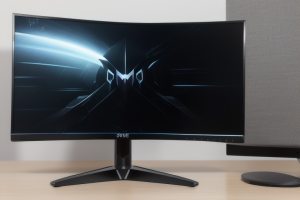
1. LG 27GX704A-B — $334.70–$349.99
Specs: 26.5-inch glossy WOLED (META 2.0, MLA+), 2560×1440, 240Hz, 0.03ms GtG, 1,300 nits HDR peak, DisplayHDR True Black 400, 98.5% DCI-P3, G-SYNC Compatible, FreeSync Premium Pro, 2× HDMI 2.1, 1× DisplayPort 1.4, USB hub, headphone out with DTS Headphone:X, full stand (height, tilt, swivel, pivot), 2-year warranty.
The 27GX704A-B ended the “$300 OLED” conversation: it was the cheapest OLED in our competitive guide at ~$349.99, missing by $49.99 — and then it got cheaper. Amazon read $334.70 on November 9–14, Best Buy and LG’s own store read $349.99 against a $799.99 list; the low was $332 on October 20, so the honest budget is $350.
What the money buys: a 1,300-nit HDR peak — the brightest here by a wide margin — plus the only HDMI 2.1 ports in this guide, so a PS5 or Xbox runs 1440p at 120Hz with VRR.
Two honest flags: the two-year warranty does not spell out burn-in cover the way MSI and Alienware do (a Best Buy Q&A answer says yes, but that is a user answer, not LG’s terms), and there are no built-in speakers — budget $30 for sound, or use the headphone jack.
Pros: Cheapest OLED here; brightest HDR peak at 1,300 nits; only HDMI 2.1 in the guide.
Cons: 2-year warranty; no speakers; glossy panel.
Best for: The gamer who wants the best OLED image for the least money, on PC or console.
2. Alienware AW2726DM — $349.99
Specs: 27-inch QD-OLED, 2560×1440, 240Hz, 0.03ms GtG, ~200 nits typical SDR brightness, HDR10, FreeSync Premium, VESA AdaptiveSync, 2× HDMI, 1× DisplayPort 1.4 with DSC, no USB hub, no speakers, height/tilt stand (no swivel), 3-year warranty including burn-in.
The AW2726DM launched in April 2026 at $349.99, and the press response was immediate: Tom’s Hardware called it “a price breakthrough for desktop OLED” (4.5/5), Wirecutter named it the top gaming monitor pick, and PC Gamer made it their budget OLED pick. It is the cheapest QD-OLED entry ever.
The cuts are real: ~200-nit typical SDR brightness, HDMI capped at 1440p/120Hz so 240Hz needs DisplayPort, no USB hub, no speakers, and a stand with no swivel. The three-year warranty including burn-in is unheard of at this price — the whole reason to pick this over the LG.
Pros: Cheapest QD-OLED ever; 3-year warranty including burn-in; Tom’s Hardware 4.5/5.
Cons: ~200 nits; HDMI caps at 120Hz; no hub, no speakers, no swivel.
Best for: The gamer who wants QD-OLED with the burn-in warranty, and plays in a room they can dim.
3. MSI MAG 272QP QD-OLED X24 — $399.99
Specs: 26.5-inch QD-OLED, 2560×1440, 240Hz, 0.03ms GtG, 99% DCI-P3, Delta E ≤2, VESA ClearMR 13000, FreeSync Premium Pro, G-SYNC Compatible, 2× HDMI 2.1, 1× DisplayPort 1.4a, 1× USB-C (15W PD, video), 4-way stand, OLED Care 2.0, graphene heatsink, 3-year warranty including burn-in.
The MAG 272QP is the QD-OLED value pick with the fewest compromises: $399.99 at B&H in stock and $399.99 on Amazon, with a three-year warranty that explicitly includes burn-in, OLED Care 2.0, and a fanless graphene heatsink. It is the only pick here with both HDMI 2.1 and a USB-C port.
Two honest flags: the USB-C port is 15W video only — it carries a laptop’s picture, not its charge — and one aggregator shows $349.99 at some sellers, an unverified holiday read, not the street price; honest budget $400.
Pros: QD-OLED with HDMI 2.1 and USB-C; 3-year burn-in warranty; Delta E ≤2 colour.
Cons: USB-C is 15W video only; no hub or KVM; $349.99 reads are unverified.
Best for: The gamer who wants QD-OLED, console HDMI 2.1, and a burn-in warranty in one box.
4. Gigabyte MO27Q2A — $399.99
Specs: 27-inch QD-OLED, 2560×1440, 280Hz, 0.03ms GtG, 99% DCI-P3, DisplayHDR True Black 400, VESA ClearMR 15000, FreeSync Premium Pro, G-SYNC Compatible, 2× HDMI 2.1, 1× DisplayPort 1.4, USB-C, USB hub, KVM, height/tilt stand, AI-based Gigabyte OLED Care.
The MO27Q2A is the fastest OLED under $500 — 280Hz on a QD-OLED panel, with the best port set in this guide: USB-C video, a USB hub, and a real KVM switch, plus two HDMI 2.1 ports. Amazon reads $399.99 across November 15–17, 2026.
Two honest flags: SDR brightness peaks near 250 nits, so it is not the bright-room pick, and the stand adjusts height and tilt only — no swivel or pivot, per the listing. One more: the triangular subpixel layout fringes fine text, so if this screen also does eight hours of documents a day, the LG’s WOLED is the cleaner text panel.
Pros: Fastest OLED under $500 at 280Hz; USB-C, hub, KVM.
Cons: ~250 nits SDR peak; height/tilt stand only; QD-OLED text fringing.
Best for: The competitive player who wants the fastest OLED and a KVM for two machines.
5. ASUS ROG Strix XG27ACMG — $269–$289.45
Specs: 27-inch Fast IPS, 2560×1440, 270Hz (OC), 1ms GtG, 400 nits, 1000:1, 95% DCI-P3, DisplayHDR 400, ELMB Sync, G-SYNC Compatible, FreeSync Premium, 1× DisplayPort 1.4, 1× HDMI 2.1, 1× USB-C (DP Alt Mode, 15W), 3-year warranty.
The XG27ACMG is the only pick here with zero burn-in risk, and the cheapest: ASUS’s own store reads $269 (out of stock at check), AVADirect reads $289.45, and an Amazon tracker read $234.03 on November 16 — honest budget $290. It is a 270Hz Fast IPS panel at 400 nits, the brightest SDR screen here, with ELMB Sync and USB-C.
Two honest flags: IPS contrast is 1000:1 against the OLEDs’ per-pixel blacks, so dark game scenes look grey by comparison, and DisplayHDR 400 is a checkbox, not real HDR. And 270Hz is an overclock — treat the headline as a maximum, not a given.
Pros: No burn-in risk; brightest SDR at 400 nits; cheapest pick.
Cons: IPS contrast 1000:1; HDR 400 is a checkbox; 270Hz is an overclock.
Best for: The gamer who plays one game for hours a day with a static HUD and refuses to think about burn-in.
What to Avoid
The MSI one-letter maze — now seven ways. The MAG 272QP QD-OLED X24 ($399.99) is not the MAG 274QP QD-OLED X24 ($402.40–$484.11), the MAG 271QPX QD-OLED E2 (240Hz, USB-C, $400–$570 by seller), the PRO MAX 271QPX14G (144Hz QD-OLED, $319.99 — the $246 AliExpress promo is not a US retail price), the MAG 274QF X24 (the IPS 240Hz panel from our competitive guide, $239–$272), or the MAG 272QP X50 (the 500Hz flagship, ~$990). Confirm the full code before you pay.
The Gigabyte maze. The MO27Q2A (280Hz, $399.99) is not the MO27Q2 (240Hz, $469.99, also with Type-C KVM), the MO27Q28GR (Tandem WOLED 280Hz, $524.48 — misses by $24.48), or the GO27Q24A (a new budget OLED with one $329.99 catalog read — unverified, check the panel first).
The LG maze. The 27GX704A (240Hz WOLED, $350) is not the 27GX700A (280Hz native), the 27GX790A (480Hz OLED, $549.99 — misses by $49.99), or the 27GS93QE (the 2023 WOLED at $499.99 — worse value than the $350 GX704A in every way).
The Alienware maze. The AW2726DM ($349.99, 240Hz QD-OLED) is not the AW2725D (280Hz QD-OLED, $449.90), the AW2725DF (360Hz QD-OLED, $550–$650), the AW2726DL (280Hz IPS, $199.99 brand-direct read — unverified), or the AW2725Q (4K QD-OLED, $699.99 at Best Buy, $799.99 at Dell).
The Samsung maze. The Odyssey OLED G6 G61SH (240Hz QD-OLED, $394.99–$419.99, matte, 3-year burn-in warranty) is not the G60SD (360Hz QD-OLED, $549–$649), the G60F (350Hz IPS, $282.90–$337.99 — the fastest IPS under $500), or the G50SF (180Hz OLED, $359.99).
The “320Hz” BenQ that is not — carried. Catalog listings still call the BenQ MOBIUZ EX271QM a 320Hz monitor at $279.99. The real model is the EX271Q — a 180Hz panel — and the “QM” listing is a mislabel; the real OLED is the EX271QMZ at $449.99.
Corrections carried from the $300 guides. The MSI 274QF E20 has no USB-C and a tilt-only stand per MSI’s own spec sheet — only the 274QPF E20 has USB-C and a full stand. The MAG 275QPF E21 refresh dropped the E20’s USB-C port entirely. The ViewSonic XG2736-2K $199.99 deal is over (honest $320) — it fits $500 now, but OLED outclasses it at the same money. The GW2790Q no longer fits the $200 guides (honest $215); the S2722DC listing is fragile (honest $470). Still no webcam on any gaming pick here — the first 1440p monitor with one, the ViewSonic VG2758V-2K at $379.99, is a 100Hz office panel.
Still Doesn’t Fit
| Monitor | Real Price | Honest Budget |
|---|---|---|
| Gigabyte MO27Q28GR Tandem WOLED 280Hz | $524.48 | $525 |
| LG 27GX790A-B 480Hz OLED | $549.99 | $550 |
| Alienware AW2725DF 360Hz QD-OLED | $550–$650 | $550 |
| Samsung Odyssey OLED G6 G60SD 360Hz QD-OLED | $549–$649 | $550 |
| MSI MPG 271QRX QD-OLED 360Hz | $611.99 | $612 |
| Alienware AW2725Q 4K QD-OLED 240Hz | $699.99–$799.99 | $700 |
| MSI MPG 271QR QD-OLED X50 500Hz | ~$990 | $990 |
| ASUS ROG Swift PG27AQWP-W 540Hz OLED | $1,099 | $1,099 |
The near-miss that stings is the Gigabyte MO27Q28GR — a Tandem WOLED at 280Hz for $524.48, just $24.48 over. If it drops $25 in a Black Friday sale, it becomes the pick.
FAQ
What is the best 1440p gaming monitor for gaming under $500?
The LG 27GX704A-B at $334.70–$349.99 — 240Hz glossy WOLED, 0.03ms, HDMI 2.1, a 1,300-nit HDR peak, RTINGS 9.0 for PC gaming. If the burn-in warranty matters more, buy the Alienware AW2726DM at the same $349.99 with three years of burn-in cover.
Is OLED worth it over IPS at $500?
Yes, for gaming in a dim room — per-pixel blacks and 0.03ms response are things no IPS panel can match, and OLED now costs the same as fast IPS. The exceptions are bright rooms and static-HUD marathons — buy the ASUS and never think about burn-in.
Do I need to worry about OLED burn-in?
It is a slow risk, not a sudden one. MSI, Alienware, and Samsung cover burn-in for three years; Gigabyte runs AI-based OLED Care; LG gives two years without spelling it out. Vary your content and let the panel run its pixel refresh.
Is 280Hz worth it over 240Hz?
Only if your card pushes 240-plus frames per second at 1440p. At 200 fps, the Gigabyte’s 280Hz shows every frame; at 120 fps, a 180Hz panel shows every frame your card makes, and the extra refresh rate buys nothing.
Verdict
For gaming at $500, OLED is no longer the upgrade — it is the default — and the LG 27GX704A-B at $334.70–$349.99 is the cheapest way into it, with the brightest HDR peak, the only HDMI 2.1 in the guide, and a 9.0 PC-gaming score from RTINGS. Its honest catches: a two-year warranty without spelled-out burn-in cover, and no speakers.
If the warranty matters more than the HDR peak, buy the Alienware AW2726DM at $349.99. If you want USB-C and the best factory colour, buy the MSI MAG 272QP QD-OLED X24 at $399.99. If you want the fastest panel, buy the Gigabyte MO27Q2A at $399.99 — 280Hz with a KVM. If you refuse to think about burn-in, buy the ASUS ROG Strix XG27ACMG at $269–$289.45. And if your room is bright, the Samsung Odyssey OLED G6 G61SH at $394.99–$419.99 is the only matte OLED here. All prices are November 2026 snapshots — check the current price before buying.
As an Amazon Associate, we earn from qualifying purchases.
Suggested Internal Links
- Best 1440p Gaming Monitor for Competitive Gaming Under $300
- Best 1440p Gaming Monitor for Work from Home Under $300
- Best 1440p Gaming Monitor for Home Lab Under $300
More from Amazon
Programs that pair well with the guide above. Offers and eligibility are set by Amazon and may change.
Free shipping on eligible items, Prime Video and more. Eligible new members can start with a free trial.
Start a Prime free trialAudiobooks and podcasts to listen to on the go. Eligible new members can start with a free trial.
Try Audible freeAd-free music streaming. Eligible new subscribers can start with a free trial.
Try Music Unlimited freeA free business account with business pricing and bulk-buying tools for work, shop or home office.
Create a business accountAs an Amazon Associate we earn from qualifying purchases.
Write Your Review
No reviews yet. Be the first to share your experience!