

Our Top Picks
Competitive gaming is the one angle where the monitor’s spec sheet is the whole argument — and where it lies the most. The pick is the MSI MAG 272QP QD-OLED X24 at $349.99: 240Hz, a 0.03ms response, and per-pixel blacks no IPS panel can match. It leads because competitive play is won on motion clarity, and nothing under $500 moves cleaner.
But the honest headline is the one the marketing hides: the monitor’s refresh rate is not the game’s frame rate. A 240Hz panel shows 240 frames a second only if your GPU renders them. An RTX 5060 at $450 or an RTX 4060 at $437 cannot hold 240 fps at 1440p in demanding games. In esports titles a current mid-range GPU reaches 240 fps at 1440p on competitive settings; in a demanding AAA game the same rig runs 100–165 fps. Buy the refresh rate your GPU can feed, not the one on the box.
$500 buys the monitor, not the competitive setup: arm ~$30, webcam ~$30, hub ~$22 — plus the GPU, the mouse, and the keyboard. Prices are a November 2026 snapshot — check the current price on Amazon before you buy.
Our top picks

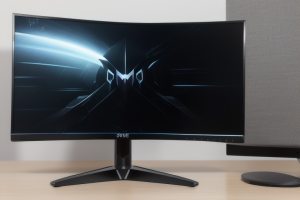
Best for: The competitive player whose motion clarity matters most — and who reads the warranty first
Check price on Amazon
Best for: The competitive player on the tightest budget who wants 240Hz from a major brand
Check price on Amazon
Best for: The competitive player who wants the fastest IPS response and strobing that works with adaptive sync
Check price on Amazon
Best for: The player whose one panel is the game, the chat, and the squad
Check price on AmazonQuick Picks
| Monitor | Price | Key Spec | Best For |
|---|---|---|---|
| MSI MAG 272QP QD-OLED X24 | $349.99 | 240Hz QD-OLED, 0.03ms GtG | Best overall |
| LG UltraGear 27G640A-B | $288–$309.99 | 300Hz IPS, 1ms GtG | Fastest IPS |
| LG UltraGear 27GR83Q-B | $269.99 | 240Hz IPS, 1ms GtG | Best value |
| ASUS ROG Strix XG27ACMES | $299 | 255Hz OC, 0.3ms min | Fastest response IPS |
| Alienware AW3426DWM | $349.99 | 34″ ultrawide, 240Hz VA | Best screen space |
How to Choose a 1440p Gaming Monitor for Competitive Gaming Under $500
Refresh rate is the competitive question — and it has a ceiling. The jump from 60Hz to 144Hz is dramatic; from 144Hz to 240Hz it is real but much smaller, and it only counts in fast competitive games where your PC can push 240+ fps. At 240Hz each frame displays for 4.2ms; at 144Hz, 6.9ms. The 360Hz panels in this family’s record sit $50–$150 over budget for a gain most players cannot feel.
GtG is not MPRT, and 1ms is not 1ms. Gray-to-gray is how fast a pixel changes color; moving-picture response time is how long a frame is visible — what backlight strobing (ASUS ELMB Sync) attacks. A 240Hz IPS panel rated 1ms GtG and a 240Hz QD-OLED rated 0.03ms GtG are not the same monitor: the OLED pixel changes color thirty times faster.
Panel type is the competitive trade. IPS is the safe competitive choice: fast, consistent response, wide viewing angles, no burn-in. VA is the smear risk: deep blacks and high contrast, but dark-scene smearing on fast pans — the Alienware ultrawide’s one real weakness in a shooter. QD-OLED is the best motion and the burn-in risk: a static health bar, minimap, or crosshair sitting on the same pixels for hours a day is the burn-in use case, and only a warranty that spells out burn-in cover makes an OLED buyable.
The ultrawide is not a competitive panel. The Alienware AW3426DWM at $349.99 is the first gaming ultrawide under $500 — and it is a casual-gaming panel, not a competitive one. Valorant restricts the playable field of view: the extra 21:9 width goes to the HUD, not to seeing around corners. CS2 letterboxes wider-than-16:9 ratios, so a true 21:9 image gets black bars top and bottom, not a wider sightline. Overwatch 2 restricts vertical field of view so ultrawide players gain no advantage. Apex and Warzone do render full 21:9 — but the tactical shooters do not. On a 21:9 panel the honest options are stretching a 16:9 image across the whole panel or accepting black bars. And the pros agree: on ProSettings.net, 68% of pros use 1920×1080. A 27-inch panel fits the whole field of view at arm’s length; 32 inches is too big, and 34 inches is for immersion, not competition.
The Honest Competitive Math: What $500 Really Buys
| Setup | Total |
|---|---|
| LG UltraGear 27GR83Q-B + arm $30 + Brio 100 webcam $30 + hub $22 | $351.99 |
| ASUS ROG Strix XG27ACMES + arm $30 + Brio 100 webcam $30 + hub $22 | $381.00 |
| LG UltraGear 27G640A-B + arm $30 + Brio 100 webcam $30 + hub $22 | $369.99–$391.99 |
| MSI MAG 272QP QD-OLED X24 + arm $30 + Brio 100 webcam $30 + hub $22 | $431.99 |
| Alienware AW3426DWM + heavy-duty arm ~$110 | $459.99 |
And the frame-rate math:
| Piece | Price | Honest note |
|---|---|---|
| Monitor (this guide) | $269.99–$349.99 | The desk |
| GPU that feeds 240 fps at 1440p | $295–$450 | Used RTX 3060 Ti $295, RTX 4060 $437, RTX 5060 $450 — esports only, not AAA |
A 240Hz panel with a GPU that renders 120 fps is a 120Hz experience with a 240Hz price tag.
1. MSI MAG 272QP QD-OLED X24 — $349.99
Specs: 26.5-inch QD-OLED, 2560×1440, 240Hz, 0.03ms GtG, True Black 400, Delta E ≤ 2, 98% DCI-P3, 2× HDMI 2.1, DisplayPort 1.4, USB-C 15W, USB hub, VESA, 3-year warranty including burn-in.
The competitive pick: the lab, office, and streaming guides punish the OLED for static UI; this guide rewards it for motion. A 0.03ms pixel response is effectively instant — a fast pan in CS2 or Valorant stays clean. Per-pixel blacks mean a dark corner is actually dark. Live Amazon read $349.99, 13% off the $399.99 list; catalog reads $359.99–$438.99.
Honest flag: the HUD is the burn-in use case. A health bar, minimap, and crosshair sitting on the same pixels for hours a day is exactly the static image QD-OLED fears. What makes it buyable here is the warranty: MSI spells out three years of burn-in cover, which is why this OLED is buyable and the cheaper AOC Q27G4ZD is not. The 15W USB-C port will not charge a laptop, there are no speakers, and QD-OLED’s subpixels fringe small text.
Pros: Best motion here — 240Hz, 0.03ms, OLED blacks; 3-year burn-in warranty; HDMI 2.1; lightest pick
Cons: Static HUD is the burn-in use case; USB-C is 15W only; no speakers; text fringing
Best for: The competitive player whose motion clarity matters most — and who reads the warranty first.
2. LG UltraGear 27G640A-B — $288–$309.99

Specs: 27-inch Fast IPS, 2560×1440, 300Hz, 1ms GtG, DisplayHDR 400, NVIDIA G-Sync, AMD FreeSync Premium, HDMI 2.1, DisplayPort, USB-C, built-in speakers, full ergonomic stand, VESA.
The fastest IPS pick — and the new face in this family: 27-inch QHD Fast IPS at 300Hz for under $310. Amazon reads $309.99 against a $449.99 list; roundups read $288; Abt’s $239.99 includes a rebate ending November 18, 2026 — do not budget on it.
Honest flag: 300Hz is headroom, not a promise. The panel refreshes 300 times a second; your GPU still has to render 300 frames a second, and at 1440p that takes a stronger card than the 240Hz tier. Below 240 fps the extra 60Hz buys nothing.
Pros: 300Hz; G-Sync and FreeSync Premium; HDMI 2.1 and USB-C; speakers
Cons: 300Hz needs 300 fps your GPU probably cannot render; rebate price expires November 18; no OLED blacks
Best for: The competitive player whose GPU already pushes past 240 fps and wants the headroom — or who wants the fastest IPS panel for the least money.
3. LG UltraGear 27GR83Q-B — $269.99
Specs: 27-inch IPS, 2560×1440, 240Hz, 1ms GtG, DisplayHDR 400, NVIDIA G-Sync Compatible, AMD FreeSync Premium, HDMI 2.1, DisplayPort, full ergonomic stand, VESA.
The value pick: a 240Hz 1440p IPS panel from a major brand for $269.99, in a November 6, 2026 roundup — the cheapest honest competitive desk in this family at $351.99. IPS response is quick and consistent, so a fast pan stays clean instead of trailing.
Honest flag: the price spread is the widest here — catalog reads run $349.99–$449.99 against the $269.99 roundup read, so the honest budget is $270–$450 and it fits only at the low read. A $179 listing is a customer-reviews page, not a price — ignore it.
Pros: Cheapest honest competitive desk at $351.99; 240Hz IPS, 1ms GtG; G-Sync Compatible; HDMI 2.1
Cons: Fits only at the low read; no USB-C; no speakers listed; no webcam or mic
Best for: The competitive player on the tightest budget who wants 240Hz from a major brand.
4. ASUS ROG Strix XG27ACMES — $299
Specs: 27-inch Fast IPS, 2560×1440, 255Hz OC, 1ms GtG / 0.3ms min, 133% sRGB / 97% DCI-P3, 350 nits, DisplayHDR 400, ELMB Sync, Adaptive-Sync (G-Sync Compatible, FreeSync Premium), USB-C (DP Alt Mode), DisplayPort 1.4, HDMI 2.1, tripod socket, 3-year warranty.
The fastest-response IPS pick: 255Hz overclocked, 0.3ms minimum response, ELMB Sync — backlight strobing with variable refresh rate to kill ghosting and tearing at once. The catalog reads $299 at a brand-direct seller and $336.99 at an authorized retailer.
Honest flag: the refresh-rate listing is a maze. One catalog listing calls this a 300Hz panel — it is not. ASUS’s spec sheet says 255Hz maximum, 1ms GtG, 0.3ms minimum. Buy it as a 255Hz panel — the 0.3ms is a minimum, not a GtG. What the ASUS has that they do not is ELMB Sync and USB-C.
Pros: 255Hz OC with ELMB Sync; 0.3ms minimum response; USB-C; 97% DCI-P3; $299 brand-direct
Cons: Not 300Hz, whatever one listing says; 0.3ms is a minimum, not GtG; no speakers listed
Best for: The competitive player who wants the fastest IPS response and strobing that works with adaptive sync.
5. Alienware AW3426DWM — $349.99
Specs: 34-inch curved VA, 3440×1440, 240Hz, 1ms, 1500R, 3000:1 contrast, 400 nits, 95% DCI-P3, Dolby Vision HDR, DisplayHDR 400, FreeSync Premium, AdaptiveSync, 2× HDMI 2.1, DisplayPort 1.4, USB hub (1× USB-B upstream, 1× USB-A, 1× USB-C 15W downstream), VESA, 3-year warranty.
The screen-space pick — and the honest admission that it is not a competitive one. Dell lists it at $349.99 against a $399.99 list; the Amazon buy box reads the same.
Honest flag: this is where the ultrawide argument dies. Valorant locks the gameplay view to a fixed ratio, so the extra width goes to the HUD. CS2 letterboxes wider-than-16:9 ratios. Overwatch 2 restricts vertical field of view. The honest options on this panel are stretching a 16:9 image across the whole 21:9 panel — wider models, same hitboxes — or accepting black bars. Add VA dark-scene smearing, the HDMI cap at 2560×1440 at 240Hz (full 3440×1440 at 240Hz needs DisplayPort), no webcam, mic, or speakers, and 9.76 kg with stand and cables — the heaviest pick here.
Pros: Game + chat + Discord on one panel; 240Hz, 3440×1440; HDMI 2.1
Cons: Not a competitive panel — Valorant caps FOV, CS2 letterboxes; VA smearing; HDMI capped at 2560×1440 at 240Hz; no webcam, mic, or speakers; heaviest pick
Best for: The player whose one panel is the game, the chat, and the squad.
What to Avoid
The ultrawide for ranked play. Valorant locks the field of view, CS2 letterboxes, Overwatch 2 restricts vertical FOV. The ultrawide is for immersion.
The headline that is not the spec. The AOC Q27G4ZD’s headline says 280Hz while its spec table says 240Hz. One catalog listing calls the ASUS XG27ACMES a 300Hz panel — ASUS’s spec sheet says 255Hz.
The QD-OLED without the warranty spelled out. The MSI MAG 272QP spells out three years of burn-in cover, which is why it is buyable. The cheaper AOC Q27G4ZD covers bright dots only.
The mazes, carried. The MAG 272QP X24 is not the 274QP, the 271QPX E2, or the 274QF X24. The MO27Q2A is not the MO27Q2 or the MO27Q28GR. The PD2706QN is ΔE ≤ 2 and the PD2706U is ΔE ≤ 3. The U2724D’s USB-C is data-only per Dell’s spec sheet. The S2725QC has no DisplayPort input and the S2725QS has no USB-C. The XG27ACDMS store price is $399.99 — batch 177’s $349.99 read came from a Best Buy Q&A answer, not the store price.
Still Doesn’t Fit
| Monitor | Real Price | Honest Budget |
|---|---|---|
| Alienware AW2724DM 360Hz QD-OLED | $550–$650 | $550 |
| MSI MAG 272QP X50 500Hz QD-OLED | $649–$669 | $649 |
| Alienware AW3426DW 280Hz QD-OLED ultrawide | $799.99 | $800 |
| Alienware AW3425DW 240Hz QD-OLED ultrawide | $699.99 | $700 |
| ASUS ProArt Display OLED PA279CDV 4K 120Hz | $699 | $700 |
| Dell UltraSharp U2725QE 4K Thunderbolt 4 | $600–$680 | $600 |
| Dell P2726DEV webcam monitor | $541.99 | $542 |
FAQ
What is the best 1440p gaming monitor for competitive gaming under $500?
The MSI MAG 272QP QD-OLED X24 at $349.99 — 240Hz, 0.03ms, per-pixel blacks, and a three-year warranty that spells out burn-in cover. The catch: static HUD is the burn-in use case; no speakers.
Do I need 240Hz for competitive gaming?
Only if you play fast competitive shooters seriously and your GPU can push 240 fps at 1440p.
Is an ultrawide monitor good for competitive gaming?
No — not for the tactical shooters. Valorant locks the field of view, CS2 letterboxes wider-than-16:9 ratios, and Overwatch 2 restricts vertical field of view.
What GPU do I need for 240 fps at 1440p?
For esports titles, a current mid-range GPU reaches 240 fps at 1440p — a used RTX 3060 Ti at $295, an RTX 4060 at $437, or an RTX 5060 at $450.
Verdict
For competitive gaming at $500, the MSI MAG 272QP QD-OLED X24 at $349.99 is the best monitor — 240Hz, 0.03ms, OLED blacks, and a three-year burn-in warranty that makes the HUD risk buyable. Catches: static HUD is the burn-in use case, no speakers, USB-C at 15W only.
Fastest IPS first: the LG UltraGear 27G640A-B at $288–$309.99 — 300Hz, 1ms, G-Sync, speakers — but 300Hz needs 300 fps your GPU probably cannot render. Value first: the LG UltraGear 27GR83Q-B at $269.99 — 240Hz IPS, cheapest honest desk at $351.99 — but only at the low read. Fastest response first: the ASUS ROG Strix XG27ACMES at $299 — 255Hz OC, 0.3ms minimum, ELMB Sync — but not the 300Hz panel one listing claims. Screen space first: the Alienware AW3426DWM at $349.99 — game, chat, and Discord on one 240Hz ultrawide — but not a competitive panel.
As an Amazon Associate, we earn from qualifying purchases.
Suggested Internal Links
- Best 1440p Gaming Monitor for 4K Streaming Under $500
- Best 1440p Gaming Monitor for Home Lab Under $500
- Best 1440p Gaming Monitor for Multi-Story Home Under $500
More from Amazon
Programs that pair well with the guide above. Offers and eligibility are set by Amazon and may change.
Free shipping on eligible items, Prime Video and more. Eligible new members can start with a free trial.
Start a Prime free trialAudiobooks and podcasts to listen to on the go. Eligible new members can start with a free trial.
Try Audible freeAd-free music streaming. Eligible new subscribers can start with a free trial.
Try Music Unlimited freeA free business account with business pricing and bulk-buying tools for work, shop or home office.
Create a business accountAs an Amazon Associate we earn from qualifying purchases.
Write Your Review
No reviews yet. Be the first to share your experience!