

The best squash rackets for most players are a 125–135 g head-light or evenly balanced model with a teardrop head and a durable 16 x 19 string pattern; lighter, head-heavy rackets suit attacking players, while heavier conventional heads usually give beginners more stability and control.
Our top picks
 BatZoom Squash Racket for Beginners
- ★【Classic Oval Shape Design for Enhanced Control 】:…
- ★【Optimal Control and Stability 】: Balanced weight distribution…
- ★【Pre-strung with Shock-absorbing Technology】: Pre-strung with durable nylon…
 Dunlop Sports Squash Sonic Lite Ti Racket
- The Lite TI is a perfect racket for…
- It's the perfect companion to your first on-court…
- 16x18 Powermax String Pattern
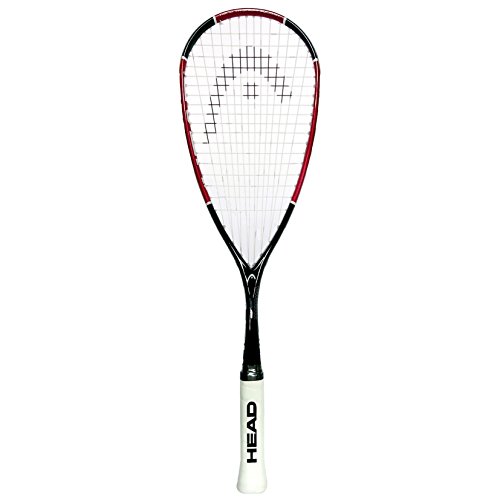 Head Nano Ti 110 Squash Racket
- Head Nano Ti 110 squash racket.
- HEAD Nano Ti 110 Squash Racket
- One Size
| Product | Key specs | |
|---|---|---|
| BatZoom Squash Racket for Beginners | ★【Classic Oval Shape Design for Enhanced Control 】:… ★【Optimal Control and Stability 】: Balanced weight distribution… ★【Pre-strung with Shock-absorbing Technology】: Pre-strung with durable nylon… | Check price |
| Dunlop Sports Squash Sonic Lite Ti Racket | The Lite TI is a perfect racket for… It's the perfect companion to your first on-court… 16x18 Powermax String Pattern | Check price |
| Head Nano Ti 110 Squash Racket | Head Nano Ti 110 squash racket. HEAD Nano Ti 110 Squash Racket One Size | Check price |
 Dunlop Sports Tristorm Pro Squash Racket Dunlop Sports Tristorm Pro Squash Racket | Frame Weight: 170 g (unstrung) → lightweight for… Performance Focus: Entry‑level racket designed to help players… Shape: Teardrop → longer main strings for added… | Check price |
As an Amazon Associate we earn from qualifying purchases at no extra cost to you.
Quick picks by playing situation
| Player or priority | Recommended racket type | Useful target specification | Why it fits |
|---|---|---|---|
| New player learning length and technique | Conventional or slightly teardrop head | 135–150 g, even balance, 16 x 19 or 16 x 18 | More stable on off-centre contact and less demanding to swing |
| Intermediate all-court player | Teardrop head, head-light balance | 125–135 g, 345–355 mm balance, 16 x 19 | Combines manoeuvrability, control and accessible power |
| Attacking player or frequent volleyer | Light teardrop or open throat | 115–130 g, head-light to even balance, 14 x 18 or 16 x 17 | Fast through the air and lively from the front of the court |
| Power player who swings slowly | Head-heavy teardrop | 125–140 g, approximately 355–370 mm balance, 16 x 19 | Extra mass behind the ball helps produce depth without a very fast swing |
| Durability-first buyer | Heavier conventional or compact teardrop | 135–155 g, 16 x 19 or 18 x 20, reinforced bumper | Dense patterns and greater frame mass tolerate mishits and wall contact better |
Manufacturers do not always measure weight and balance in the same way. A racket advertised at 125 g may be unstrung, while another brand may quote a strung weight. Treat the figures below as useful comparisons rather than laboratory-equivalent measurements.
Best squash rackets to consider
Tecnifibre Carboflex 125 X-Top: best all-round attacking option
The Carboflex 125 X-Top is a sensible choice for an intermediate or advanced player who wants speed without giving up too much stability. Its nominal 125 g unstrung weight, teardrop shape and head-light-oriented feel make it quick for volleys, boasts and rapid preparation. The X-Top bumperless design replaces some conventional bumper material with protective fibres at the top of the frame, reducing drag and slightly changing the feel at the head.
It is not the most forgiving choice for a beginner who frequently strikes the wall or misses the central strings. The frame rewards a clean swing, and its lively response can send loose shots long if the player is still learning touch. Choose it when manoeuvrability and attacking speed matter more than maximum stability.
Dunlop Sonic Core Revelation 125: best for a fast, lively response
The Sonic Core Revelation 125 is aimed at players who like a light racket with a pronounced attacking response. Its teardrop head and approximately 125 g unstrung weight help it accelerate quickly, while the Sonic Core construction uses a vibration-damping material in selected frame areas. The result is a racket category suited to aggressive drives and quick changes of direction.
Its relatively low mass means it will not absorb heavy incoming pace as effortlessly as a 140 g model. Players with a compact swing may enjoy the easy speed; players who regularly hit off-centre may prefer the Revelation 135 or another heavier frame in the same family.
Head Speed 120: best for players who want easy racket-head speed
The Head Speed 120 is a light teardrop-style option designed for players who value rapid handling. At about 120 g unstrung, it can feel noticeably quicker than a 135–140 g conventional racket, particularly when reacting at the front of the court. A larger or more open hitting area can also make it easier to create power with a shorter swing.
The trade-off is reduced plough-through. If your shots lack depth, adding more racket-head speed may help, but switching to a slightly heavier, evenly balanced racket may produce a more controlled result. This is a better fit for an intermediate player than for someone still developing reliable contact.
Head Graphene 360+ Speed 135: best stability-focused compromise
A 135 g Speed model offers a more planted feel than the 120 g version while remaining more manoeuvrable than many traditional 150 g rackets. That middle ground suits club players who defend as often as they attack. The extra mass can steady the frame against hard drives and make length easier to repeat.
Compared with a very light, head-light racket, it will feel slower during emergency pickups and fast volleys. It is therefore a strong choice for an all-court player who values predictable response over the quickest possible swing.
Tecnifibre Carboflex 130 X-Top: best for added control and stability
The 130 g Carboflex version keeps the family’s fast, attacking character but adds a little more mass behind the ball. That difference may sound small, yet five grams in the frame can be noticeable during long matches and defensive exchanges. It is often the more forgiving choice for a player moving up from a basic starter racket.
Select it over the 125 g version if your shots sometimes float short, you face powerful opponents, or you prefer a solid contact sensation. Select the lighter model if you rely on rapid racket preparation and have consistent central contact.
How the specifications change playing feel
Weight: do not choose by the number alone
Racket weight is normally quoted before strings, grip and overgrip. Stringing can add roughly 10–15 g, while an overgrip may add another 5–8 g. A 125 g frame can therefore finish close to 140–148 g in playing condition.
Lighter frames accelerate easily but twist more when contact is near the edge. Heavier frames resist twisting and transfer more stable mass into the shot, but they demand more effort during repeated swings. Beginners should usually avoid choosing the lightest racket available unless they already have dependable technique.
Balance: the specification you feel most quickly
- Head-light: quicker preparation, easier volleying and less perceived weight during rapid exchanges.
- Even balance: a neutral compromise for mixed attacking and defensive play.
- Head-heavy: greater momentum and easier depth, but slower reactions and more fatigue for some players.
Balance is measured from the handle end, often in millimetres. A balance around 345–350 mm generally feels head-light in a standard squash frame, while figures above roughly 360 mm feel progressively more head-heavy. Grip size, overgrip thickness and string choice can alter the final balance.
Head shape: conventional versus teardrop
A conventional head has a longer bridge and a more central sweet spot. It tends to offer predictable control and useful stability on mishits. A teardrop or open-throat head moves more string area toward the top of the racket, enlarging the effective hitting zone and helping generate power.
Teardrop designs are not automatically more powerful. Their benefit depends on the player’s swing speed, string tension and contact point. They can also feel less precise on delicate drops if the string bed is very lively.
String pattern and tension
Common patterns include 16 x 19, 16 x 18 and 14 x 18. A more open pattern generally offers easier power and more string movement, while a denser pattern tends to give a firmer, more controlled response and may wear more slowly.
As a starting point, many club players use approximately 24–28 lb of tension, but the correct range depends on the racket and string. Lower tension increases liveliness and comfort; higher tension sharpens response but can make mishits feel harsher and reduce easy power. Do not exceed the manufacturer’s recommended range.
Durability and ownership costs
The strings usually wear out before the carbon frame. Notching develops where the main and cross strings rub together, followed by fraying and loss of tension. A frequent player may restring every 1–3 months, while an occasional player may go much longer. Replace strings earlier if they feel dead, move excessively or show deep notches.
The next common failure points are the bumper, grommets and frame edges. Wall strikes, scraping the racket on the floor and carrying it loose in a bag can cause damage that is not obvious at first. Use a racket cover, avoid leaving the frame in a hot car, and inspect the top bumper and grommet strips after collisions.
A simple ownership calculation helps compare a cheap frame with a more durable one. Suppose a £70 racket lasts 18 months with four restringing jobs at £25 each: the total is £170, or about £9.45 per month. A £150 racket lasting 30 months with six £25 restringing jobs costs £300, or £10 per month. The more expensive frame is not automatically cheaper, but durability and comfort can make the small difference worthwhile for a frequent player.
Buying decision: match the racket to your actual game
- Play once a week: choose a 135–150 g evenly balanced racket with a conventional or moderate teardrop head. Forgiveness matters more than maximum speed.
- Play two or three times a week: choose 125–135 g and head-light or even balance. This is the most versatile range for developing players.
- Play four or more times a week: prioritise reliable grommets, a protective bumper and a replacement-string cost you can afford. A slightly heavier racket may reduce mishit twisting.
- Struggle to reach the back wall: try a livelier teardrop or lower string tension before simply buying a lighter racket.
- Overhit or lack touch: try a denser pattern, higher tension within the safe range, or a more conventional head.
- Miss the centre frequently: move heavier or more evenly balanced rather than choosing an ultra-light frame.
Final verdict
For the broadest mix of control and power, start with a 125–135 g teardrop racket at an even or slightly head-light balance and a 16 x 19 pattern. The Tecnifibre Carboflex 125 X-Top is a strong attacking all-rounder, the Dunlop Sonic Core Revelation 125 favours quick handling, and a 135 g Head Speed or Tecnifibre Carboflex offers more stability for players who want a calmer response. Beginners should prioritise forgiveness and balance over headline weight, while advanced players can fine-tune the choice through balance, string pattern and tension.







Write Your Review
No reviews yet. Be the first to share your experience!