

Best Searing Grates for High-Heat Grill Marks
The best searing grates for most grill owners are heavy cast-iron grates when dark, wide grill marks and strong heat retention matter most; stainless-steel grates are the better choice when easy cleaning, rust resistance, and long-term flexibility matter more.
A searing grate is not automatically better because it has a higher maximum temperature. The useful differences are contact area, heat recovery after food is added, compatibility with your grill, and how much maintenance you will tolerate. The right choice depends on whether you sear one or two steaks occasionally or cook several batches at high heat every week.
Our top picks
 BAC772 Reversible Grill Grate for Traeger Woodridge
- 【REVERSIBLE COOKING SURFACE】Upgrade your outdoor cooking experience with…
- 【FAST & EVEN HEAT DISTRIBUTION】Constructed from anodized aluminum…
- 【COMPATIBLE GRILL CONFIGURATION】Designed for BAC772 compatible grill setups…
 BAC772 Reversible Anodized Aluminum Sear Grate-18.25" x
- 【Pro-Level Searing】 Achieve restaurant-quality results with our anodized…
- 【Lightweight & Portable】 Cook effortlessly outdoors with our…
- 【Built to Last】 Experience superior durability with our…
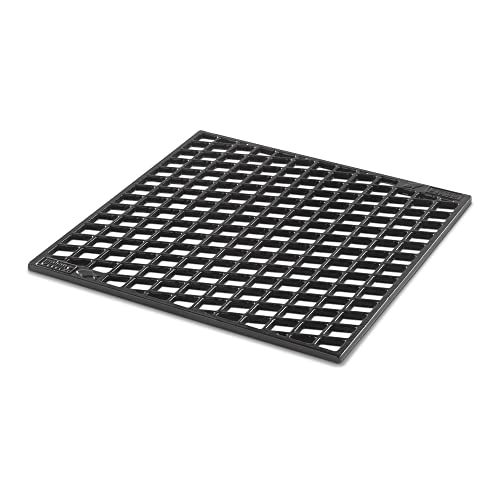 Weber Crafted® Dual‑Sided Sear Grate
- Create food never thought possible in a grill…
- Skip the restaurant and create those beautiful steak-house…
- Weber Crafted grates and frame kit are required…
| Product | Key specs | |
|---|---|---|
| BAC772 Reversible Grill Grate for Traeger Woodridge | 【REVERSIBLE COOKING SURFACE】Upgrade your outdoor cooking experience with… 【FAST & EVEN HEAT DISTRIBUTION】Constructed from anodized aluminum… 【COMPATIBLE GRILL CONFIGURATION】Designed for BAC772 compatible grill setups… | Check price |
| BAC772 Reversible Anodized Aluminum Sear Grate-18.25" x | 【Pro-Level Searing】 Achieve restaurant-quality results with our anodized… 【Lightweight & Portable】 Cook effortlessly outdoors with our… 【Built to Last】 Experience superior durability with our… | Check price |
| Weber Crafted® Dual‑Sided Sear Grate | Create food never thought possible in a grill… Skip the restaurant and create those beautiful steak-house… Weber Crafted grates and frame kit are required… | Check price |
 NEURARC Stainless Steel Cooking Grid Grate for NEURARC Stainless Steel Cooking Grid Grate for | 【Product Materials】-Our Grill grates made of heavy duty… 【Product Dimension】 Please double measure your original parts… 【Grill parts Perfect Fits】Cooking Grid Replacement Fits For… | Check price |
As an Amazon Associate we earn from qualifying purchases at no extra cost to you.
Cast Iron vs. Stainless Steel: The Head-to-Head Choice
| Factor | Cast iron | Stainless steel |
|---|---|---|
| Typical grate thickness | 8–12 mm | 6–10 mm |
| Typical weight for a 15 x 10 in grate | 12–20 lb | 6–12 lb |
| Heat retention | Very high; recovers slowly but steadily | Moderate to high; usually recovers faster |
| Rust resistance | Low without seasoning and dry storage | High, especially with 304 stainless steel |
| Maintenance | Dry immediately and apply a light oil film | Brush, wash when needed, and dry |
| Warping resistance | Good when thick and heated gradually; can crack from thermal shock | Good in heavy-gauge construction; thin grates can deform |
| Best use | Steaks, burgers, chops, repeated high-heat searing | Frequent cooking, mixed foods, wet marinades, lower maintenance |
Cast iron: the heat-retention specialist
Cast iron stores substantial heat because it is dense and usually thicker than replacement stainless-steel grates. That stored energy helps maintain the cooking surface when a cold steak is placed on it. The result is more consistent browning across multiple portions, provided the grate has been preheated thoroughly.
Its disadvantages are weight and upkeep. Moisture left on bare cast iron can produce surface rust, and aggressive scraping can remove seasoning. A seasoned cast-iron grate is not nonstick in the same way as a coated pan, but its surface becomes easier to clean and less prone to sticking over time.
Stainless steel: the low-maintenance specialist
Stainless steel does not need seasoning and tolerates acidic marinades, salt, and damp storage better than bare cast iron. It is also easier to inspect for damage and generally lighter to remove for cleaning. A grate made from 304 stainless steel is a strong all-purpose choice; 430 stainless steel can still perform well but is typically less corrosion-resistant in humid or coastal environments.
Stainless steel may show thinner or less deeply defined marks if the bars are narrow and the grate loses heat quickly. That is a design issue rather than an unavoidable property of stainless steel. Thick bars, close spacing, and a substantial frame can produce excellent searing results.
Grate Dimensions Matter More Than the Material Label
Look for the dimensions of the actual cooking surface, not only the outside dimensions of the insert. A 15 x 10-inch grate provides 150 square inches of cooking area, but the usable space can be lower if the frame has wide borders or if the grate sits inside a larger accessory.
For sizing, measure the grill opening at three points: front to back, left to right, and diagonally if the grate must pass through a circular or oval opening. Subtract at least 1/4 inch from each required dimension for clearance. For example, an opening measuring 19 1/2 inches wide and 12 inches deep should generally accept a grate no larger than about 19 1/4 x 11 3/4 inches. Confirm the support ledges and grate height as well; a grate that fits the opening can still sit too high for the lid to close.
- Small 10–14-inch insert: suitable for one or two steaks and compact charcoal grills.
- Medium 15–18-inch insert: practical for two to four steaks or a mixed batch of burgers and vegetables.
- Large 19–24-inch insert: better for families, frequent entertaining, and cooking in batches without crowding.
- Raised or reversible grates: useful when you want both a concentrated searing zone and a flatter general-purpose surface.
Bar spacing also affects food choice. Gaps of roughly 3/8 to 1/2 inch suit steaks and burgers, while smaller gaps of about 1/4 to 3/8 inch are safer for shrimp, sliced vegetables, and smaller foods.
Choose by Situation
| Your situation | Best choice | Why |
|---|---|---|
| Lowest initial cost | Basic cast iron | Often available in simple, thick designs without complex frames |
| First-time high-heat griller | Stainless steel | Forgiving cleaning routine and no seasoning to maintain |
| Small grill or limited storage | Two-piece grate set | Easier to lift and store than one heavy panel |
| Weekly steak cooking | Heavy cast iron or thick 304 stainless steel | Both provide better heat recovery than thin replacement grates |
| Wet marinades and acidic foods | 304 stainless steel | Resists corrosion and requires less protective maintenance |
| Maximum grill-mark contrast | Thick cast iron with raised bars | Creates more concentrated contact heat |
| Coastal or humid storage | Stainless steel | Less vulnerable to rust between uses |
Compatibility: Check the Grill Before Buying
Replacement grates are not universally interchangeable. Gas grills often use ledges, pins, or brackets that require a precise footprint. Charcoal grills may accept a round grate but still need the correct diameter and hinge position. Kamado-style cookers commonly use segmented systems, heat deflectors, and elevated racks, so a flat rectangular grate may not work even if its listed area appears suitable.
Check whether the grate is designed for direct contact with a burner or fire. A searing insert with narrow slots may concentrate heat effectively over gas burners, while a heavy solid plate can restrict airflow or create excessive heat beneath the food. On charcoal grills, confirm that the grate leaves enough room for fuel and that hinged sections still open for adding charcoal.
Also check lid clearance. Measure from the grate support to the closed lid, then subtract the height of the proposed grate and the food you normally cook. A grate that prevents the lid from closing can turn a useful accessory into a permanent obstruction.
Heat Retention and Recovery: A Simple Comparison
Heat retention matters most when you add cold food or cook several portions in succession. Suppose a grate has a heat capacity of about 2.0 kilojoules per degree Celsius and a second grate has 1.2 kilojoules per degree. If each loses roughly 12 kilojoules of heat when a cold steak is added, the first would theoretically drop about 6°C while the second would drop about 10°C, assuming similar conditions. Real grills are more complicated because burners, airflow, food moisture, and the lid continuously add or remove heat, but the calculation illustrates why heavier grates usually recover more steadily.
Do not interpret heat retention as permission to preheat indefinitely. A thick grate can store enough energy to damage seasoning, burn residue, or stress a thin accessory frame. Preheat with the lid closed, monitor the surface, and follow the grill manufacturer’s temperature limits.
Cleaning, Seasoning, and Preventing Warping
Cast iron routine
- Brush loose residue while the grate is still warm, using a suitable grill brush.
- Use a small amount of water and mild soap only when needed; avoid soaking.
- Dry completely over low heat or with a towel.
- Wipe on a very thin layer of high-smoke-point cooking oil before storage.
The most common cast-iron mistake is putting the grate away slightly damp. The second is applying too much oil, which creates sticky carbonized buildup rather than useful seasoning.
Stainless-steel routine
Brush after cooking, then wash with warm water and detergent when grease accumulates. Use a non-abrasive pad for stubborn residue and brush in the direction of any visible grain. Avoid chlorine-based cleaners and do not assume stainless steel cannot discolor; overheating, salt deposits, and grease can leave permanent-looking stains even when the metal is structurally sound.
Reducing warping and cracking
Warping usually begins with thin construction, uneven burner exposure, or repeated thermal shock. Do not pour cold water onto a grate that is still extremely hot. Heat a heavy grate gradually, keep it supported at its intended contact points, and avoid placing a chilled metal accessory directly over a roaring fire. Cast iron is more likely to crack than bend if shocked, while thin stainless steel may bow and fail to sit flat.
Value and Ownership Costs
Basic replacement searing grates commonly fall in the general market range of about $30–$80, while thick, multi-piece, or premium stainless-steel systems can cost roughly $80–$200 or more. A $100 grate used twice per month for four years costs about $1.04 per use: $100 divided by 96 cooking sessions. A cheaper grate that must be replaced after two years may not be the better value if rust, distortion, or poor fit limits how often you use it.
Before paying for extreme thickness, spend money on correct dimensions, sturdy support points, and a material suited to your storage conditions. Those details affect everyday performance more than a marketing claim about maximum temperature.
Final Recommendation
Choose heavy cast iron if your priority is the strongest heat retention and bold grill marks, and you are willing to dry and lightly oil the grate after use. Choose thick 304 stainless steel if you want a dependable high-heat surface with simpler cleaning, better moisture resistance, and easier handling. Whichever material you select, measure the grill opening, confirm grate height and support points, and choose spacing that matches the foods you actually cook. That combination of fit, mass, and maintenance routine determines whether a searing grate performs well beyond its first few uses.







Write Your Review
No reviews yet. Be the first to share your experience!