

Key takeaways
- Choose the IKEA ANTILOP when cleanability, low price, and a small number of parts matter most. Choose the Stokke Tripp Trapp when long-term table seating is the priority. Choose the Abiie Beyond Junior when you want extensive adjustment and a chair that transitions through childhood.…
Best High Chairs for Safe, Easy Mealtimes
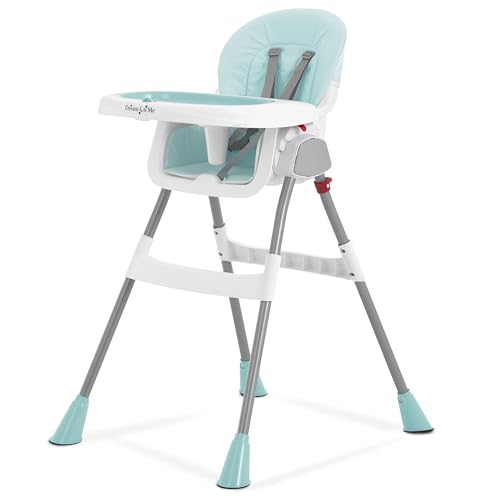
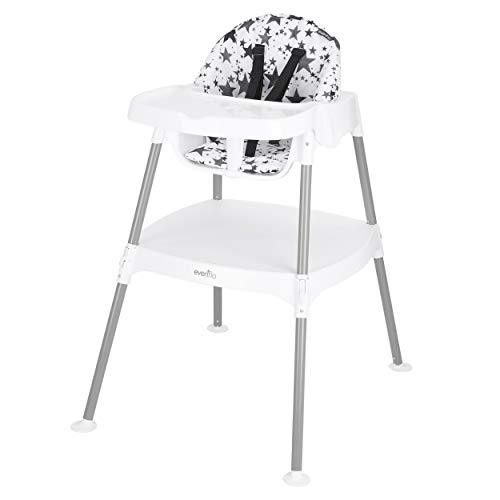
The best high chairs depend on your priority: choose the IKEA ANTILOP for the lowest-cost, easiest-to-clean option, the Stokke Tripp Trapp for long-term use and table seating, the Abiie Beyond Junior for adjustability, or a compact folding chair such as the Joovy Nook for limited space.
A good high chair should hold a child securely without relying on the tray as a restraint, offer a stable base, place the child at a practical eating height, and tolerate repeated wiping. Beyond those basics, the important differences are harness design, tray adjustment, footprint, folding, materials, and whether the chair remains useful after the baby stage.
Our top picks


As an Amazon Associate we earn from qualifying purchases at no extra cost to you. Ratings are shown as listed on Amazon.
Best high chairs by situation
| Situation | Best fit | Why it makes sense | Main compromise |
|---|---|---|---|
| Lowest budget and frequent messy meals | IKEA ANTILOP | Simple plastic seat, removable tray, light weight, and very few parts to scrub | Limited adjustment and no meaningful long-term use |
| One chair from infancy through childhood | Stokke Tripp Trapp | Adjustable seat and footrest can bring the child to the family table for years | Higher initial cost and more crevices than a basic molded chair |
| Maximum adjustment without buying a separate toddler chair | Abiie Beyond Junior | Adjustable seat and footrest, reclining positions, and a wide usable age range | Heavier and more expensive than a minimalist chair |
| Small kitchen or chair stored between meals | Joovy Nook | Folds relatively compactly and has a swing-open tray | Padding and hinges require more cleaning attention |
Head-to-head comparison
The following figures are useful for comparing the ownership trade-offs. Dimensions and weight can vary slightly by version, market, and included accessories, so check the current manufacturer specification before ordering.
| Chair | Approx. size or weight | Harness and tray | Materials and cleaning | Expected use |
|---|---|---|---|---|
| IKEA ANTILOP | About 56 × 62 × 90 cm; about 3.6 kg | Three-point restraint; removable tray, generally not highly adjustable | Polypropylene seat and tray; smooth surfaces wipe quickly | Typically about 6 months to 3 years, subject to child development and local guidance |
| Stokke Tripp Trapp | About 52.6 × 56 × 81.5 cm; about 7 kg | Baby set and five-point harness available; tray is an accessory and has limited positional adjustment | Wooden frame with painted or stained finish; removable cushions and tray need regular cleaning | With the correct accessories, from baby stage to adult use |
| Abiie Beyond Junior | About 9 kg; footprint roughly 56 × 56 cm | Five-point harness; adjustable tray and seat components | Wood-and-plastic construction with removable, wipeable parts | Designed to transition from high chair to toddler and child seating |
| Joovy Nook | About 7.5 kg; folded height roughly 91 cm | Five-point harness; swing-open tray with several positions | Plastic frame with padded seat; fabric and hinge areas need extra attention | Usually used through the toddler period, depending on size and fit |
Harness design matters more than the tray
A tray should keep food within reach, not serve as the device that prevents a child from sliding out. A five-point harness secures the shoulders, waist, and crotch, while a three-point harness normally secures the waist and crotch. Either can be appropriate when correctly fitted, but a five-point design offers more upper-body restraint for children who lean, twist, or attempt to stand.
Look for straps that adjust smoothly and remain flat rather than folding into a narrow, uncomfortable edge. The buckle should be difficult for a child to release but easy for an adult to operate one-handed. Check the harness every few weeks for food buildup, fraying, loose stitching, or a buckle that no longer clicks positively.
Use the chair only when the child meets the manufacturer’s readiness guidance. Keep the chair on a level floor, avoid placing it close to tables or counters that a child can push against, and do not add aftermarket cushions or accessories unless they are specifically approved for that chair.
Tray adjustability versus family-table seating
A sliding tray with several depth positions is helpful when a child is small or wearing bulky clothing. The closest safe position reduces the gap where food and toys collect. A tray that removes with one hand is convenient when lifting the child out, but it should still lock securely during use.
Adjustability is less important if the chair is designed to sit directly at the dining table. The Tripp Trapp is the clearest example: its value comes from positioning the seat and footrest so the child can use the family table rather than from a large independent tray. This can make the chair more useful after the messy feeding stage, but it does not offer the same easy “hose-down” simplicity as a basic plastic model.
Footprint, folding, and everyday storage
Measure the chair in its open position, not only its folded dimensions. A compact folding chair can still occupy considerable floor space during meals, and rear legs may extend behind the seat farther than expected. Leave enough clearance to walk around it without catching a foot on the base.
The ANTILOP is light enough to move easily, but it is not a folding chair. The Nook is more suitable when the chair must be stored between meals, although folding joints create places for crumbs and can eventually become stiff. A grow-with-the-child wooden chair usually has the largest long-term value when it can remain at the table, but it is a poor choice if you need to put the chair away after every meal.
Cleanability: the feature you use three times a day
For frequent purées, finger foods, and spilled drinks, fewer surfaces usually beat more padding. A one-piece molded seat with a removable tray is fastest to wipe. Cushions improve comfort but add seams, underside surfaces, and laundry. Wood is durable when maintained, yet dried food around joints and adjustment slots takes longer to remove.
A five-minute cleaning routine
- Remove the tray and scrape food into the waste or compost container before it dries.
- Wipe the tray and seat with warm water and a mild detergent suitable for the material.
- Clean the harness separately, working around the buckle and strap anchors.
- Inspect the underside, footrest, and floor-contact points for trapped food.
- Allow fabric or padded parts to dry fully before reassembly.
Do not soak wooden components unless the manufacturer permits it. Avoid harsh abrasives on plastic, because roughened surfaces can hold stains and residue. Never put a removable part in a dishwasher unless its instructions specifically allow dishwasher cleaning.
Materials and long-term ownership
Polypropylene and other molded plastics resist moisture and are easy to wipe, but trays can become scratched and plastic hinges may loosen after years of repeated use. Wooden frames can last longer and often look better in a dining room, but their finish needs protection from standing water and aggressive cleaners. Padded covers are the parts most likely to show wear first, followed by harness straps, tray latches, and adjustment knobs.
Before buying, check whether replacement harnesses, trays, cushions, and footrest components are sold separately. A chair that costs more but supports replacement parts may be cheaper over several years than a low-cost chair that must be discarded after one damaged buckle or cracked tray.
Is a more expensive chair worth it?
Consider cost per use rather than purchase price. Suppose a basic chair costs $30 and is used twice daily for 18 months: 30 × 2 × 548 equals 1,096 uses, or about 3 cents per use. A $250 adjustable chair used twice daily for five years provides roughly 3,650 uses, or about 7 cents per use before accessories. The cheaper chair still wins on cost, but the adjustable chair may justify its price if it replaces a toddler seat and remains comfortable at the family table.
Accessories can change the calculation. A grow-with-the-child chair may require a baby set, tray, cushion, and harness, while a basic chair may include its restraint and tray. Compare the complete setup, not the frame alone.
Bottom line
Choose the IKEA ANTILOP when cleanability, low price, and a small number of parts matter most. Choose the Stokke Tripp Trapp when long-term table seating is the priority. Choose the Abiie Beyond Junior when you want extensive adjustment and a chair that transitions through childhood. Choose the Joovy Nook when folding storage outweighs the extra cleaning around padding and hinges.
Whichever model you select, prioritize a stable base, a correctly fitted harness, a supportive footrest, and a tray or table position that keeps the child upright and close to the meal. Those details have more effect on daily use than decorative finishes or a long list of accessories.




Write Your Review
No reviews yet. Be the first to share your experience!