

Key takeaways
- Swivel Accent Chair with Ergonomic Lumbar Support: This…
- Soft Oiled PU Leather
- Elegant Barrel Design with Rivet Detailing
The best swivel barrel chairs combine a seat that is deep enough for relaxed sitting, a 360-degree swivel, firm edge support, and a weighted base that does not wobble when you turn; for most home offices, a chair about 30–34 inches wide with a 19–21 inch seat height and medium-firm foam is the most versatile choice.
Our top picks
 HAOMARKETS 360 Degree Swivel Accent Chair Set
- Swivel Accent Chair with Ergonomic Lumbar Support: This…
- Soft Oiled PU Leather
- Elegant Barrel Design with Rivet Detailing
 HAOMARKETS 360 Degree Swivel Accent Chair Set
- Swivel Accent Chair with Ergonomic Lumbar Support: This…
- Soft Oiled PU Leather
- Elegant Barrel Design with Rivet Detailing
 Madison Park Swivel Barrel Accent Chair
- Comfortable & Durable - Swivel chair is perfect…
- High Density Comfort - Sleek nailheaded swivel chair…
- Versatile placement
| Product | Key specs | |
|---|---|---|
| HAOMARKETS 360 Degree Swivel Accent Chair Set | Swivel Accent Chair with Ergonomic Lumbar Support: This… Soft Oiled PU Leather Elegant Barrel Design with Rivet Detailing | Check price |
| HAOMARKETS 360 Degree Swivel Accent Chair Set | Swivel Accent Chair with Ergonomic Lumbar Support: This… Soft Oiled PU Leather Elegant Barrel Design with Rivet Detailing | Check price |
| Madison Park Swivel Barrel Accent Chair | Comfortable & Durable - Swivel chair is perfect… High Density Comfort - Sleek nailheaded swivel chair… Versatile placement | Check price |
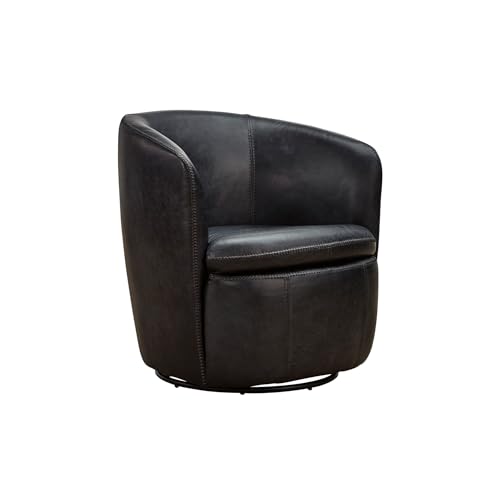 Signature Design by Ashley Leather Swivel Accent | Unbox and enjoy immediately with a fully assembled… Experience a premium leather accent chair crafted with… Maximize your floor plan with a comfy swivel… | Check price |
As an Amazon Associate we earn from qualifying purchases at no extra cost to you.
Best swivel barrel chairs by use case
| Best for | Recommended chair profile | Key dimensions and features | Typical market range |
|---|---|---|---|
| Daily home-office work | Ergonomic swivel barrel chair | 19–21 in seat height, 19–22 in seat depth, 360-degree swivel, medium-firm foam, optional casters | $250–$700 |
| Occasional desk use | Compact upholstered barrel chair | 28–31 in overall width, 17.5–19.5 in seat height, fixed pedestal, 180–360-degree swivel | $150–$400 |
| Reading and living rooms | Deep lounge swivel chair | 20–24 in seat depth, 20–23 in seat height, 360-degree swivel, loose or reversible cushion | $300–$900 |
| Small apartments | Space-saving compact swivel | 26–30 in overall width, 17–20 in seat depth, low-profile base, no protruding arms | $180–$500 |
| Heavy everyday use | Contract-style upholstered swivel | At least 300 lb stated capacity, reinforced frame, steel base, cleanable performance fabric | $450–$1,000+ |
What separates a good swivel barrel chair from a decorative one?
A barrel chair wraps its back and arms around the sitter, creating a compact appearance and a supported feel. That shape is comfortable, but it can also restrict shoulder room and make a chair difficult to use at a desk. The best choice depends less on the silhouette than on the relationship between seat height, depth, back angle, and base design.
For desk work, look for a seat height that lets your feet rest flat while your knees remain close to a right angle. A seat that is too low encourages a rounded posture; one that is too high can leave your feet unsupported. A 19–21 inch seat height suits many standard desks, but shorter users may prefer approximately 17.5–19 inches.
Seat depth matters just as much. Measure from the front edge to the back cushion, then allow roughly 2–3 inches between the back of your knees and the cushion edge. A 19–22 inch usable depth is usually more practical for office work. Lounge chairs can extend to 24 inches, but a deep cushion may require a lumbar pillow or a more reclined sitting position.
Head-to-head: the features that matter most
Swivel range
A full 360-degree swivel is the most useful option beside a desk, side table, or conversation area because you can change direction without dragging the chair. Some compact chairs use a limited 180-degree return swivel. That can be adequate in a living room, but it is less convenient when reaching between a monitor, notebook, and phone.
Check whether the chair rotates smoothly or spins too freely. A light, uncontrolled rotation can feel unstable when you sit down or stand up. If possible, prioritize a mechanism with consistent resistance and a return-to-center function when the chair will sit at a desk or dining-height surface.
Upholstery materials
- Polyester and polyester blends: Usually the most affordable option, with many colors and textures. Tight weaves are easier to vacuum and less likely to snag than loose bouclé.
- Performance fabric: A practical choice for homes with children, pets, or frequent use. Look for cleaning instructions that permit water-based treatment, rather than assuming every “performance” label means stain-proof.
- Microfiber: Soft and relatively resistant to everyday marks, although it can show directional shading and may attract lint.
- Top-grain or corrected-grain leather: Durable and wipeable when properly maintained, but more expensive and less forgiving of scratches. Leather can also feel warm in summer and cool in winter.
- Vegan leather: Easy to wipe initially, but the surface can crack or peel sooner than fabric, particularly beside a sunny window or a heat vent.
For a work chair used six or more hours per day, a breathable woven fabric is often more comfortable than nonporous upholstery. For an occasional accent chair, appearance and cleanability may reasonably take priority over ventilation.
Cushioning and frame support
Very soft foam feels inviting for the first few minutes but can compress at the front edge and leave you sitting in a hollow. Medium-firm high-density foam, often combined with a fiber wrap, offers a better balance for desk and conversation use. A spring-and-foam seat can provide a resilient feel, while a fiber-filled cushion is softer but usually needs more frequent fluffing.
Inspect the cushion construction rather than relying on the word “plush.” A removable seat cushion is easier to rotate or replace, but a fixed cushion may look neater and resist shifting. For everyday work, a cushion at least 4 inches thick is a useful target; thinner cushions can still work when the seat has a supportive webbing or spring platform underneath.
Base stability
The base should be wide enough to prevent tipping when you lean sideways or rise while turned. Steel and solid aluminum generally offer more predictable rigidity than lightweight plastic. A five-point caster base is useful for an office, but casters can make a barrel chair look less residential and may roll on hard floors. A broad stationary pedestal is usually better for a living room.
Do not judge stability only by the chair’s total weight. A heavy chair with a narrow base can still feel top-heavy. Look for a low center of gravity, a base diameter of roughly 22–28 inches on a full-size chair, and a clearly stated weight capacity. For frequent use, choose a chair rated at least 50 pounds above the heaviest expected user’s weight to allow for dynamic movement.
Decision matrix: which chair fits your room?
| Your situation | Prioritize | Avoid | Best profile |
|---|---|---|---|
| Under 30 inches of available width | 26–29 inch exterior width, narrow arms, compact pedestal | Deep cushions and wide flared arms | Small-space swivel chair |
| Six or more hours per day | 19–21 inch seat height, medium-firm foam, supportive back, breathable fabric | Low lounge seats and soft sink-in cushions | Office-oriented barrel chair |
| Pets or frequent spills | Tight-weave performance fabric, removable cushion, accessible cleaning instructions | Loose bouclé and delicate velvet | Cleanable upholstered swivel |
| Rental or occasional assembly experience | Preassembled upper chair, four-to-six-bolt base, illustrated instructions | Mechanisms requiring upholstery removal | Simple pedestal model |
| Shared living-room seating | 360-degree rotation, 20–23 inch seat height, broad base, firm edge | Very low seats and uncontrolled spinning | Full-size lounge swivel |
Assembly: what to expect and how to avoid problems
Most swivel barrel chairs arrive in two main pieces: the upholstered chair shell and the base. Assembly typically takes 15–30 minutes and requires tightening four to eight bolts. More complicated models may include a lift, tilt mechanism, caster assembly, or separate swivel plate, increasing the time to 30–60 minutes.
- Open the box on a rug or blanket so the upholstery and floor are protected.
- Confirm that the bolt lengths match the instructions before inserting them. A bolt that is too long can damage the seat frame.
- Start every bolt by hand, leaving each one slightly loose until all holes align.
- Tighten in a diagonal pattern rather than fully tightening one corner first.
- Turn the chair upright, rotate it through its full range, and check for rubbing, rocking, or uneven resistance.
- Retighten the hardware after one week of use, then inspect it every few months.
A chair that rocks after careful assembly may have an uneven floor, a misaligned swivel plate, or a bent base. Do not compensate by forcing bolts into misaligned holes; that can weaken the frame.
Ownership realities: what wears first?
The first visible wear is often not the upholstery. It is the front edge of the seat, where repeated entry and exit compresses the foam. Flattened padding, loose fabric, and a slight tilt can appear before the chair looks old from across the room. Rotating the cushion, when the design allows it, reduces one-sided compression.
Swivel bearings and mounting bolts are the next likely maintenance points. Dust and pet hair can make a mechanism feel rough, while loose hardware causes clicking or wobbling. Vacuum around the base and follow the manufacturer’s lubrication guidance; do not apply oil to fabric or to a mechanism that specifies dry lubrication.
Vacuum upholstery with a soft brush attachment, blot spills rather than rubbing them, and test any cleaner on an inconspicuous area. Keep fabric chairs away from direct, prolonged sunlight when possible. For leather, use a suitable conditioner sparingly; for vegan leather, avoid abrasive cleaners and excessive heat.
Is a more expensive swivel barrel chair worth it?
Consider cost per use rather than purchase price alone. Suppose a $350 chair is used five days per week for three years: approximately 780 workdays. That works out to about $0.45 per workday before maintenance. A $700 chair lasting six years at the same schedule costs about $0.45 per workday as well. The higher-priced option makes sense if its frame, cushion, upholstery, and mechanism are actually designed for the longer service life—not merely because it has a more elaborate appearance.
For occasional seating, paying for durable contract-grade components may be unnecessary. For a primary home-office chair, prioritize fit, base stability, and cushion resilience before decorative details such as channel tufting or contrast piping.
Bottom line
The best swivel barrel chairs for offices are moderately compact, 360-degree models with a 19–21 inch seat height, 19–22 inch usable depth, medium-firm cushioning, and a stable steel or broad pedestal base. Living rooms allow deeper, softer seats, while small spaces benefit from narrow arms and a low-profile base. Compare the actual seat dimensions—not just the overall width—and treat upholstery cleaning, bolt access, and replacement practicality as part of the chair’s long-term value.







Write Your Review
No reviews yet. Be the first to share your experience!