

The best weighted blankets for adults are chosen by matching the blanket’s weight, dimensions, filling, and temperature behavior to your body size, sleeping position, room temperature, and washing routine—not by simply buying the heaviest option.
Our top picks
 Mr. Sandman Cooling Weighted Blanket for Adults
- Enhanced Sleep Quality: Adults weighted blanket evenly distributes…
- Year-Round Comfort: Crafted from ultra-comfortable, reversible material, our…
- Stylish Home Accessory: More than just functional, this…
 yescool Weighted Blanket for Adults 20lbs Queen
- 🌙【CHOOSE RIGHT SIZE】: Weighted blanket which owns 10%…
- 🌙【JUST ON TOP OF MATTRESS】: Yescool weighted blankets…
- 🌙【TIGHTLY STITCHING&DURABILE】: Our weighted blanket for women&man composed…
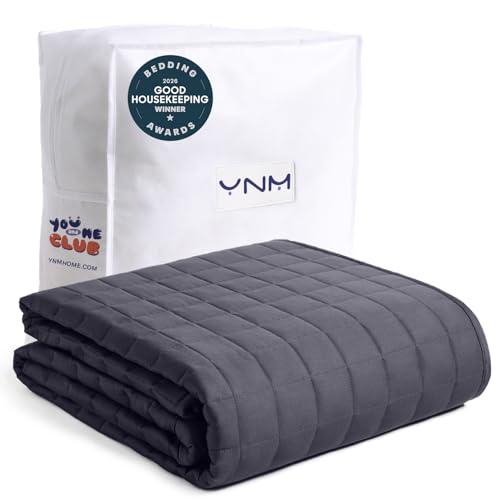 YnM 15lbs Weighted Blanket for Adults
- YNM Exclusive Line: Features 2x2 inch smallest compartments…
- Innovative Seven-Layer Design: The 7-layer system adapts to…
- Natural Sleeping Experience: Designed to help calm your…
| Product | Key specs | |
|---|---|---|
| Mr. Sandman Cooling Weighted Blanket for Adults | Enhanced Sleep Quality: Adults weighted blanket evenly distributes… Year-Round Comfort: Crafted from ultra-comfortable, reversible material, our… Stylish Home Accessory: More than just functional, this… | Check price |
| yescool Weighted Blanket for Adults 20lbs Queen | 🌙【CHOOSE RIGHT SIZE】: Weighted blanket which owns 10%… 🌙【JUST ON TOP OF MATTRESS】: Yescool weighted blankets… 🌙【TIGHTLY STITCHING&DURABILE】: Our weighted blanket for women&man composed… | Check price |
| YnM 15lbs Weighted Blanket for Adults | YNM Exclusive Line: Features 2x2 inch smallest compartments… Innovative Seven-Layer Design: The 7-layer system adapts to… Natural Sleeping Experience: Designed to help calm your… | Check price |
 L'AGRATY Weighted Blanket for Adults 15lbs L'AGRATY Weighted Blanket for Adults 15lbs | Premuim Material: The weighted blanket is made of… Recommended Weight Size: Please choose 7%-12% of your… Precise Positioning Technology: The biggest problem of weighted… | Check price |
As an Amazon Associate we earn from qualifying purchases at no extra cost to you.
Quick picks by sleeping situation
| Adult sleeper or priority | Best configuration | Why it fits | Typical market range |
|---|---|---|---|
| First-time user | 12–15 lb, 48–60 by 72–80 inches | Moderate pressure and manageable coverage without excessive bulk | $50–$130 |
| Hot sleeper | Glass-bead fill, cotton or bamboo cover, breathable stitching | Usually less insulating than dense polyester-filled designs | $70–$180 |
| Cold bedroom | Microfiber or polyester fill with a plush removable cover | Adds warmth and a softer, more insulating surface | $60–$160 |
| Couple sharing a bed | Two individual twin or throw-size blankets | Better independent control than one 20–25 lb blanket | $100–$300 for two |
| Frequent washing | Removable machine-washable cover and washable inner blanket | Reduces wear on the weighted insert and simplifies maintenance | $90–$250 |
| Small sofa or office chair | 5–8 lb, approximately 36–48 by 48–60 inches | More practical for seated use and easier to store | $35–$100 |
How much should an adult weighted blanket weigh?
A practical starting point is about 7% to 10% of body weight, but that is only a sizing guideline. A lighter blanket can be more comfortable for a first-time user, a smaller-framed adult, or anyone who dislikes restriction. A heavier option may suit someone who prefers pronounced pressure, but more weight also means more heat, bulk, and difficulty moving the blanket.
For example, an adult weighing 160 lb might begin with a 12–15 lb blanket rather than automatically choosing 16 lb. An adult weighing 210 lb might compare 15–20 lb models, paying close attention to dimensions and construction instead of assuming the maximum weight is best.
Do not use body-weight mathematics as a substitute for professional advice. People with breathing, circulation, mobility, sensory, or other health concerns should ask an appropriate clinician whether weighted bedding is suitable. A user should be able to remove the blanket independently and should not place it over the head or neck.
Why blanket size changes the experience
The listed weight is distributed across the surface. A 15 lb throw-size blanket generally feels denser than a 15 lb queen-size blanket because more weight is concentrated into less area. For bed use, select a size that covers the sleeper rather than one that hangs far over the sides. Excess overhang can pull the blanket toward the floor and make it feel heavier at the edges.
A single adult usually needs roughly 48–60 inches wide and 72–80 inches long. A twin-size design can provide more coverage, while a throw-size design is often better for a sofa, reading chair, or short periods of use. Couples should usually consider two separate blankets: this avoids compromise over weight and prevents one person from pulling the other’s blanket away during the night.
Fill materials: glass beads, plastic beads, and alternatives
Glass beads
Glass microbeads are dense, relatively quiet, and typically allow a slimmer blanket than plastic pellets at the same weight. They can shift if the internal pockets are poorly stitched, so look for small, evenly distributed channels or square pockets rather than a few large compartments. Glass-filled blankets may feel cooler than thick fiber-filled models, although the cover and room temperature often matter more than the bead material alone.
Plastic pellets
Polypropylene or other plastic pellets are common in lower- and mid-priced blankets. They can be durable and less costly, but some designs feel bulkier or make more noise when the sleeper moves. Check whether the fill is described as non-toxic and whether the insert can be washed; care instructions vary substantially.
Fiber and hybrid fills
Polyester fiber fill adds loft and warmth, making it useful in cold rooms but less attractive for hot sleepers. Some blankets combine beads with fiber, foam, or quilted batting for a softer feel. These designs can be comfortable but are often harder to dry thoroughly and may take longer to return to their original shape after washing.
Temperature control is mostly a cover decision
A breathable shell does not make a heavy blanket cold, but it can reduce trapped heat. For warm bedrooms, prioritize cotton percale, linen, bamboo-derived viscose, or a lightweight cotton blend. Avoid thick sherpa, fleece, and plush microfiber covers unless warmth is the goal. For winter use, a removable plush cover can be more useful than buying a completely different blanket.
Look for air space between stitched compartments, a smooth rather than heavily padded surface, and a cover that can be removed independently. “Cooling” marketing is less useful than the actual fiber content, weave, and care instructions. A blanket filled with glass beads but enclosed in thick polyester may still feel warm.
Washability and ownership costs
The ideal arrangement is a weighted insert with a machine-washable cover. The cover handles body oils, skin flakes, and spills, while the insert is washed less often. Confirm that the cover uses a full-length zipper or secure ties and that the attachment points are distributed around the perimeter; a few weak ties can allow the insert to bunch.
Check the washing-machine capacity before buying. A wet 15–20 lb blanket can become substantially heavier, and some manufacturers recommend a commercial front-loading machine even when the blanket is technically washable. Never assume a removable cover means the weighted insert is washable. Follow the care label, use a gentle cycle and mild detergent where specified, and dry completely before use.
What wears out first?
- Cover fabric: Frequent washing, rough zippers, and fabric softener can cause pilling, thinning, or reduced breathability.
- Corner ties and snaps: These experience repeated pulling when the insert is installed or removed.
- Stitching between pockets: Broken seams can allow beads to migrate and create uneven pressure.
- Bead containment: A leaking insert should be removed from use rather than patched casually, particularly if small beads can escape.
- Drying performance: Dampness trapped inside a thick blanket can create odor and mildew risk, so allow extra drying time.
Fabric softener is often best avoided because it can coat fibers and reduce absorbency or breathability. Do not iron a weighted insert unless its instructions specifically allow it. Store the blanket loosely folded, not compressed for months in a vacuum bag, because sharp folds can stress internal stitching.
Decision matrix: which configuration makes sense?
| Your priority | Choose | Be cautious about |
|---|---|---|
| Lowest upfront cost | Single-layer polyester cover, plastic or glass-bead fill, basic stitched pockets | Non-removable covers and unclear washing instructions |
| Best long-term convenience | Separate washable cover, reinforced ties, machine-washable insert | Oversized blankets that exceed your washer’s capacity |
| Quiet movement | Fine glass beads in small quilted compartments | Large plastic pellets and loose, wide channels |
| Shared bed | Two lighter blankets matched to each person | One extra-heavy king blanket that cannot be independently adjusted |
| Occasional use | Smaller throw-size blanket with a storage bag | Paying for a large bed blanket that is difficult to wash and store |
A simple way to compare value
Suppose a $120 blanket is used four nights each week for two years. That is approximately 416 uses, or about $0.29 per use before laundering. A $70 blanket used only once a week for the same period costs about $0.67 per use. The cheaper blanket is not automatically better value if its cover is uncomfortable, its insert cannot be cleaned, or it is too warm to use regularly.
For frequent use, spending more on a removable cover, strong stitching, and clear care instructions can be more practical than paying for decorative fabric or an unusually high weight. Also budget for a replacement cover if the manufacturer sells one; replacing the cover is usually less expensive than replacing the entire insert.
How to start using one safely and comfortably
- Begin with a moderate weight rather than the maximum suggested by a chart.
- Use it while awake for a short period so you can assess heat, movement, and ease of removal.
- Keep the blanket below the shoulders and ensure your face and neck remain uncovered.
- Stop using it if you feel overheated, restricted, short of breath, numb, or unable to remove it independently.
- After washing, inspect the seams and pocket distribution before putting it back on the bed.
The best weighted blankets for adults are therefore not one universal model. A moderate, well-distributed weight with the right dimensions is the safest starting point; breathable materials favor warm sleepers, plush covers favor cold rooms, and a removable washable cover usually delivers the best ownership experience.







Write Your Review
No reviews yet. Be the first to share your experience!