

The best RAM kits in 2026 are DDR5-6000 kits for new gaming PCs, 32GB kits for most players, 64GB for demanding multitasking and creation, and carefully matched DDR4 kits for older platforms where a full motherboard-and-CPU replacement is not worthwhile.
Our top picks
 G.SKILL Flare X5 Series DDR5 RAM
- * Requires overclocking/BIOS adjustments
- G.SKILL Flare X5 Series DDR5 U-DIMM Memory Kit,…
- Non-ECC, DDR5 U-DIMM, 288-pin, for Desktop PC &…
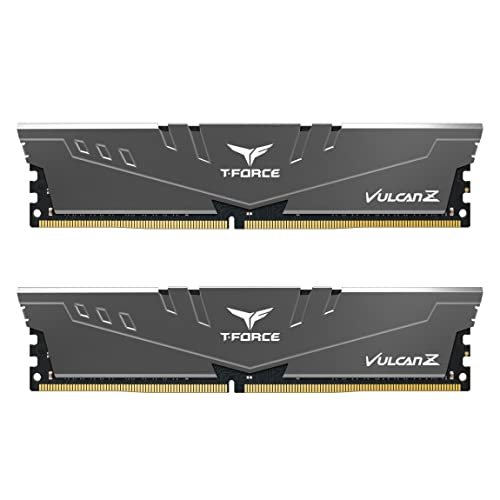 TEAMGROUP T-Force Vulcan Z DDR4 16GB Kit
- Simple design to perfectly protect the cooling module
- High thermal conductive adhesive
- Supports Intel & AMD motherboards
 【DDR4 RAM】 GIGASTONE Game PRO 32GB Kit
- [Capacity] 32GB Kit (2x16GB) UDIMM Compatible with Select…
- [Speed] PC Speed (PC4-25600), DDR4 3200MHz
- [Specification] ECC Type = Non-ECC, Form Factor =…
| Product | Key specs | |
|---|---|---|
| G.SKILL Flare X5 Series DDR5 RAM | * Requires overclocking/BIOS adjustments G.SKILL Flare X5 Series DDR5 U-DIMM Memory Kit,… Non-ECC, DDR5 U-DIMM, 288-pin, for Desktop PC &… | Check price |
| TEAMGROUP T-Force Vulcan Z DDR4 16GB Kit | Simple design to perfectly protect the cooling module High thermal conductive adhesive Supports Intel & AMD motherboards | Check price |
| 【DDR4 RAM】 GIGASTONE Game PRO 32GB Kit | [Capacity] 32GB Kit (2x16GB) UDIMM Compatible with Select… [Speed] PC Speed (PC4-25600), DDR4 3200MHz [Specification] ECC Type = Non-ECC, Form Factor =… | Check price |
 Patriot Viper Venom DDR5 RAM 32GB Patriot Viper Venom DDR5 RAM 32GB | Capacity: 32GB (2 x 16GB) 6000MHz Tested Timings: 30-40-40-76 Feature Overclock: XMP 3.0 / EXPO overclocking supported | Check price |
As an Amazon Associate we earn from qualifying purchases at no extra cost to you.
Quick picks by PC situation
| Situation | Recommended kit | Why it fits | Typical market range |
|---|---|---|---|
| New mainstream gaming PC | 32GB (2 x 16GB) DDR5-6000, CL30–36 | Strong gaming performance, sensible capacity, and good upgrade life | $80–$140 |
| High-end gaming and streaming | 64GB (2 x 32GB) DDR5-6000 to 6400, CL30–36 | Leaves room for a game, browser tabs, recording software, and mods | $160–$280 |
| Older DDR4 gaming PC | 32GB (2 x 16GB) DDR4-3200 CL16 or DDR4-3600 CL16–18 | Improves capacity without replacing the platform | $45–$90 |
| Workstation, editing, or virtual machines | 64GB or 96GB DDR5, preferably 2 modules | Capacity matters more than chasing the highest frequency | $170–$400 |
| Small-form-factor PC | Low-profile DDR5 or DDR4 kit matched to the board | Reduces interference with large CPU coolers | $80–$220 |
DDR4 versus DDR5: which upgrade makes sense?
DDR4 remains a sensible upgrade when the existing motherboard supports it and the system only needs more memory. DDR4 kits are inexpensive, widely compatible with older Intel and AMD platforms, and usually deliver enough performance for a mid-range graphics card. A 32GB DDR4-3200 CL16 kit is still a substantial improvement over 16GB for modern games and everyday multitasking.
DDR5 is the better choice for a new build. It offers higher bandwidth, greater module capacities, and a longer platform lifespan. Current mainstream DDR5 gaming kits commonly run at 6000 MT/s, compared with roughly 3200–3600 MT/s for popular DDR4 kits. The gain is not equally visible in every game: GPU-limited titles may show a small difference, while CPU-limited games, high-refresh gaming, simulation titles, and minimum frame rates can benefit more.
DDR4 and DDR5 are not interchangeable. The notch is in a different position, and a motherboard designed for one memory generation cannot accept the other. Some processor families were sold in separate DDR4 and DDR5 motherboard versions, so check the exact motherboard model rather than relying only on the CPU name.
Speed and latency: do the numbers tell the whole story?
Memory speed is normally shown in MT/s, such as DDR5-6000. CAS latency, or CL, indicates how many memory clock cycles pass before data begins returning. A useful approximate first-word latency calculation is:
Latency in nanoseconds = CL × 2,000 ÷ data rate.
- DDR4-3200 CL16: 16 × 2,000 ÷ 3,200 = 10ns
- DDR4-3600 CL18: 18 × 2,000 ÷ 3,600 = 10ns
- DDR5-6000 CL30: 30 × 2,000 ÷ 6,000 = 10ns
- DDR5-6000 CL36: 36 × 2,000 ÷ 6,000 = 12ns
This is why a DDR5-6000 CL30 kit can be a more attractive gaming choice than a higher-latency DDR5-6000 CL36 kit, even though both have the same transfer rate. The calculation is only part of total memory behavior: timings such as tRCD, tRP, and tRAS, the processor’s memory controller, and the application also matter.
For most buyers, DDR5-6000 CL30–36 is the practical performance target. Very fast kits can cost considerably more and may require manual tuning, a newer BIOS, or reduced settings to remain stable. DDR4-3600 can be worthwhile on a compatible system, but the difference from DDR4-3200 is usually too small to justify a large premium.
How much RAM do you need?
16GB
Two 8GB modules can still run a basic gaming system, but 16GB is now an entry-level capacity. Newer games, browsers, launchers, voice chat, and background utilities can consume enough memory to cause stutter or paging to storage. Choose 16GB only for a strict budget build or a computer with an easy future upgrade path.
32GB
Two 16GB modules are the best balance for most gaming PCs. They provide headroom for modern games, streaming, large mod packs, and normal productivity without the cost or potential memory-controller strain of four populated slots.
64GB
Choose 64GB when you use heavy texture mods, run a game while recording or editing, keep many browser tabs open, compile software, or use virtual machines. It is also a good value choice for a premium system intended to last several years.
96GB and 128GB
These capacities are aimed at serious creation work, local development environments, scientific workloads, and multiple virtual machines. They can also help a gaming PC with unusually heavy modding, but capacity alone will not improve frame rates if the game already fits comfortably in 32GB.
Recommended kit types and established product families
For DDR5 gaming, look at low-to-mid-height kits such as the Corsair Vengeance DDR5, G.Skill Ripjaws S5, G.Skill Trident Z5, and Kingston FURY Beast DDR5 families. The exact speed, timings, capacity, and voltage matter more than the family name. RGB versions can be useful for a particular build aesthetic, but they often have taller heat spreaders and do not inherently perform better.
For DDR4 upgrades, established options include Corsair Vengeance LPX, Kingston FURY Beast DDR4, and G.Skill Ripjaws V. Look for a matched 2 x 16GB kit at DDR4-3200 CL16 or DDR4-3600 CL16–18. Avoid paying a large premium for decorative heat spreaders on a system whose motherboard and processor cannot exploit higher settings.
Specifications vary within each product family, so confirm the label or part number. “Vengeance” or “Ripjaws” alone does not identify the memory generation, capacity, or timing profile.
Compatibility checks before buying
- Memory generation: Verify DDR4 or DDR5 in the motherboard specifications.
- Module format: Desktop DIMMs are different from laptop SO-DIMMs.
- Capacity support: Check the board’s maximum capacity and supported module densities, especially for 48GB and 64GB modules.
- Physical clearance: Tall RGB heat spreaders can collide with large air-cooler fans. Low-profile kits are safer in compact cases.
- Slot arrangement: For two modules, use the motherboard’s recommended slots, usually A2 and B2.
- Profile support: Intel systems commonly use XMP, while AMD systems commonly use EXPO. The board and firmware must support the selected profile.
- Firmware: Update the motherboard BIOS when a new kit is unstable or when using high-capacity modules.
Why two modules are usually better than four
A matched 2 x 16GB or 2 x 32GB kit is generally easier to run at its advertised speed than four separate modules. Adding another pair later may force a lower frequency or looser timings, even if the total capacity is supported. Mixing kits with the same branding is not guaranteed to work because the underlying memory chips can differ between production batches.
If you expect to need 64GB, buying 2 x 32GB initially is usually preferable to buying 2 x 16GB and adding another pair. The larger initial purchase can cost more, but it reduces troubleshooting and leaves two motherboard slots available.
Setup steps after installation
- Install the modules in the recommended paired slots while the PC is powered off.
- Enter the firmware setup and confirm that the full capacity is detected.
- Enable the advertised XMP or EXPO profile; otherwise, memory may run at a conservative default speed.
- Boot into the operating system and check the reported speed and capacity.
- Run a memory stability test for several hours, particularly after enabling an overclocking profile.
- If errors appear, update the BIOS, reseat the modules, and try a slightly lower speed before increasing voltage manually.
Memory does not normally wear out through ordinary use, but instability is often caused by a poor contact, an aggressive profile, mismatched modules, excessive heat, or an outdated BIOS. Keep dust from accumulating around the CPU cooler and memory area, and do not force a module into the wrong orientation.
Bottom line
For a new gaming build, buy a matched 32GB DDR5-6000 kit with CL30–36 unless your workload clearly requires more. Select 64GB when multitasking, modding, streaming, or creative work justifies it. For an existing DDR4 computer, a 32GB DDR4-3200 CL16 or DDR4-3600 CL16–18 kit is usually the highest-value upgrade. Compatibility, capacity, and stable operation matter more than buying the fastest label on the shelf.







Write Your Review
No reviews yet. Be the first to share your experience!