

Key takeaways
- Best all-rounder: Logitech G Pro X Superlight 2 for a safe, symmetrical shape, low weight, excellent sensor performance, and broad compatibility.
- Best for fast competitive play: Razer Viper V3 Pro for its very low weight, precise sensor, responsive wireless connection, and balanced shape.
- Best ergonomic choice: Razer DeathAdder V3 HyperSpeed for right-handed users who want a pronounced palm support and a relaxed claw or palm grip.
- Best for large hands and broad support: Zowie EC2-CW, particularly if you prefer a substantial right-handed shape and uncomplicated plug-and-play controls.
- Best for many buttons and productivity: Logitech G502 X Lightspeed, provided you accept considerably more weight in exchange for its thumb controls and adjustable button layout.
- Best budget direction: Look for a wired mouse using a modern optical sensor, weighing roughly 60–85 g, with a shape that matches your hand. Wired models often deliver the best price-to-performance ratio.
The best gaming mice for precision and comfort are usually lightweight wireless models with a reliable 2.4 GHz connection, a shape that suits your grip, and enough battery life that charging never interrupts play; the right choice depends more on fit and control than on maximum DPI.
Our top picks

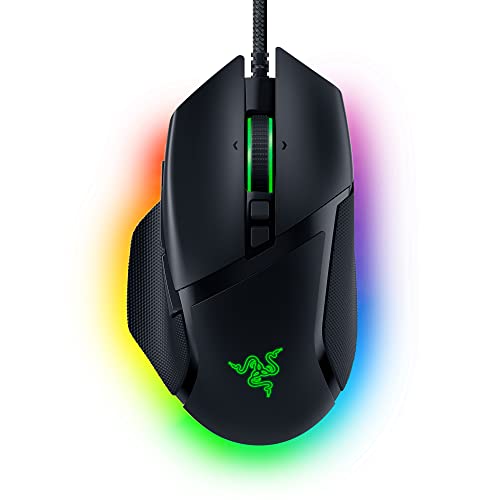


As an Amazon Associate we earn from qualifying purchases at no extra cost to you. Ratings are shown as listed on Amazon.
Quick picks by playing style
- Best all-rounder: Logitech G Pro X Superlight 2 for a safe, symmetrical shape, low weight, excellent sensor performance, and broad compatibility.
- Best for fast competitive play: Razer Viper V3 Pro for its very low weight, precise sensor, responsive wireless connection, and balanced shape.
- Best ergonomic choice: Razer DeathAdder V3 HyperSpeed for right-handed users who want a pronounced palm support and a relaxed claw or palm grip.
- Best for large hands and broad support: Zowie EC2-CW, particularly if you prefer a substantial right-handed shape and uncomplicated plug-and-play controls.
- Best for many buttons and productivity: Logitech G502 X Lightspeed, provided you accept considerably more weight in exchange for its thumb controls and adjustable button layout.
- Best budget direction: Look for a wired mouse using a modern optical sensor, weighing roughly 60–85 g, with a shape that matches your hand. Wired models often deliver the best price-to-performance ratio.
What matters most when choosing a gaming mouse
Sensor performance
Modern gaming sensors have largely exceeded what most players can usefully distinguish. A sensor rated at 26,000 or 30,000 DPI is not automatically more accurate than one rated at 20,000 DPI. Tracking consistency, low lift-off distance, stable wireless transmission, and the absence of unwanted smoothing matter more.
For most games, a practical sensitivity range is between 400 and 3,200 DPI. Competitive players often use the lower end with a large mousepad, while desktop users and players with limited space may prefer 800–1,600 DPI. Avoid choosing solely by the headline DPI number. A well-tuned sensor at a comfortable sensitivity is more valuable than an extreme specification.
Weight and control
A lighter mouse makes rapid direction changes easier and reduces the effort needed for large arm movements. It is not automatically better: some players find a heavier mouse steadier for browsing, strategy games, or high-sensitivity aiming. Weight distribution matters too. A mouse that feels front-heavy can be tiring even if its listed weight is low.
As a useful guide, mice under 60 g suit fast tracking and frequent repositioning; 60–80 g is a versatile middle ground; and models over 90 g are best chosen for their controls, shape, or deliberate feel rather than speed.
Shape and grip style
Shape has a greater effect on comfort than small differences in sensor specifications. Measure your hand from the wrist crease to the tip of the middle finger, then compare that length with the manufacturer’s dimensions where available.
- Palm grip: favors a longer, taller shell that supports the rear of the hand. Ergonomic right-handed models such as the DeathAdder or EC series are common fits.
- Claw grip: benefits from a raised rear section and defined side contours, giving the fingers leverage while keeping the palm partly lifted.
- Fingertip grip: usually works best with a compact, light mouse and unobstructed sides because the fingers do most of the steering.
- Symmetrical shape: is predictable and may suit either hand, although many symmetrical gaming mice still place side buttons only on the left.
- Ergonomic shape: gives the right hand more palm support but generally cannot be used comfortably by left-handed players.
Feature comparison: strong choices in 2026
| Model | Shape | Weight | Wireless battery rating | Main controls | Best suited to |
|---|---|---|---|---|---|
| Logitech G Pro X Superlight 2 | Symmetrical, medium-large | Approx. 60 g | Up to about 95 hours | 5 primary buttons | Claw, fingertip, and general competitive play |
| Razer Viper V3 Pro | Symmetrical, medium-large | Approx. 54 g | Up to about 95 hours | 6 programmable inputs | Fast aiming and claw or fingertip grip |
| Razer DeathAdder V3 HyperSpeed | Right-handed ergonomic | Approx. 55 g | Up to about 100 hours | 6 programmable inputs | Palm and relaxed claw grip |
| Zowie EC2-CW | Right-handed ergonomic, medium | Approx. 77 g | Up to about 70 hours | 5 primary buttons | Players who value shape and simple setup |
| Logitech G502 X Lightspeed | Right-handed ergonomic, large | Approx. 102 g | Up to about 140 hours | Many programmable controls | MMOs, productivity, and users needing thumb buttons |
Battery figures are manufacturer-style maximums and vary with polling rate, lighting, wireless mode, and firmware settings. Higher polling rates can reduce runtime, so regard them as operating choices rather than free performance.
Wireless or wired: which is the better buy?
For most players, modern 2.4 GHz wireless mice remove the old practical disadvantages of wireless gaming. They provide low-latency communication without a cable dragging across the desk, and many can be used while charging. Bluetooth is useful for laptops and office work, but 2.4 GHz is normally the preferred mode for gaming.
Choose wired if your budget is tight, you dislike charging, or your desk setup already allows the cable to move freely through a mouse bungee or low-friction cable channel. A wired mouse can be excellent, but the cable is a moving part: repeated bending near the mouse or connector is a common failure point.
Wireless ownership adds a battery that will gradually lose capacity. A mouse rated for 95 hours may last several days or weeks depending on use, but frequent high-polling operation and lighting reduce that figure. Check whether the charging cable remains usable during play and whether replacement batteries are realistically serviceable before paying extra for wireless convenience.
Decision matrix: match the mouse to your situation
| Your situation | Prioritize | Most suitable direction |
|---|---|---|
| Competitive FPS, large mousepad, frequent low-sensitivity swipes | Under 65 g, stable 2.4 GHz wireless, low-friction feet | Viper V3 Pro or G Pro X Superlight 2 |
| Long work-and-game sessions with a palm grip | Rear palm support, moderate width, textured sides | DeathAdder V3 HyperSpeed or EC2-CW |
| Small desk and limited arm movement | Compact body, moderate sensitivity, reliable sensor | Smaller wired or wireless symmetrical mouse |
| MMOs, simulations, editing, or frequent shortcuts | Side buttons, comfortable thumb rest, accessible profiles | G502 X Lightspeed or another multi-button ergonomic model |
| Occasional gaming and limited budget | Durable switches, 60–85 g body, wired simplicity | Modern wired optical-sensor mouse |
How to set up a new gaming mouse
- Start at 800 or 1,600 DPI. Change sensitivity in the game rather than constantly switching the mouse DPI button.
- Disable unnecessary acceleration. Consistent input is easier to learn, especially in competitive games.
- Set the polling rate sensibly. Use 1,000 Hz as a reliable baseline; higher rates can increase system load and battery consumption without a visible benefit on every computer.
- Position the receiver close to the mouse. A short extension cable can prevent interference from a desktop computer, monitor, or metal equipment.
- Test the shape for several sessions. A mouse can feel impressive for five minutes yet create pressure at the thumb, ring finger, or wrist after an hour.
Durability, cleaning, and ownership costs
The first parts to show wear are usually the feet, scroll wheel surface, button switches, and rubberized or textured side panels. Keep food and dust away from the wheel opening, wipe the shell with a lightly damp microfiber cloth, and avoid spraying liquid directly onto the mouse. Compressed air used too aggressively can push debris farther inside.
Mouse feet are consumables. If a set lasts two years and costs roughly $10–$20 to replace, that adds about $5–$10 per year to ownership. This is often cheaper than replacing a mouse solely because its glide has become inconsistent. Do not use household oils or abrasive cleaners on the skates or shell.
Before buying, check the warranty period, charging connector, replacement-foot availability, and whether the software is required for basic operation. A mouse with fewer features but replaceable feet and dependable firmware can provide a better long-term value than a feature-heavy model with poor support.
Final buying advice
If you are uncertain, choose the shape first, then the weight, then connectivity and battery life. The G Pro X Superlight 2 is the safest general-purpose recommendation for many right- and left-handed users who like symmetrical designs. The Viper V3 Pro is a stronger fit for players who want the lightest, fastest-feeling option. Choose the DeathAdder V3 HyperSpeed or EC2-CW when palm support matters more than ambidextrous flexibility, and choose the G502 X Lightspeed when extra controls justify its added weight. The best gaming mice are the ones you can aim with consistently and use comfortably after a full session—not simply the ones with the largest sensor number.


Write Your Review
No reviews yet. Be the first to share your experience!