

Key takeaways
- Choose the Roborock Saros 10R for the most balanced premium package, the Dreame X50 Ultra for difficult thresholds and larger homes, the Eufy Omni S1 Pro for hard-floor mopping, and the Narwal Freo Z Ultra when automated mop care is the priority. For a more…
The best robot vacuum and mop combos in 2026 are the Roborock Saros 10R for all-around automation, the Dreame X50 Ultra for homes with thresholds and mixed flooring, the Eufy Omni S1 Pro for hard-floor mopping, and the Roborock Qrevo series for better value.
The right choice depends less on the headline suction figure than on how well a robot handles your actual floors, cables, rugs, stains, pets, and maintenance tolerance. A premium model can save substantial time if its dock washes and dries mop pads, empties debris, and refills water reliably; a cheaper model may be the better buy if you only need regular vacuuming and light damp mopping.
Our top picks
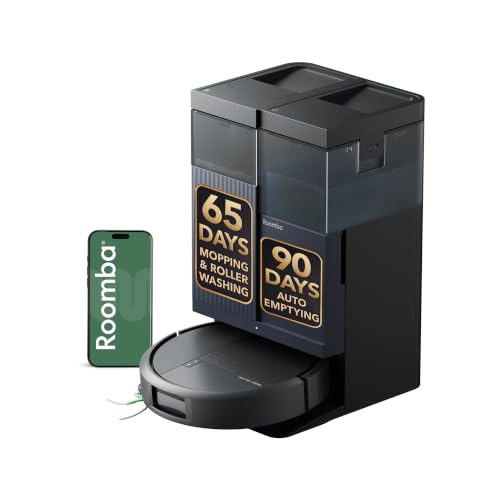


As an Amazon Associate we earn from qualifying purchases at no extra cost to you. Ratings are shown as listed on Amazon.
Quick comparison of the leading choices
| Model | Best for | Approx. robot height | Battery | Dock automation | Typical market position |
|---|---|---|---|---|---|
| Roborock Saros 10R | Low furniture and strong obstacle avoidance | About 8 cm / 3.1 in | Up to roughly 180 minutes | Auto-emptying, water refill, mop washing and drying | Premium |
| Dreame X50 Ultra | Thresholds, carpets and large homes | About 9 cm / 3.5 in; retractable navigation hardware | Up to roughly 200 minutes | Auto-emptying, water refill, hot mop washing and drying | Premium |
| Eufy Omni S1 Pro | Hard floors and visible wet messes | About 10 cm / 4 in | Up to roughly 180 minutes | Auto-emptying, clean-water refill, roller washing and drying | Premium |
| Narwal Freo Z Ultra | Low-maintenance mopping and pet homes | About 11 cm / 4.3 in | Up to roughly 180 minutes | Auto-emptying, water refill, mop washing and drying | Premium |
| Roborock Qrevo series | Value-focused vacuuming and mopping | Usually about 9.5–10 cm / 3.7–3.9 in | Often 150–180 minutes | Many versions include auto-emptying and mop washing | Mid-range to upper-mid-range |
Battery figures are manufacturer-style maximums under favorable conditions, not guaranteed cleaning time. Suction settings, carpet use, navigation, mopping, and repeated charging can reduce the area cleaned per cycle. Capacities and dock dimensions also vary by regional package and model revision, so check the exact model number before ordering.
Best overall: Roborock Saros 10R
The Saros 10R is the strongest general recommendation when the priorities are compact clearance, dependable mapping, and hands-off operation. Its low-profile design can reach beneath furniture that blocks taller robots, while its camera- and sensor-based obstacle recognition is designed to identify common household objects rather than simply collide with them.
Vacuum pickup is well suited to hard floors, dust, crumbs, and routine pet hair. Its dual-roller and edge-cleaning approach is more useful in daily life than suction numbers alone, particularly along baseboards. The rotating mop pads can lift from the floor for carpet cleaning, which reduces the chance of dragging a wet pad across a rug.
Choose it if your home has a mixture of hard floors and rugs, furniture with limited clearance, and enough daily clutter that obstacle recognition matters. It is less compelling if you want the cheapest route to occasional cleaning or if your home has deep-pile carpet throughout.
Best for thresholds and complicated floor plans: Dreame X50 Ultra
The Dreame X50 Ultra stands out for its approach to transitions between rooms. Its threshold-climbing system is intended to handle taller door tracks and floor transitions than conventional robot wheels, although the result still depends on the shape and edge of the threshold. A steep, narrow, or flexible transition can defeat any robot.
It combines strong vacuuming with spinning mop pads, carpet detection, automatic mop lifting, and a multifunction dock. The dock can empty dust, wash the pads, dry them, and manage clean and dirty water. These features make it particularly suitable for a larger home where the robot needs to work for long periods without daily intervention.
Its trade-offs are size, price, and complexity. More moving parts create more places for hair, mineral deposits, and residue to accumulate. Measure both the robot’s clearance and the dock’s installation area, including the space needed to remove water tanks and the dust bag.
Best hard-floor mop: Eufy Omni S1 Pro
The Omni S1 Pro uses a continuously cleaned roller mop rather than relying only on two small rotating pads. That design is appealing for sealed tile, vinyl, laminate approved for damp cleaning, and finished hardwood where frequent light washing is more useful than a single aggressive pass.
The roller receives fresh water while cleaning and is washed in the dock, helping it avoid spreading the same dirty pad across the entire floor. It also maintains a separate vacuum path for crumbs and dust. For dried spills, the roller format can provide more consistent contact than a thin passive cloth, but it does not eliminate the need to treat sticky or sugary residue promptly.
This is the most logical pick for homes dominated by hard flooring and frequent kitchen messes. It is not the best fit for thick carpeting, rooms with many loose objects, or owners who would rather replace inexpensive mop pads than clean a more specialized roller assembly.
Best for low-intervention mopping: Narwal Freo Z Ultra
Narwal’s Freo line emphasizes mop washing, floor recognition, and automatic adjustments. The Freo Z Ultra is a strong choice for households where mopping is the main reason to buy a robot, especially when hard floors need frequent light cleaning and pet hair is a recurring problem.
Its dock-based automation can reduce daily work: the robot returns to wash its mop pads, refill as needed, and dry the pads after cleaning. The app provides room-level schedules and cleaning preferences, while its obstacle-detection system is designed to reduce encounters with toys, cables, and pet items.
Expect to spend more time on dock hygiene than the marketing phrase “self-cleaning” suggests. Dirty-water tanks, filters, tray channels, and sensors still need periodic attention. The robot also benefits from a clear route around the dock and from keeping small objects off the floor.
Best value: a Roborock Qrevo model
A Qrevo model is usually the sensible middle ground when you want rotating mop pads and dock automation without paying premium flagship prices. Depending on the exact version, the dock may empty the dustbin, wash and dry the mop pads, and refill the robot’s water tank.
Vacuum performance is adequate for routine crumbs, dust, and moderate pet hair, while the mapping and app controls are generally more useful than those on entry-level random-navigation robots. The compromises are typically less advanced obstacle recognition, less capable edge cleaning, fewer specialized carpet behaviors, and a taller chassis than the newest low-profile flagships.
For many homes, those compromises are acceptable. If you can do a quick floor pickup before cleaning and do not have unusually high thresholds, a mid-range Qrevo can deliver most of the practical convenience at a lower market price, commonly in the mid-range rather than flagship price bracket.
Match the robot to your situation
| Your situation | Best direction | Why |
|---|---|---|
| Small budget and weekly cleaning | Basic robot vacuum with a separate mop pad, or an entry Qrevo | Dock automation may not repay its added cost at low usage |
| Pets, daily debris and many rugs | Saros 10R or Dreame X50 Ultra | Better object handling, carpet behavior and automated pad management |
| Mostly sealed hard floors | Eufy Omni S1 Pro or Narwal Freo Z Ultra | More emphasis on repeated wet cleaning |
| Older home with tall door thresholds | Dreame X50 Ultra, after measuring each transition | Designed to handle more challenging floor changes |
| Low furniture and tight clearance | Roborock Saros 10R | Low-profile construction improves access |
| First robot and limited setup patience | Mid-range Qrevo model | Useful automation without the most elaborate feature set |
What to evaluate before buying
Vacuum pickup and floor compatibility
Look for a brush design that resists hair wrapping, adjustable suction, and reliable carpet detection. Robot mops are generally strongest on hard, sealed surfaces. Do not use automated wet mopping on unsealed wood, damaged laminate, porous stone, or any floor whose manufacturer prohibits moisture. A robot can also struggle with black rugs, reflective floors, very dark transitions, and thick shag carpet because sensors may interpret them as drops or obstacles.
Obstacle avoidance and app controls
Advanced cameras and structured-light sensors can recognize more objects, but no system is perfect. Cables, socks, transparent bowls, and small pet toys remain common failure points. The app should let you set no-go zones, room sequences, carpet preferences, cleaning intensity, and schedules. Multi-floor mapping is valuable in a house with stairs, but the robot still needs to be carried between levels unless you buy a separate dock.
Dock placement and ownership cost
Allow open space in front of the dock and enough side clearance for navigation. A plumbed-in water connection can reduce refilling, but it adds installation complexity and leak risk. Consumables commonly include dust bags, filters, brushes, mop pads, and cleaning solution. Premium robots often cost roughly $700–$1,800 depending on promotions and configuration; mid-range models are commonly around $400–$900, while basic units can cost less but usually require more manual work.
Maintenance that prevents most problems
- After each week of frequent use: inspect the main brush, side brush, wheels, and mop pads. Remove hair before it reaches the bearings.
- Every one to four weeks: empty and rinse the dirty-water tank, clean the dock tray, wipe sensors, and check the filter. Homes with pets may need the shorter interval.
- When performance drops: check for a blocked air path, saturated filter, tangled roller, full dust bag, or clogged water outlet before assuming the battery has failed.
- Replace wear parts on condition: a brush with bent bristles, a mop pad that stays smelly after washing, or a filter that remains clogged should not be kept in service indefinitely.
A useful ownership calculation is cleaning frequency. If a dock-equipped robot saves 15 minutes of manual work on each of five runs per week, it saves about 65 hours per year: 15 minutes × 5 × 52 ÷ 60. If it costs $600 more than a manually emptied model, that premium works out to about $9.25 per saved hour before consumables. That can be worthwhile for frequent cleaners, but not necessarily for a small apartment cleaned once a week.
Bottom line
Choose the Roborock Saros 10R for the most balanced premium package, the Dreame X50 Ultra for difficult thresholds and larger homes, the Eufy Omni S1 Pro for hard-floor mopping, and the Narwal Freo Z Ultra when automated mop care is the priority. For a more controlled budget, a Roborock Qrevo model is the practical starting point. Before buying, measure furniture clearance, thresholds, rugs, and dock space; those physical details usually matter more than a single suction number.




Write Your Review
No reviews yet. Be the first to share your experience!