

Key takeaways
- Track length: Look for roughly 48–55 inches for coverage from the neck area to the glutes. Shorter tracks can still be comfortable but generally concentrate on the back.
- Body scan: A scan should estimate shoulder width, spine position, and sometimes leg length before the program begins. It should also allow manual adjustment when the scan places the rollers too high or low.
- Shoulder fit: Fixed shoulder airbags can feel restrictive on broad users. Adjustable shoulder width or open shoulder areas are more flexible for a shared household chair.
- Calf and foot fit: Measure your foot length and calf circumference against the manufacturer’s limits. Foot wells that are too short can leave the toes pressed against the end of the compartment.
- Airbag coverage: More airbags are not automatically better. Important locations are shoulders, arms, hips, calves, and feet, with independent intensity controls.
The best massage chairs for home relaxation are full-body 3D or 4D models with a long SL-track, a genuine zero-gravity position, adjustable body scanning, targeted heat, and enough clearance to recline safely in your room.
For most buyers, a midrange 3D chair is the sensible choice: it usually provides a 48–52-inch massage track, foot and calf massage, lumbar heat, and quieter operation without the size and cost of a flagship 4D chair. Choose a compact S-track model only when room clearance is the limiting factor.
Our top picks

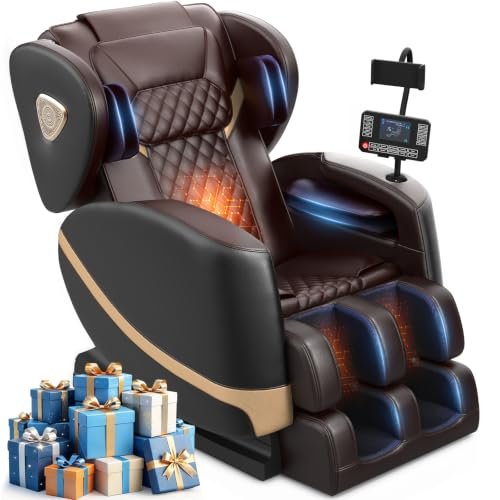


As an Amazon Associate we earn from qualifying purchases at no extra cost to you. Ratings are shown as listed on Amazon.
Best massage chairs by situation
| Situation | Best fit | Specifications to prioritize | Typical market range |
|---|---|---|---|
| Small room or apartment | Compact S-track or space-saving 2D chair | 29–31-inch width, 2–6 inches from the wall, under 250 pounds | $1,000–$2,000 |
| Regular relaxation several times weekly | Midrange 3D SL-track chair | 48–52-inch track, adjustable roller depth, lumbar and foot heat | $2,000–$4,500 |
| Tall users or multiple household users | Large 3D or 4D chair with expanded scan range | Up to approximately 6 feet 2 inches, 250–300-pound capacity, calf-length adjustment | $3,500–$7,000 |
| Most immersive massage | Flagship 4D SL-track chair | Speed and depth adjustment, 50–55-inch track, full-body scan, multiple heat zones | $5,000–$10,000+ |
| First massage chair | Simple 2D or entry-level 3D model | Clear controls, preset programs, removable headrest cover, easy return or service policy | $800–$2,500 |
Head-to-head: the features that matter most
3D versus 4D rollers
Two-dimensional rollers travel along the track and press against the body with a fixed intensity. Three-dimensional rollers add outward and inward movement, allowing you to reduce pressure for a gentler session or increase it for a deeper-feeling massage. Four-dimensional systems add more variation in roller speed and rhythm; the benefit is a less mechanical sensation rather than a larger massage area.
A 4D label does not automatically mean better coverage. A well-calibrated 3D chair with a long track can reach more of the back than a poorly sized 4D model. If you are comparing chairs from established brands such as Human Touch, Osaki, Infinity, or Panasonic, compare the actual track length, roller adjustment, and user-height range rather than the generation number alone.
S-track versus SL-track
An S-track follows the natural curves of the spine and usually ends around the lower back. An SL-track continues beneath the glutes and upper thighs. For general relaxation, an SL-track offers broader coverage, but it also needs more upholstery, a longer frame, and additional floor space.
Do not assume that an SL-track massages the entire leg. The track may reach the upper hamstrings while separate air cushions and mechanical foot rollers handle the calves and feet. Check whether calf kneading, foot rolling, and ankle airbags are included rather than relying on the phrase “full body.”
Zero-gravity recline and room clearance
Zero gravity raises the knees slightly above the heart and distributes body weight across the backrest and seat. In practice, its value is comfort and pressure distribution, not a therapeutic guarantee. Some chairs have one preset position; better models offer two or three recline angles.
Measure the chair in its fully reclined position, not only its upright dimensions. A space-saving design may move forward as it reclines and require only 2–6 inches behind the chair. A conventional recliner can require 12–24 inches of rear clearance. Leave at least 24 inches in front of the footrest for walking space, and keep the power cord away from the moving frame.
A useful fit calculation is simple: add the chair’s maximum reclined length to the clearance stated by the manufacturer, then add 24 inches of walking space. For example, a 78-inch reclined chair needing 4 inches from the wall requires about 106 inches of practical floor depth: 78 + 4 + 24. If your room is shorter, choose a forward-sliding model or a smaller chair.
How to compare massage coverage
- Track length: Look for roughly 48–55 inches for coverage from the neck area to the glutes. Shorter tracks can still be comfortable but generally concentrate on the back.
- Body scan: A scan should estimate shoulder width, spine position, and sometimes leg length before the program begins. It should also allow manual adjustment when the scan places the rollers too high or low.
- Shoulder fit: Fixed shoulder airbags can feel restrictive on broad users. Adjustable shoulder width or open shoulder areas are more flexible for a shared household chair.
- Calf and foot fit: Measure your foot length and calf circumference against the manufacturer’s limits. Foot wells that are too short can leave the toes pressed against the end of the compartment.
- Airbag coverage: More airbags are not automatically better. Important locations are shoulders, arms, hips, calves, and feet, with independent intensity controls.
Heat, noise, and everyday usability
Most chairs place heat in the lumbar area. Higher-priced models may add warmth beneath the seat, in the calves, or across the feet. Separate zones are useful because many people want lumbar heat without warming the legs. Treat heat as a comfort feature; people with reduced heat sensation or circulation concerns should ask a healthcare professional before using it.
Noise is usually produced by the motor, air pump, fan, and roller mechanism. A typical chair may measure approximately 45–60 decibels during a quiet rolling program and become louder during aggressive air compression or foot massage. If you intend to use the chair near a sleeping area or while watching television, prioritize independent noise specifications, a quiet mode, and a return policy. A showroom demonstration can be useful, but remember that a hard floor may amplify vibration.
Controls also affect whether the chair gets used. A remote with clearly labeled intensity, speed, heat, and zone controls is preferable to a complicated touchscreen alone. Bluetooth speakers and automatic programs are secondary; they should not compensate for poor fit or weak warranty support.
Ownership realities: what wears first
The upholstery is usually the first visible wear point, particularly on the seat edge, arm openings, and foot wells. Synthetic leather is easy to wipe but can crack when exposed to direct sunlight, heat vents, body oils, or harsh cleaners. Wipe surfaces with a slightly damp microfiber cloth and a manufacturer-approved cleaner; avoid soaking seams and do not use alcohol, bleach, or abrasive wipes unless the manual specifically permits them.
Airbags, foot rollers, power recline actuators, and control cables are common service points. A massage chair weighing 200–350 pounds is difficult to return, so confirm delivery method, doorway dimensions, in-home assembly, warranty length, and whether labor or replacement parts are covered. A longer warranty is useful only if service is available in your area.
Keep a few inches around ventilation openings, do not sit on the armrests, and never allow children to operate the recline mechanism unsupervised. Run programs within the recommended session length, usually 15–30 minutes, rather than repeating intense sessions continuously. Stop if you experience pain, numbness, dizziness, or unusual swelling, and seek professional advice when appropriate.
Which chair should you choose?
Choose a compact chair if your room is the main constraint, but accept that the track and foot compartments may be smaller. Choose a midrange 3D SL-track model if two or more people will use it several times a week; adjustable depth, body scanning, and a broad height range are more valuable than decorative features. Choose a flagship 4D chair only if you specifically want fine control over speed and pressure and have verified its dimensions, service network, and user-fit limits.
Before buying, write down five measurements: your available width, maximum depth, rear clearance, doorway width, and the tallest and shortest likely user. Then compare those numbers with the chair’s fully reclined dimensions and scan range. The best massage chairs are not necessarily the most expensive; they are the ones that fit the room, fit the users, and provide controls you will actually use.


Write Your Review
No reviews yet. Be the first to share your experience!