

Key takeaways
- Steel: Usually the strongest value, with good rigidity and a lower price. It is heavier and can rust if the coating is chipped or the chair is stored damp.
- Aluminum: Light and naturally corrosion-resistant, making it useful for transport and outdoor use. It may flex more than steel and often costs more.
- Resin or molded plastic: Easy to wipe clean and suitable for occasional outdoor use. Quality varies; ultraviolet exposure and cold temperatures can make some plastics brittle over time.
- Wood: Attractive for dining rooms and ceremonies, with a more furniture-like appearance. It needs more care around moisture and may be less tolerant of rough transport.
Best Folding Chairs for Home, Events, and Outdoors
The best folding chairs depend on where they will live and how often they will be carried: choose a padded steel chair for long indoor seating, a lightweight resin chair for events and occasional outdoor use, and a compact wood or metal chair when storage space matters most.
Quick picks by situation
| Situation | Best chair type | Useful target specifications | Why it fits |
|---|---|---|---|
| Small apartment or home office | Compact wood or slim steel folding chair | Folded depth under 9 in; under 10 lb | Slides into a closet or behind a door without becoming a storage project |
| Dining guests and family gatherings | Padded steel folding chair | 16–18 in seat width; 250–500 lb capacity | More comfortable for meals and conversations lasting several hours |
| Large events | Commercial resin or plastic folding chair | 11–15 lb; 300–1,000 lb rated capacity | Stacks efficiently, tolerates frequent setup, and wipes clean quickly |
| Camping, tailgating, and outdoor parties | Powder-coated steel or aluminum folding chair | Under 12 lb; rust-resistant frame; 250 lb or greater capacity | Portable enough to carry while offering better support than a fabric-only seat |
| Frequent transport | Aluminum-frame folding chair | Under 8 lb; carry handle or strap; folded length under 36 in | Reduces the effort of repeated loading and unloading |
What separates the best folding chairs
Seat comfort
Comfort comes from more than padding. Check the seat width, front-to-back depth, backrest height, and the angle between the back and seat. A useful general target is a seat at least 16 inches wide and 15 inches deep. Adults who will sit for a meal or meeting usually benefit from a 17- to 18-inch-wide seat and a backrest that reaches the shoulder blades.
Our top picks


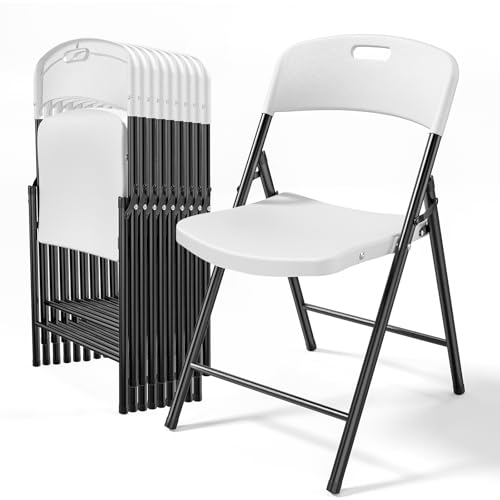
As an Amazon Associate we earn from qualifying purchases at no extra cost to you. Ratings are shown as listed on Amazon.
Thin foam over a hard seat can feel comfortable for the first few minutes but compress quickly. Look for high-density foam, a molded contour, or a flexible resin seat. A waterfall-style front edge, where the seat slopes gently downward, can feel less restrictive behind the knees than a sharply squared edge.
For occasional guests, a padded seat is usually worth the small increase in folded thickness. For outdoor use, however, absorbent foam and fabric create drying and mildew concerns. A molded plastic or ventilated resin seat is easier to maintain.
Folded dimensions and storage
Measure the storage location before buying. A chair advertised as “compact” may still be 36 to 42 inches long when folded. Also account for the space needed to remove it from a closet: a tight stack that fits on paper may be difficult to pull out safely.
Typical folded profiles range from about 2 to 5 inches thick per chair. Slim wood or steel chairs may fold nearly flat, while padded and molded-resin models often require more depth. If you need six chairs, multiply the folded thickness by six, then add at least 2 inches for imperfect alignment and easy handling.
For example, six chairs that occupy 3.5 inches each need about 21 inches of stack width. A 24-inch-wide storage shelf would accommodate them, but a 20-inch shelf would not, even if the chairs’ individual measurements appear suitable.
Weight capacity and stability
Weight capacity is a structural rating, not a promise that every chair will feel equally stable. Compare the rating with the total load: the seated person, clothing, and any movement such as leaning back or shifting sideways. A 250-pound-rated chair may be adequate for a light-use dining room, while a 300- to 500-pound-rated commercial chair provides a wider safety margin for mixed guests.
Look for four legs that remain planted when the occupant shifts weight, a positive locking mechanism, and non-slip feet. A chair can have a high published capacity yet feel insecure if its legs are narrow, its seat is unusually high, or the floor is uneven. Never use a folding chair with a partially opened frame.
Frame materials
- Steel: Usually the strongest value, with good rigidity and a lower price. It is heavier and can rust if the coating is chipped or the chair is stored damp.
- Aluminum: Light and naturally corrosion-resistant, making it useful for transport and outdoor use. It may flex more than steel and often costs more.
- Resin or molded plastic: Easy to wipe clean and suitable for occasional outdoor use. Quality varies; ultraviolet exposure and cold temperatures can make some plastics brittle over time.
- Wood: Attractive for dining rooms and ceremonies, with a more furniture-like appearance. It needs more care around moisture and may be less tolerant of rough transport.
Powder coating protects steel better than bare paint, but it is not waterproof armor. Store steel chairs dry, and touch up deep chips before moisture reaches the metal.
Head-to-head: padded steel versus resin folding chairs
| Characteristic | Padded steel chair | Molded resin chair |
|---|---|---|
| Typical weight | 8–14 lb | 10–16 lb |
| Typical seat width | 16–18 in | 16–19 in |
| Typical folded thickness | 3–5 in | 2.5–4.5 in |
| Comfort for long meals | Usually better | Acceptable; add a removable cushion if needed |
| Rain and spill resistance | Varies; upholstery may absorb water | Usually better |
| Cleaning | Frame wipes easily; fabric needs spot cleaning | Soap, water, and a soft brush |
| Best use | Indoor gatherings and repeated seating | Events, kitchens, patios, and mixed indoor-outdoor use |
When named products make sense
For a home that needs an attractive occasional seat, the IKEA TERJE folding chair is a compact wood option with a furniture-oriented appearance. It is better suited to indoor use and light, careful storage than to being left outdoors.
For heavier event use, Lifetime’s commercial folding chairs are an example of the molded-plastic-and-steel category. Their appeal is wipe-clean seating and a sturdier event-chair design rather than minimum weight. Confirm the exact model’s capacity and folded measurements, since Lifetime sells multiple chair configurations.
These examples illustrate two different priorities: compact household storage versus repetitive event service. The right choice is not automatically the chair with the highest capacity or the lowest price.
Ownership costs and maintenance
Price ranges are typically about $15–$35 for basic household chairs, $30–$80 for better padded or molded chairs, and $70–$150 or more for commercial-grade seating. A simple cost-per-use calculation helps when the chairs will be used frequently. Six $45 chairs cost $270. Used 30 times per year for five years, each chair receives 150 uses, or about $1.80 per chair-use before storage and maintenance.
The parts most likely to wear first are hinge rivets, locking brackets, rubber feet, upholstery seams, and the foam beneath a frequently used seat. Inspect these areas twice a year. Tighten only hardware designed to be tightened; drilling or modifying a hinge can weaken the frame and remove the manufacturer’s safety margin.
- Wipe plastic and resin with mild soap and water; avoid abrasive cleaners that dull the surface.
- Dry outdoor chairs completely before stacking them.
- Vacuum or spot-clean padded seats instead of saturating the foam.
- Store chairs vertically or in a stable stack, with heavier chairs at the bottom.
- Do not hang bags from the backrest or stand on the seat.
- Remove any chair with a bent leg, cracked seat, loose rivet, or lock that does not engage fully.
How to choose in five steps
- Measure storage first: Record maximum folded height, width, and depth, including the path through doors and around shelves.
- Set a realistic comfort requirement: Select molded or padded seating for meals and meetings; choose a simpler seat for short waiting periods.
- Choose the environment: For regular outdoor exposure, favor aluminum or coated steel with washable resin. Bring padded and wood chairs indoors after use.
- Add a capacity margin: Select a rating comfortably above the heaviest expected user rather than matching the rating exactly.
- Check the folding mechanism: Open and close the chair only as directed, and confirm that every lock or brace is fully engaged before sitting.
Bottom line
The best folding chairs balance comfort, folded size, capacity, and maintenance rather than maximizing one specification. Choose compact wood or slim steel for limited home storage, padded steel for comfortable indoor gatherings, commercial resin for repeated event use, and lightweight aluminum or washable resin for outdoor transport. The ideal chair is the one that fits your storage space, remains stable under real use, and is easy enough to maintain that it will still be useful years from now.


Write Your Review
No reviews yet. Be the first to share your experience!