
Our Short List of 3
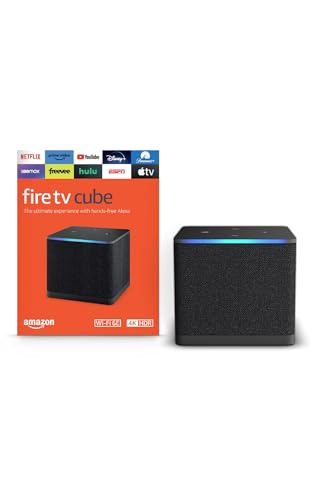
- Best for: Buyers who want hands-free far-field Alexa voice control plus an HDMI input for a cable box or console in one streaming box.
- Processor: octa-core (4x 2.2GHz + 4x 2.0GHz) with 800MHz GPU
- Storage and memory: 16 GB storage, 2 GB memory
- Wireless: Wi-Fi 6E tri-band; Bluetooth 5.0 + LE
- Picture: Dolby Vision, HDR 10, HDR10+, HLG; output up to 2160p at 60 fps

- Best for: Buyers who want Roku’s platform with a rechargeable, backlit voice remote and the fastest player Roku lists.
- Picture: 4K with HDR10+ and Dolby Vision
- Audio: Dolby Atmos
- Connectivity: Bluetooth and Wi-Fi 6
- Remote: rechargeable Roku Voice Remote Pro (2nd edition) with backlit buttons, USB-C charging

- Best for: Buyers in the Google TV ecosystem who want 32 GB of storage and a wired Ethernet option in a compact box.
- Picture: up to 4K HDR with Dolby Vision
- Audio: Dolby Atmos
- Storage and memory: 32 GB storage, 4 GB RAM
- Connectivity: Ethernet and Wi-Fi
All 4 Picks at a Glance
| Product | Specs | Action |
|---|---|---|
| Amazon Fire TV Cube (3rd Gen) |
| Check price on Amazon |
| Roku Ultra (2024) |
| Check price on Amazon |
| Google TV Streamer (4K) |
| Check price on Amazon |
 NVIDIA SHIELD TV Pro |
| Check price on Amazon |
Key takeaways
- The Fire TV Cube leads five dual-verified streaming media players compared on listed picture formats, voice control, storage and ports for any TV setup.
This article reviews the Amazon Fire TV Cube against four same-class streaming media player alternatives, because the real decision is rarely whether to add a streamer but which box deserves the HDMI port. Built-in TV apps age quickly, remotes differ sharply in daily use, and the five players here split on the features that matter most: hands-free voice control, Dolby Vision and Atmos support, storage for apps, and wired networking. Each pick below is a current Amazon US listing, so the comparison reflects what a buyer can actually order today.
The guide serves voice-first households that want to control a TV from across the room, platform loyalists settled on Roku, Google TV or Apple, home-theater owners chasing the best picture formats their sets support, and media collectors who need storage or a built-in server. Every pick was chosen from the product name and specifications published on its Amazon page.
Quick Picks
As an Amazon Associate we earn from qualifying purchases
| Product | Best for | Key spec from title |
|---|---|---|
| Amazon Fire TV Cube (3rd Gen) | Hands-free voice control plus an HDMI input | Wi-Fi 6E with 4K Ultra HD streaming |
| Roku Ultra (2024) | Roku fans who want a rechargeable backlit remote | HDR10+, Dolby Vision and Wi-Fi 6 |
| Google TV Streamer (4K) | Google TV users who want storage and Ethernet | 32 GB storage with Dolby Vision |
| Apple TV 4K (128GB) | Apple households wanting the newest model | 128 GB storage with Dolby Vision and HDR10+ |
| NVIDIA SHIELD TV Pro | Media-server and game-streaming setups | Tegra X1+ processor with two USB 3.0 ports |
How to Choose
Voice control and the remote
Decide how the TV gets controlled day to day. The Fire TV Cube offers far-field voice control from across the room, while the other players rely on a voice remote that must be in hand. Remote details matter more than they first appear: Roku’s Voice Remote Pro is rechargeable and backlit, the Siri Remote and Google voice remote cover search and playback, and the SHIELD follows its own remote design. Households that misplace remotes or watch in the dark should weigh backlighting and rechargeable batteries heavily, because the remote is the part of the system touched every single day.
Picture and audio formats
Match the player to the TV it feeds. All five players handle 4K, but the high-dynamic-range formats differ: the Fire TV Cube covers Dolby Vision, HDR 10, HDR10+ and HLG, the Roku Ultra lists HDR10+ and Dolby Vision, and the Google streamer, Apple TV 4K and SHIELD TV Pro each list Dolby Vision as well. Dolby Atmos appears across the group for soundbar and receiver owners. A player cannot add a format the television lacks, so check the TV’s own format list first, then choose the streamer that covers it instead of paying for badges the screen can never display.
Storage, memory and ports
Storage decides how many apps and games fit before something must be deleted: the Google TV Streamer lists 32 GB, the Apple TV 4K lists 128 GB, and the Fire TV Cube and SHIELD TV Pro list 16 GB each. Ports separate the group further. The Cube adds an HDMI input and a USB-A port, the SHIELD offers two USB 3.0 ports for external drives, and Ethernet on the Cube, Google streamer and SHIELD gives a wired alternative when Wi-Fi is crowded or the router sits far from the television in another room.
Platform and ecosystem fit
Each player ties the household to a platform: Fire TV, Roku, Google TV, tvOS or Android TV. The right choice usually follows the services and devices already at home. Apple households get the most from the Apple TV 4K, Google accounts sit naturally on the Google TV Streamer, and Roku suits buyers who want a neutral, app-first menu. Voice assistants follow the same split, between Alexa, Google Assistant and Siri. Switching platforms means relearning menus and reinstalling every app, so treat the ecosystem decision as the long-term one and the hardware differences as secondary.
The 5 Best Options
Amazon Fire TV Cube (3rd Gen)
- Best for: Buyers who want hands-free far-field Alexa voice control plus an HDMI input for a cable box or console in one streaming box.
- Processor: octa-core (4x 2.2GHz + 4x 2.0GHz) with 800MHz GPU
- Storage and memory: 16 GB storage, 2 GB memory
- Wireless: Wi-Fi 6E tri-band; Bluetooth 5.0 + LE
- Picture: Dolby Vision, HDR 10, HDR10+, HLG; output up to 2160p at 60 fps
Buyers who want hands-free far-field Alexa voice control plus an HDMI input for a cable box or console in one streaming box.
The HDMI, IR extender and Ethernet cables are sold separately, and the Ethernet port is 10/100 Mbps rather than gigabit.
The Fire TV Cube is the anchor of this comparison and the only pick built around far-field voice control: its microphones hear requests from across the room, so playback, volume and input switching can run through Alexa without reaching for the remote. The octa-core processor, Wi-Fi 6E and 16 GB of storage keep the interface responsive, while Dolby Vision, HDR10+ and Dolby Atmos cover current picture and sound formats. Its HDMI input is the differentiator, letting a cable box or game console pass through the Cube so one voice command changes both the source and the channel.
Roku Ultra (2024)
- Best for: Buyers who want Roku’s platform with a rechargeable, backlit voice remote and the fastest player Roku lists.
- Picture: 4K with HDR10+ and Dolby Vision
- Audio: Dolby Atmos
- Connectivity: Bluetooth and Wi-Fi 6
- Remote: rechargeable Roku Voice Remote Pro (2nd edition) with backlit buttons, USB-C charging
Buyers who want Roku’s platform with a rechargeable, backlit voice remote and the fastest player Roku lists.
The captured listing text states no Ethernet or storage figures, so buyers who need wired networking or a stated app-storage size should confirm those details on the product page before ordering.
Roku’s flagship player pairs the company’s simple, app-forward platform with its best remote: the Voice Remote Pro is rechargeable over USB-C, has backlit buttons for dark rooms and responds to voice commands for launching apps or finding the remote. The 2024 Ultra lists 4K playback with HDR10+ and Dolby Vision, Dolby Atmos audio, and both Bluetooth and Wi-Fi 6 connectivity, which makes it the natural upgrade for households that already know Roku’s menus. An HDMI cable is included in the box, so setup needs nothing extra beyond a free HDMI port and a wall outlet.
Google TV Streamer (4K)
- Best for: Buyers in the Google TV ecosystem who want 32 GB of storage and a wired Ethernet option in a compact box.
- Picture: up to 4K HDR with Dolby Vision
- Audio: Dolby Atmos
- Storage and memory: 32 GB storage, 4 GB RAM
- Connectivity: Ethernet and Wi-Fi
Buyers in the Google TV ecosystem who want 32 GB of storage and a wired Ethernet option in a compact box.
The HDMI 2.1 cable needed to connect it is sold separately, and the Amazon listing text does not state a Wi-Fi generation.
Google’s streamer is a compact box built for Google TV households, and it leads this group on memory: 32 GB of storage and 4 GB of RAM leave more room for apps and caches than the 16 GB players here. It supports up to 4K HDR with Dolby Vision and Dolby Atmos, and it is one of the few streaming boxes that still offers an Ethernet port alongside Wi-Fi for a wired connection. The voice remote covers search and control, and the flat, low-profile design sits neatly in front of a TV or inside a cabinet.
Apple TV 4K (128GB)
The newest Apple TV 4K is the pick for households already invested in Apple services and devices, pairing 128 GB of storage with 4K playback in Dolby Vision and HDR10+ and Dolby Atmos audio. The included Siri Remote handles voice search and control, and the generous storage suits buyers who download large games and apps rather than only streaming. Because this generation launched in mid-November 2026, listings are young and stock has been uneven, so it rewards buyers who check the product page carefully and order when a live offer is showing.
Specs
- Storage: 128 GB
- Picture: 4K with Dolby Vision and HDR10+
- Audio: Dolby Atmos
- Remote: Siri Remote included
Best for: Apple households that want the newest Apple TV 4K with 128GB of storage for apps and downloads.
Watch out for: This generation launched in November 2026 and stock has been uneven, so confirm a live offer on the listing before ordering.
ASIN: B0HMX69N2K
NVIDIA SHIELD TV Pro
- Best for: Buyers who want USB ports, a built-in Plex Media Server and game-streaming features alongside TV streaming.
- Processor: NVIDIA Tegra X1+; 3 GB RAM; 16 GB storage
- Picture and audio: Dolby Vision and Dolby Atmos; AI-enhanced upscaling to 4K
- Ports: 2x USB 3.0
- Features: Plex Media Server built in, GeForce NOW, Chromecast 4K built in
Buyers who want USB ports, a built-in Plex Media Server and game-streaming features alongside TV streaming.
The design dates to 2019, so weigh its age and older hardware against the newer rivals before ordering.
The SHIELD TV Pro is the enthusiast outlier: beyond Android TV streaming with Dolby Vision and Dolby Atmos, it runs a built-in Plex Media Server, carries two USB 3.0 ports for external drives, and adds GeForce NOW game streaming and Chromecast 4K built in. Its Tegra X1+ processor also drives AI-enhanced upscaling to 4K for lower-resolution content. Google Assistant is built in and it works with Alexa, and connectivity covers Ethernet, Wi-Fi and Bluetooth 5.0. Buyers who stream from a local library get hardware here that the other four players simply do not offer.
Which One Fits Your Situation
You want to run the TV by voice alone
If reaching for a remote is the friction you want gone, the Fire TV Cube is the only pick here with far-field microphones built into the box itself. It hears requests from across the room, handles playback and volume through Alexa, and its HDMI input lets the same voice routine switch sources. The other four players need their voice remote in hand before they listen to anything.
Your home already runs on one ecosystem
Households settled into Apple services will feel most at home on the Apple TV 4K, while Google accounts and Google TV menus point to the Google TV Streamer. Roku remains the neutral ground for mixed households that just want every major app in one simple menu, and Fire TV suits homes already using Alexa routines and Amazon services daily.
Your Wi-Fi struggles near the TV
A wired connection removes buffering guesswork, and three of these players offer one: the Google TV Streamer and the SHIELD TV Pro list Ethernet ports, and the Fire TV Cube includes a 10/100 Mbps Ethernet port as well. The Roku Ultra listing captured here states no Ethernet figure. If the router sits in another room, budget for a cable run or a powerline adapter alongside the player.
You stream from your own media library
Collectors with drives full of movies and shows should look at the SHIELD TV Pro first. Its built-in Plex Media Server and two USB 3.0 ports let it serve a local library to the whole house while still handling the usual streaming apps, a combination none of the other four players here attempts. The 16 GB of internal storage matters less once external drives carry the collection.
Common Mistakes
- Buying a player for a picture format the television itself does not support, since no streamer can add Dolby Vision or HDR10+ to a screen that lacks it.
- Assuming every cable is in the box: the Fire TV Cube sells its HDMI, IR extender and Ethernet cables separately, and the Google TV Streamer needs an HDMI 2.1 cable bought apart.
- Ignoring storage size when the household installs games and dozens of apps, which fills a 16 GB player faster than expected.
- Ordering an older generation that shares a similar name, instead of checking the exact model on the listing first.
- Putting off the wired-network question until buffering starts, when a player with an Ethernet port would have settled it at setup.
Frequently Asked Questions
Does the Fire TV Cube replace a cable box?
No. The Cube’s HDMI input passes a cable box or game console through the player, so Alexa can switch to that source and control it, but the cable box itself is still required for cable channels. Think of the Cube as the control layer and streamer in one box, sitting between the existing equipment and the television.
Which of these players can connect by Ethernet?
Three of the five list a wired port: the Fire TV Cube includes Ethernet at 10/100 Mbps, and the Google TV Streamer and NVIDIA SHIELD TV Pro both list Ethernet alongside Wi-Fi. The Roku Ultra listing text captured for this guide states no Ethernet figure, so wired buyers should confirm that detail on its product page.
How much storage does a streaming player need?
Casual streaming needs little, because apps are small and video itself is not stored. The 16 GB players here suit app-only households, while the Google TV Streamer’s 32 GB and the Apple TV 4K’s 128 GB fit buyers who download games and many apps. Anyone serving local files should look at the SHIELD TV Pro’s USB ports instead.
Will these players work with an older television?
Yes, as long as the TV has an HDMI input. A 4K player connected to a 1080p set simply outputs at the lower resolution the screen accepts; the Fire TV Cube, for example, lists output at 2160p, 1080p and 720p up to 60 fps. The picture formats the player can show still depend on what the television itself supports.
More from Amazon
Programs that pair well with the guide above. Offers and eligibility are set by Amazon and may change.
Free shipping on eligible items, Prime Video and more. Eligible new members can start with a free trial.
Start a Prime free trialAudiobooks and podcasts to listen to on the go. Eligible new members can start with a free trial.
Try Audible freeAd-free music streaming. Eligible new subscribers can start with a free trial.
Try Music Unlimited freeA free business account with business pricing and bulk-buying tools for work, shop or home office.
Create a business accountAs an Amazon Associate we earn from qualifying purchases.
Write Your Review
No reviews yet. Be the first to share your experience!