

The best wallpaper steamers for most DIY rooms are a 1,500-watt model with a tank of at least 1 gallon, an 8- to 12-foot hose, a large scraper plate, and automatic shutoff; choose a compact 1,300-watt unit for one small room and a larger Wagner Power Steamer 725 for repeated or whole-floor removal.
Our top picks
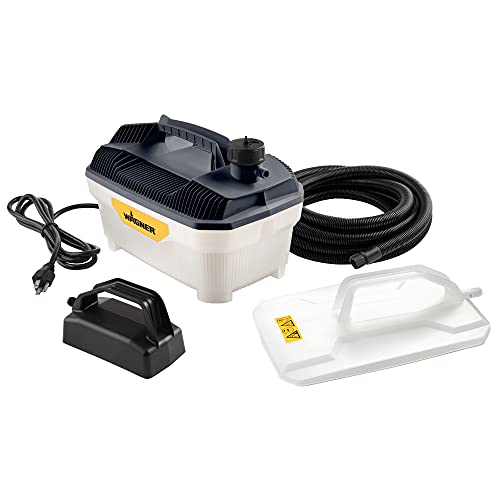 Wagner Spraytech 725 Wallpaper Steamer for Easy
- Just add distilled water to this Wagner steam…
- Use this steam cleaner to apply steam to…
- Includes a large 8" x 11" steam plate…
 Goplus Wallpaper Steamer Chemical-Free Cleaner for Wallpaper
- Just fill with clean-preferably hot water to wait…
- The 4.5 Liters(1 Gallon) water tank can produce…
- Safety cut-out is fitted to prevent overheating the…
 KITLUCK Wallpaper Steamer
- 【KITLUCK Chemical Free Wallpaper Remover Steamer】 Just fill…
- 【Lightweight and Portable Design】 KITLUCK wallpaper steamer is…
- 【Long Running Time and Easy Operation】 1.2 Gallon…
| Product | Key specs | |
|---|---|---|
| Wagner Spraytech 725 Wallpaper Steamer for Easy | Just add distilled water to this Wagner steam… Use this steam cleaner to apply steam to… Includes a large 8" x 11" steam plate… | Check price |
| Goplus Wallpaper Steamer Chemical-Free Cleaner for Wallpaper | Just fill with clean-preferably hot water to wait… The 4.5 Liters(1 Gallon) water tank can produce… Safety cut-out is fitted to prevent overheating the… | Check price |
| KITLUCK Wallpaper Steamer | 【KITLUCK Chemical Free Wallpaper Remover Steamer】 Just fill… 【Lightweight and Portable Design】 KITLUCK wallpaper steamer is… 【Long Running Time and Easy Operation】 1.2 Gallon… | Check price |
 Wallpaper Steamer Wallpaper Steamer | Wallpaper Steamer, Steam Cleaner for Easy Wallpaper Removal,… Effortless Wallpaper Stripping: Say goodbye to the hassle… Improved Steam Plates: The large 7.8"x11" steam plate… | Check price |
As an Amazon Associate we earn from qualifying purchases at no extra cost to you.
Best wallpaper steamers by room size and project type
| Best for | Recommended type or model | Heat-up time | Water capacity | Hose reach | Why it fits |
|---|---|---|---|---|---|
| Small bathroom, hallway, or accent wall | Compact 1,300W wallpaper steamer such as the BLACK+DECKER KX3300T | About 10–15 minutes | About 1.0–1.1 gal (3.8–4.0 L) | About 5 ft (1.5 m) | Lower storage demand and adequate output for short sessions |
| One average bedroom | Wagner 715 Power Steamer | About 12 minutes | About 1.25 gal (4.7 L) | About 8 ft (2.4 m) | Good balance of tank size, portability, and working reach |
| Several rooms or heavy, layered wallpaper | Wagner 725 Power Steamer | About 12 minutes | About 1.3 gal (4.9 L) | About 12 ft (3.7 m) | Longer hose and larger capacity reduce repositioning and refills |
| Infrequent light-duty removal | Entry-level 1,000–1,300W steamer with two scraper plates | 10–20 minutes | 0.8–1.1 gal (3–4 L) | 5–8 ft (1.5–2.4 m) | Usually the lowest purchase cost, but slower on stubborn coverings |
Specifications above are representative published figures and can vary by regional version. Treat them as buying benchmarks rather than a substitute for checking the current manual. A steamer’s real productivity depends on the wallpaper type, how many layers are present, and whether the paste has softened evenly.
The head-to-head: what matters more than the headline wattage?
Heat-up time
Most household wallpaper steamers take roughly 10 to 15 minutes to produce steam. A higher wattage can shorten warm-up, but it does not automatically remove wallpaper faster. Once the unit is hot, the important factors are steam consistency, plate size, and how effectively the wallpaper has been perforated.
For a small wall, a five-minute difference in warm-up is minor. For a large room, however, a model that maintains steam without frequent cooling or refilling saves more time than one with a slightly faster start. Avoid beginning work before the “ready” indication or steady steam output: partially heated water can produce inconsistent steam and encourage you to scrape too aggressively.
Water-tank capacity and practical coverage
A 1-gallon tank holds about 3.8 litres of water. Larger tanks mean fewer interruptions, but they also make the machine heavier when full. A useful planning estimate is 20 to 40 square feet of softened wallpaper per tank, depending on the paper, paste, wall temperature, and how much steam escapes around the plate.
For example, a 12-by-10-foot bedroom has approximately 440 square feet of wall area before subtracting doors and windows. At 30 square feet per tank, that is around 15 tankfuls of steam work. In practice, you may remove some sections dry after the paste loosens, and a single room may require fewer full refills than this conservative estimate suggests. The calculation shows why a larger tank helps on extensive projects, while it does not make a small bathroom steamer faster.
Hose reach
Hose length is easy to overlook. An 8-foot hose generally works well in a bedroom if the steamer sits near the wall. A 12-foot hose is more comfortable in stairwells, tall rooms, and larger spaces because you can leave the base unit on the floor while moving the steam plate across a wider area.
Do not count the power cord as hose reach. The hose carries very hot steam and should not be sharply kinked, trapped under furniture, or stretched until its connectors pull sideways. A longer hose is useful only when it remains flexible and well supported.
Scraper accessories
Look for at least one broad plate for open wall areas and one narrow plate for corners, edges, and around trim. A broad plate covers more surface per pass; a narrow plate gives better control near electrical boxes and woodwork. Some kits include a separate scraper, but its blade quality can matter more than the number of accessories.
Plastic scrapers reduce the chance of gouging plasterboard, while a sharp metal scraper can be effective on sound plaster. Whichever tool you use, keep it shallow to the wall and let steam do the softening. A dull scraper encourages force, which can damage the wall beneath the paper.
Decision matrix: which specification should you prioritize?
| Your situation | Prioritize | Good target | Trade-off |
|---|---|---|---|
| First-time DIY user | Large plate, clear water-level markings, automatic shutoff | 1,300–1,500W; 1.0–1.25 gal tank | May cost more than the smallest basic unit |
| One small room | Low weight and compact storage | Up to 1.1 gal; 5–8 ft hose | More refills on larger projects |
| Whole floor or multiple rooms | Capacity and hose reach | 1.25–1.3 gal; 10–12 ft hose | Full tank is heavier to carry |
| Occasional use on a tight budget | Reliable shutoff and replaceable scraper parts | 1,000–1,300W; two plate sizes | Slower warm-up or less uniform steam |
| Frequent decorating work | Robust hose connections and serviceable parts | 1,500W; 1.25 gal or larger | Higher upfront cost and storage space |
Safety features that are worth paying for
Automatic shutoff is the most useful feature when the tank runs dry or the unit overheats. A secure filler cap, stable base, insulated handle, and clear water-level markings also reduce avoidable accidents. Steam can cause serious burns within seconds, so never remove a pressurized cap, point the plate toward yourself, or leave the hot unit unattended.
- Turn off and unplug the steamer before filling, moving, or changing plates.
- Wear gloves, eye protection, and footwear with good grip.
- Protect floors and nearby sockets from dripping water.
- Keep children and pets out of the work area.
- Use extra caution around outlets, switches, plaster cracks, and loose trim.
- Follow the manual’s guidance on extension cords; a high-wattage steamer can overload a lightweight cord.
How to use a wallpaper steamer without damaging the wall
- Prepare the room. Remove plates and hardware where safe, cover the floor, and score or perforate washable vinyl wallpaper so steam can reach the paste.
- Fill below the maximum line. Use clean water and leave room for expansion. Fit the cap securely before heating.
- Heat fully. Wait for steady steam rather than relying only on the elapsed time.
- Work in small sections. Hold the plate against one area for roughly 10–20 seconds, then test an edge. Thick or painted paper may need a second pass.
- Peel and scrape gently. Pull softened paper at a low angle and use the scraper to lift residue, not gouge the substrate.
- Wash away paste. After the wall cools, wipe it with clean water and allow it to dry completely before sanding or repainting.
Scoring is particularly important for vinyl-coated paper because its surface resists water and steam. Do not score so deeply that you cut into plasterboard or the wall’s paper face.
Ownership realities: cleaning, wear, and total cost
The first parts likely to show wear are the hose ends, filler-cap seal, scraper edge, and plastic plate surface. Store the hose loosely rather than tightly coiled, and do not drag the base by the hose. Let the unit cool fully, empty leftover water, and wipe mineral deposits from the plate after each project. In hard-water areas, follow the manufacturer’s descaling instructions; do not add chemicals unless the manual specifically permits them.
A simple cost-per-use calculation can clarify the choice. If a compact steamer costs $50–$80 and you use it once, its equipment cost is $50–$80 for that project. A $90–$140 larger unit used across four rooms costs about $23–$35 per room before supplies. That does not make the larger model automatically better: for one small wall, its extra tank weight and storage footprint may be more inconvenient than its capacity is useful.
Bottom line
Choose a compact 1,300-watt steamer for a small, occasional job; a Wagner 715-style 1.25-gallon machine for a typical bedroom; and a Wagner 725-style unit when long hose reach and fewer refills matter across several rooms. Whichever model you buy, prioritize automatic shutoff, a secure cap, two scraper sizes, and a hose long enough to keep the hot base safely on the floor. Those details usually have more effect on speed, wall damage, and ease of use than a small difference in advertised wattage.







Write Your Review
No reviews yet. Be the first to share your experience!