

The best changing tables are the ones that put the changing surface at a comfortable height, keep wipes and diapers within one-handed reach, include a properly designed safety barrier, and remain useful after the diaper years; for most families, a sturdy dresser-style changer offers the best long-term value.
Our top picks
 Cidaziya Baby Changing Table with Safety Bumper
- 【Adjustable Deviders in Big Storage Bin】Built-in adjustable divider…
- 【Safe & Stable Design】Constructed with a sturdy steel…
- 【Easy to Clean】Each fabric layer is removable for…
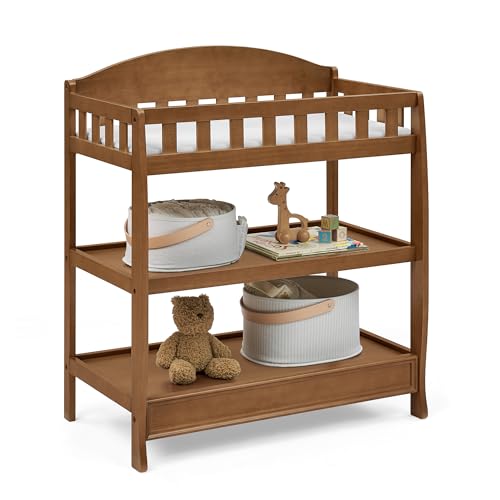 Delta Children Infant Changing Table with Pad
- This changing table features two shelves below a…
- We know chemicals have no place in your…
- The Infant Changing Table coordinates with the Delta…
 Dream On Me Emily Changing Table with
- Functional Changing Station - Designed to support your…
- Mattress Pad Included - Comes with 1 water-resistant…
- Spacious Storage Shelves - Features two spacious open…
| Product | Key specs | |
|---|---|---|
| Cidaziya Baby Changing Table with Safety Bumper | 【Adjustable Deviders in Big Storage Bin】Built-in adjustable divider… 【Safe & Stable Design】Constructed with a sturdy steel… 【Easy to Clean】Each fabric layer is removable for… | Check price |
| Delta Children Infant Changing Table with Pad | This changing table features two shelves below a… We know chemicals have no place in your… The Infant Changing Table coordinates with the Delta… | Check price |
| Dream On Me Emily Changing Table with | Functional Changing Station - Designed to support your… Mattress Pad Included - Comes with 1 water-resistant… Spacious Storage Shelves - Features two spacious open… | Check price |
 Dream On Me Jax Universal Changing Table | The Jax is the one piece of nursery… Changing time is mess-free thanks to the water… The two easy-to-reach, spacious shelves below the changing… | Check price |
As an Amazon Associate we earn from qualifying purchases at no extra cost to you.
Quick picks by nursery situation
| Situation | Best choice | Why it fits | Typical dimensions and cost |
|---|---|---|---|
| Small nursery or shared bedroom | Removable-top dresser changer | Uses vertical storage and can become a normal dresser later | About 36–42 in wide, 18–22 in deep; $180–$500 |
| Lowest initial budget | Four-sided changing table with open shelves | Usually inexpensive and easy to assemble | About 35–40 in wide, 18–24 in deep; $80–$180 |
| Frequent overnight changes | Wide dresser with drawers and a safety-secured pad | Faster access to organized supplies and less bending | About 42–54 in wide, 18–22 in deep; $300–$800 |
| Temporary setup or rental home | Changing pad on a stable, appropriately sized dresser | Avoids buying a separate piece of nursery furniture | Pad about 16–17 in wide by 32–34 in long; $30–$100 for the pad |
What makes a changing table safer?
A changing table is not a substitute for supervision. Babies can move unexpectedly, so keep one hand on the child whenever they are on the surface and place supplies within reach before starting. Safety rails reduce the chance of a roll, but they do not make it safe to step away.
Look for a changing area with a raised barrier on all four sides, or a pad and table combination specifically designed to work together. A common pad size is approximately 16 inches by 32 inches, but the table should support the entire pad without large gaps. The pad should not slide when pressed from side to side. If the product includes a restraint strap, use it according to the instructions; it is an additional measure, not a replacement for supervision.
Also check for:
- A stable, wide base that does not rock when pushed from the side.
- A tip-over restraint that anchors the furniture to a wall stud or suitable wall hardware.
- Securely attached rails, shelves, and drawer fronts.
- Rounded or well-finished edges around the changing area.
- Materials and finishes that can be wiped clean without exposing unfinished wood.
- Clear instructions stating the maximum child weight or the point at which the changing surface should no longer be used.
Changing-table height: the feature that affects every diaper change
Most changing tables place the surface roughly 36–40 inches above the floor. That range suits many adults, but the right height depends on the caregiver. A surface that is too low encourages bending; one that is too high can make it harder to control a moving baby.
Measure from the floor to your wrist while standing with your elbows relaxed. Then compare that measurement with the top of the changing pad rather than the top of the furniture alone. A pad may add 3–5 inches. If two adults will use the table, prioritize the height that is comfortable for the primary caregiver or choose a dresser with a height near the middle of both users’ preferences.
Do not raise a table with improvised blocks or furniture risers. That can reduce stability and increase the risk of tipping.
Head-to-head: open shelves versus drawers
Open-shelf changing tables
Open shelves are usually cheaper and let you see diapers, wipes, and spare clothes immediately. They are useful when speed matters and when supplies are stored in labeled baskets. The trade-off is that everything is exposed to dust, and the lower shelf can tempt caregivers to store too much weight high on the unit.
Drawer-based dresser changers
Drawers protect supplies from dust and make it easier to separate diapering, clothing, and first-aid items. They also hide clutter and usually transition more naturally into a child’s bedroom furniture. Their disadvantages are higher cost, greater weight, and the need to open a drawer before retrieving an item. Choose drawers that glide smoothly and can be opened with one hand while the other hand remains on the baby.
Best compromise
A practical layout is a top drawer for diapers and wipes, a second drawer for creams and spare covers, and lower drawers for clothing. Keep creams, medications, scissors, and other small items out of a child’s reach once the furniture becomes regular bedroom storage.
Product types worth considering
Purpose-built changing tables
Models such as the Delta Children Essex Changing Table represent the conventional format: a raised changing area above shelves or drawers. This type can offer a good working height and a compact footprint, often around 36–40 inches wide. It is a sensible choice when the table will be used frequently for one child and storage needs are moderate.
Convertible dresser changers
The DaVinci Jenny Lind Changing Table is an example of a nursery changer designed around drawers rather than open shelving. Similar dresser-style products from DaVinci, Delta Children, and other established nursery-furniture manufacturers are preferable when long-term use matters. After the changing stage, the removable topper can allow the piece to function as a dresser, provided the instructions permit conversion.
Changing pads on existing furniture
A firm, correctly sized pad on a stable dresser can save space and money. This option works only when the dresser is wide and deep enough, cannot rock, and can be anchored securely. Do not use a narrow bookcase, lightweight folding table, bed, sofa, or countertop as a substitute.
Decision matrix: which design matches your household?
| Your priority | Choose | Watch out for |
|---|---|---|
| Lowest purchase price | Open-shelf table with a fitted pad | Less concealed storage and fewer long-term uses |
| Limited floor space | Existing dresser plus pad, or a narrow changer no deeper than about 20 inches | Confirm the pad does not overhang dangerously |
| First-time parent who wants everything visible | Open shelves with removable baskets | Label baskets and keep daily supplies at the front |
| Multiple children or long ownership | Solid dresser changer with removable topper | Check replacement hardware and the future dresser height |
| Night-time use in a dark room | Drawer changer with a dedicated supply drawer | Avoid loose lamps, cords, or accessories within reach |
Calculate the real footprint before buying
Do not measure only the furniture. Add room for the caregiver to stand and open drawers. For example, a table measuring 40 inches wide by 20 inches deep needs roughly 30 inches of clear space in front for comfortable access. That creates a working footprint of approximately 40 by 50 inches, or about 13.9 square feet.
Also check doors, closet openings, heating vents, and the direction of nearby drawers. A table that fits the wall may still block the nursery’s main walking route. Leave enough clearance to approach from the front without twisting while holding a baby.
Ownership details that affect value
The parts most likely to show wear are drawer runners, changing-pad covers, anchor straps, and the finish near the changing area. A washable cover is a consumable: having two or three allows one to be used while another is being cleaned. Waterproof covers reduce staining, but they do not eliminate the need to clean spills promptly.
Wipe the pad and surrounding surface with the cleaner recommended by the manufacturer, then dry the area. Avoid soaking unfinished wood or using abrasive cleaners that can damage the finish. Inspect fasteners periodically, especially after moving the furniture. Re-tighten only as directed; overtightening can strip particleboard or damage threaded inserts.
Organize supplies before the first use. Put several diapers, wipes, a clean cover, and a spare outfit in the primary reach zone. Store backup supplies lower down. This arrangement reduces the temptation to turn away or walk off during a change.
Questions to answer before purchase
Is a changing table necessary?
No. A safe, stable dresser with a correctly fitted changing pad can work. A dedicated table is worthwhile when its height, storage, and footprint are better suited to your room.
How long can a changing table be used?
Follow the manufacturer’s weight and developmental limits rather than a fixed age. Stop using the elevated surface when the child reaches the stated limit or can climb, roll, or sit in a way that makes the arrangement unsuitable. A convertible dresser may continue as nursery furniture afterward.
Should the changing table be against a wall?
It should be positioned where it can be anchored securely. Wall anchoring is particularly important for tall dressers and any unit with drawers, because an open drawer can shift the center of gravity forward.
Bottom line
For most families, the best changing tables are stable dresser-style units around 36–40 inches high, with a fully supported pad, accessible top storage, and a removable changing topper. Choose an open-shelf model when price and visibility matter most; choose a convertible dresser when you want the furniture to earn its floor space for years. Whatever the style, prioritize secure anchoring, a proper fit between pad and table, and a setup that keeps every necessary supply within one hand’s reach.







Write Your Review
No reviews yet. Be the first to share your experience!