

Key takeaways
- Best all-purpose choice: a 20- to 30-liter welded TPU or PVC roll-top bag with a D-ring and removable shoulder strap.
- Best for whitewater and frequent boating: a reinforced river dry bag such as the NRS Bill’s Bag or Watershed Colorado.
- Best for hiking: a lightweight 10- to 20-liter roll-top dry bag, used inside a backpack rather than as the backpack itself.
- Best for travel: a dry duffel or backpack with padded shoulder straps, compression points, and a wide opening.
- Best for organization: several small dry bags in different colors instead of one oversized sack.
Best Dry Bags for Boating, Hiking, and Travel
The best dry bag depends on your exposure and carrying needs: choose a welded roll-top bag for affordable general use, a reinforced river bag for demanding boating, a lightweight nylon model for hiking, and a shoulder-friendly duffel or backpack dry bag for travel.
A dry bag is not automatically waterproof in every situation. Most protect against rain, spray, and brief immersion, while only some are designed for repeated submersion. The useful distinctions are the closure design, waterproof construction, fabric durability, carrying system, and whether the bag can be packed without stressing its seams.
Our top picks
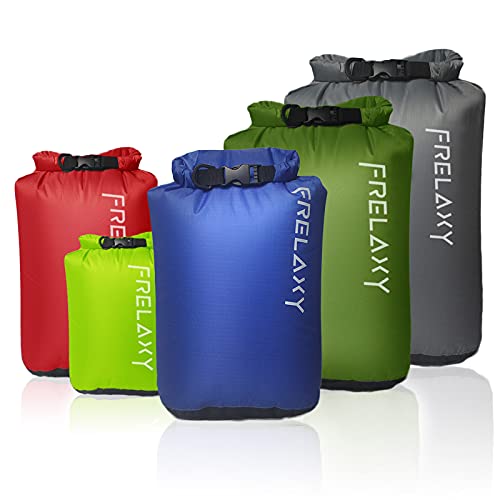
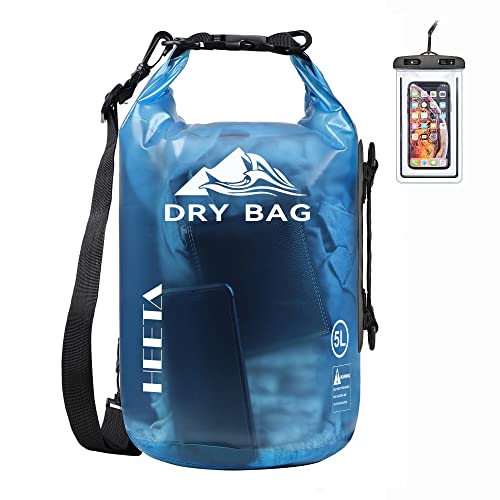
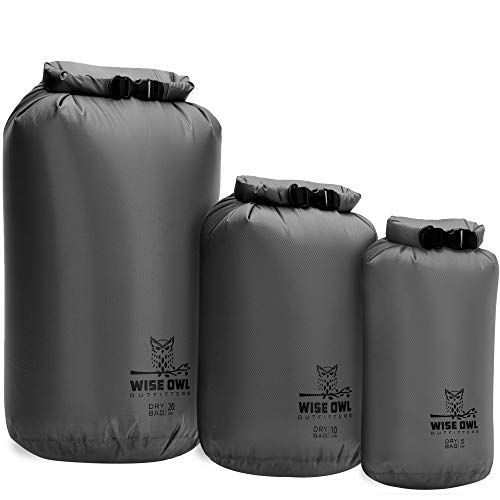

As an Amazon Associate we earn from qualifying purchases at no extra cost to you. Ratings are shown as listed on Amazon.
Quick picks by situation
- Best all-purpose choice: a 20- to 30-liter welded TPU or PVC roll-top bag with a D-ring and removable shoulder strap.
- Best for whitewater and frequent boating: a reinforced river dry bag such as the NRS Bill’s Bag or Watershed Colorado.
- Best for hiking: a lightweight 10- to 20-liter roll-top dry bag, used inside a backpack rather than as the backpack itself.
- Best for travel: a dry duffel or backpack with padded shoulder straps, compression points, and a wide opening.
- Best for organization: several small dry bags in different colors instead of one oversized sack.
Dry bag comparison: what you get at different price and durability levels
| Category | Typical capacity | Approximate weight | Construction and closure | Best use | Typical market range |
|---|---|---|---|---|---|
| Ultralight dry sack | 5–20 L | 40–150 g | Coated nylon, taped seams, roll-top | Backpacking, clothing, sleeping-bag protection | $15–$45 |
| General-purpose roll-top | 10–40 L | 250–800 g | Welded TPU or PVC, buckle roll-top | Kayaking, camping, beach and rain protection | $25–$80 |
| Heavy-duty river bag | 20–65 L | 700–1,800 g | Reinforced fabric, welded seams, robust roll-top or waterproof closure | Whitewater, expedition boating, repeated abrasion | $90–$250 |
| Dry duffel or backpack | 30–90 L | 1,000–2,500 g | Welded body, padded straps, roll-top or waterproof zipper | Travel, sailing, motorbike trips and large loads | $100–$300 |
Weights and prices vary by size and fabric. A larger bag is not always more useful: an oversized dry bag leaves empty space that shifts on a boat and encourages overpacking on a trail.
Best dry bags for boating
For calm water and occasional paddling
A 10- to 30-liter welded roll-top bag is usually the best balance. Look for a thick base, welded seams, a buckle that can be replaced, and attachment points that let you secure the bag inside a kayak or canoe. Sea to Summit Big River Dry Bags are a strong example of this category, with a more abrasion-resistant build than ultralight sacks. They are suitable for clothing, food, electronics in secondary protection, and camp equipment.
For day trips, a 13-liter bag can hold a jacket, first-aid supplies, lunch, and small personal items. A 20- to 30-liter bag is more practical for a full change of clothes or overnight equipment. Avoid clipping an unsecured dry bag to the outside of a kayak: if it falls overboard, buoyancy and a bright color help recovery, but neither replaces a proper tie-down.
For whitewater, surf, and repeated submersion
Choose durability before low weight. NRS Bill’s Bags are built for river use and combine a heavy-duty body with backpack-style carrying options. Watershed bags such as the Colorado use a zippered waterproof closure rather than a conventional roll-top. That design can provide an especially secure seal when properly closed, but it costs more and requires more care around the zipper.
A roll-top normally needs at least three folds for a dependable seal. A waterproof zipper must be fully seated and free of grit. Neither closure should be treated as indestructible: sharp boat hardware, sand, and dragging the bag over rock are common causes of failure.
Best dry bags for hiking
For hiking, the lightest suitable option is usually the best one. A 5- to 8-liter sack can separate toiletries or electronics; a 10- to 15-liter sack can protect spare clothing; and a 20-liter bag can hold a sleeping bag liner or a complete sleep system, depending on compression.
Sea to Summit Lightweight Dry Bags and similar coated-nylon sacks save substantial weight compared with river bags. Their trade-off is abrasion resistance. They should sit inside a backpack or against smooth contents, not be dragged across granite or strapped directly to a rough exterior panel.
Do not use a dry bag as a substitute for a pack liner unless its closure is positioned correctly. Pack the bag, squeeze out excess air without forcing it, roll the top down several times, and place the closure at the highest practical point. A liner protects the entire pack from a leak; individual dry bags provide better organization and selective protection.
Best dry bags for travel
Travel favors access and carrying comfort over minimum weight. A 30- to 60-liter dry duffel is useful for wet-weather journeys, boat transfers, and motorcycles. Choose padded shoulder straps, reinforced grab handles, compression straps, and a base that can tolerate floors and vehicle compartments.
Large roll-top duffels are highly water resistant but can be awkward to access because every opening requires unrolling. A waterproof-zipper duffel is quicker for frequent access, though the zipper is more expensive to replace and more vulnerable to dirt. For air travel, remember that a dry bag is not automatically protective against crushing, punctures, or rough baggage handling. Wrap fragile equipment separately and avoid packing the bag so tightly that seams are under constant tension.
Roll-top versus waterproof zipper
| Feature | Roll-top | Waterproof zipper |
|---|---|---|
| Water resistance | Very good when folded and buckled correctly | Excellent when fully closed and maintained |
| Access | Slower; opening changes with the number of folds | Fast and convenient |
| Weight and cost | Usually lighter and less expensive | Usually heavier and more expensive |
| Common failure point | Buckles, fold area, and punctures | Grit, damaged teeth or seal, and zipper separation |
| Best match | Hiking, general paddling, and infrequent access | Expedition boating, travel, and frequent access |
How waterproof ratings should influence your choice
Manufacturers may describe bags as water resistant, waterproof, IP-rated, or submersible, but these terms are not interchangeable. A water-resistant bag may handle rain but fail during immersion. An IP rating, when provided, comes from a defined test and can be more informative than marketing language; however, the rating applies to the tested product configuration and may not describe a bag repeatedly opened outdoors.
For most users, construction details are more useful than a single rating. Prefer welded seams over sewn seams for boating, a roll-top with a wide sealing area, and fabric that matches the expected abrasion. If the product is explicitly described as submersible, follow its closure instructions and do not assume that damaged fabric or a partly closed zipper preserves that protection.
Decision matrix: which type fits your use?
| Your situation | Recommended size | Recommended type | Why |
|---|---|---|---|
| Occasional rain and low budget | 10–20 L | Coated-nylon roll-top | Low weight and adequate protection when carried inside a pack |
| Weekly kayaking | 20–40 L | Welded TPU or PVC roll-top | Better resistance to wet handling and abrasion |
| Whitewater or surf | 20–65 L | Heavy-duty river bag or waterproof-zipper bag | More secure attachment and stronger materials |
| Ultralight backpacking | 5–20 L | Ultralight dry sacks | Saves weight; keep them protected inside the pack |
| Frequent travel with bulky clothing | 40–90 L | Dry duffel with padded straps | Comfortable carrying and easier loading |
Durability, maintenance, and common mistakes
The first parts to wear are usually buckles, attachment loops, fold creases, zipper seals, and the bottom panel. Inspect these areas after every demanding trip. Replace a cracked buckle before the next outing; many roll-top buckles are inexpensive and can extend the life of the whole bag.
- Shake out sand and grit before closing the bag.
- Rinse saltwater from the fabric, buckles, and zipper with fresh water.
- Wash with mild soap when necessary; avoid bleach, solvents, and high heat.
- Dry the bag completely with the opening wide before storing it.
- Do not store it tightly rolled for long periods, especially if the roll area is creased.
- Check for pinholes by looking through the fabric against bright light, but do not rely on this as a complete leak test.
The most common mistake is overfilling. A roll-top needs enough empty material to make several folds, and forcing a closure can stress seams and prevent a flat seal. A second mistake is treating a dry bag as flotation equipment or tying it where it can interfere with a person’s movement. Secure it, but keep emergency exits and deck hardware clear.
Bottom line
For most outdoor users, start with a 20-liter welded roll-top bag and add smaller lightweight sacks for organization. Choose an ultralight coated-nylon model when every gram matters, a reinforced river bag when abrasion and immersion are routine, and a padded dry duffel when the bag must be carried comfortably through airports, camps, and vehicle transfers. The right capacity and closure matter more than buying the thickest bag available.





Write Your Review
No reviews yet. Be the first to share your experience!