

Key takeaways
- Aluminum: Lightweight, naturally corrosion-resistant, and a strong choice for exposed patios. It can dent more easily than steel and may feel less rigid in inexpensive frames.
- Powder-coated steel: Usually heavier and more rigid, often at a lower price. Scratches can expose the metal underneath, so chipped areas should be cleaned and touched up promptly.
- Acacia or other outdoor wood: Attractive and stable, but it needs periodic oiling or sealing and should not be left wet for prolonged periods.
- Resin or composite: Easy to clean and resistant to rust, though the chair may have less visual refinement and can become hot in direct sun.
The best outdoor recliner chairs for most patios are adjustable zero-gravity or sling recliners with rust-resistant aluminum frames, quick-drying fabric, a 300-pound-or-higher weight limit, and at least two reclining positions; choose a cushioned model instead when lounging comfort matters more than fast drying and compact storage.
The right chair depends less on a brand name than on four practical questions: Will it sit under cover or in full weather? Do you need it folded away? How often will it be used? And does the frame and fabric suit the weight and maintenance demands of your household?
Our top picks
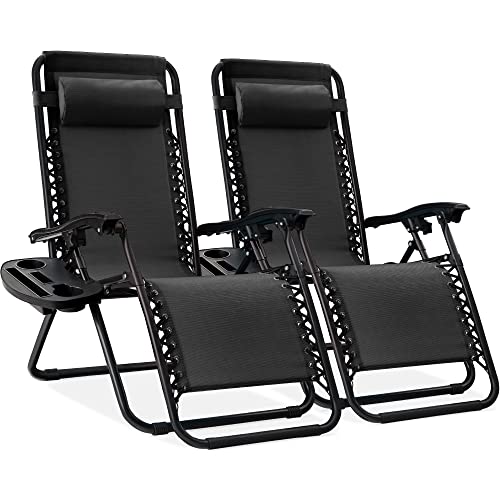


As an Amazon Associate we earn from qualifying purchases at no extra cost to you. Ratings are shown as listed on Amazon.
Best outdoor recliner chairs by patio situation
| Patio situation | Best chair type | Why it fits | Target specifications |
|---|---|---|---|
| Exposed patio with frequent rain | Textilene or sling zero-gravity recliner | Dries faster and has fewer moisture-holding cushions | Powder-coated aluminum or steel, UV-resistant sling, 250–300 lb capacity |
| Covered patio used for long reading sessions | Padded multi-position recliner | Thicker support and a more comfortable headrest | Two to five positions, removable cushion, 2–4 inch foam |
| Small balcony or seasonal storage | Folding sling recliner | Usually lighter and narrower than cushioned lounge chairs | Folded depth under 8 inches, 15–25 lb chair weight |
| High-use family patio | Heavy-duty zero-gravity or reinforced padded recliner | Better suited to repeated opening, closing, and loading | 300–350 lb capacity, steel joints, replaceable elastic cords |
| Premium covered outdoor room | Deep-seat outdoor lounge recliner | Provides the closest feel to indoor furniture | Aluminum frame, solution-dyed acrylic fabric, removable cushions |
What to compare before buying
Reclining positions and locking mechanism
A chair described as “reclining” may have only one lounging angle, while a genuine multi-position model commonly offers three to five settings. For reading, look for an upright setting near 100–110 degrees. For conversation, a middle setting around 115–125 degrees is more useful. A near-flat position is attractive for naps, but it makes the chair longer and can increase tipping risk on uneven paving.
Zero-gravity chairs typically use a sliding or locking system that lets the seat and back move together. They are comfortable for distributing body weight, but the locking mechanism should be operated with both hands. A common mistake is leaning hard to one side while adjusting, which puts unnecessary stress on the joint. Test whether the chair locks securely without requiring excessive force.
Frame material
- Aluminum: Lightweight, naturally corrosion-resistant, and a strong choice for exposed patios. It can dent more easily than steel and may feel less rigid in inexpensive frames.
- Powder-coated steel: Usually heavier and more rigid, often at a lower price. Scratches can expose the metal underneath, so chipped areas should be cleaned and touched up promptly.
- Acacia or other outdoor wood: Attractive and stable, but it needs periodic oiling or sealing and should not be left wet for prolonged periods.
- Resin or composite: Easy to clean and resistant to rust, though the chair may have less visual refinement and can become hot in direct sun.
For a chair that will be moved frequently, aluminum is usually the sensible compromise. For a permanent covered seating area, a heavier steel or wood frame can feel more substantial.
Cushion and sling fabrics
Sling fabric, often sold as Textilene or a similar PVC-coated polyester mesh, is the easiest option for exposed patios. Water passes through it, and surface dirt can normally be rinsed away. Its weaknesses are a less plush feel and eventual sagging or cracking after years of strong sunlight.
Padded polyester is inexpensive and comfortable, but ordinary indoor-style polyester can fade and retain water. Look for solution-dyed acrylic or solution-dyed polyester when the chair will remain outdoors. In solution-dyed fabric, the color extends through the fibers rather than sitting mainly on the surface, improving resistance to fading.
Cushion thickness matters, but foam construction matters more. A 3-inch cushion with quick-dry foam is more practical outdoors than a thicker cushion with absorbent foam. Removable, machine-washable covers are valuable because seat fabric usually shows wear and staining before the frame does.
Weight limits and actual fit
Do not choose a chair whose stated capacity barely exceeds the user’s weight. A useful margin is at least 50 pounds, and 75–100 pounds is preferable for a chair used daily or adjusted frequently. A listed 300-pound limit does not mean every part feels equally comfortable at that load; check seat width, arm spacing, and the distance between the front legs.
Measure the user’s seated hip width and add at least 3 inches for comfortable clearance. Also measure the available patio depth with the chair fully reclined. A chair that is 30 inches deep upright may extend to 65–75 inches when flat, potentially blocking a door or walkway.
Folded storage: the specification people overlook
Folding size is not just a convenience specification. It determines whether the chair can fit behind a shed, inside a closet, or under a bed. Typical folding recliners weigh 15–25 pounds and fold to roughly 25–32 inches wide, 6–10 inches deep, and 35–45 inches high. Large cushioned recliners may weigh 25–45 pounds and remain 10–16 inches deep when folded.
Before buying, measure the narrowest point of the intended storage route, including a shed door or stair landing. Leave at least 2 inches of clearance on each side. Store folded chairs vertically only if they have a stable resting edge; otherwise, they can slide and damage fabric or nearby surfaces.
Durability and ownership costs
The parts that usually wear first are fabric seams, elastic suspension cords, plastic arm caps, recline hinges, and cushion covers. A chair with replaceable bungee cords or widely available replacement fabric can outlast a cheaper chair that must be discarded when the seat sags.
For an exposed patio, rinse dirt and bird residue from the frame and mesh every few weeks. Clean with mild soap, a soft brush, and fresh water; avoid abrasive pads and chlorine bleach, which can weaken coatings and discolor fabric. Let the chair dry fully before folding it. If cushions remain damp, stand them on edge rather than stacking them.
Use a breathable cover rather than an airtight plastic sheet. Trapped condensation can encourage mildew and corrosion. In winter or during extended periods of nonuse, store cushions indoors and keep folding chairs off wet ground. Do not leave a recliner in the fully flat position during strong wind; its larger surface area can make it easier to move or overturn.
Price and value: calculate use rather than buying only on sticker price
General market pricing typically falls into three bands: basic folding sling chairs at about $40–$90, more durable padded or zero-gravity chairs around $90–$180, and premium outdoor lounge recliners from roughly $180–$450 or more. Prices vary with fabric, frame finish, cushions, and whether replacement parts are available.
For example, suppose a $120 chair is used four times per week for a five-month outdoor season. That is approximately 80 uses per year. If it lasts four seasons, the chair costs:
$120 ÷ (80 uses × 4 seasons) = about $0.38 per use
A $65 chair that needs replacement after one season costs about $0.81 per use under the same schedule. The more expensive chair is better value only if its frame, fabric, and repairability actually support the longer life. A high price alone does not guarantee that outcome.
Recommended decision matrix
| Your priority | Choose | Accept the trade-off |
|---|---|---|
| Lowest initial cost | Basic steel zero-gravity chair with mesh fabric | More weight, simpler finish, and potentially shorter corrosion life |
| Best rain resistance | Aluminum sling chair with no thick cushion | Less padded comfort |
| Best nap comfort | Wide zero-gravity recliner with padded headrest | Larger folded size and more fabric to dry |
| Frequent moving and storage | Lightweight aluminum folding recliner | Less rigid feel than a heavy steel frame |
| Long-term furniture-like use | Deep-seat recliner with solution-dyed fabric and replaceable covers | Higher price and little portability |
Bottom line
Choose a sling zero-gravity recliner for an exposed or compact patio, especially when drying speed and folded storage matter. Choose a padded multi-position chair for a covered patio and extended reading. For the best long-term purchase, prioritize a corrosion-resistant frame, solution-dyed or quick-drying fabric, a capacity comfortably above the user’s weight, a fully reclined length that fits the space, and replaceable wear parts over decorative extras.


Write Your Review
No reviews yet. Be the first to share your experience!