

Key takeaways
- Basic IPL models: commonly provide three to five manually selectable levels.
- More adaptable models: use a sensor to read skin tone and recommend or automatically select an intensity for each flash.
- Laser models: often use a smaller spot and a more deliberate pulse-by-pulse treatment style.
The best laser hair removal devices for home use are usually IPL devices: choose one with an automatic skin-tone sensor, enough energy levels for your complexion, a treatment window suited to the area, and a replacement or warranty plan you can live with.
Our top picks


As an Amazon Associate we earn from qualifying purchases at no extra cost to you. Ratings are shown as listed on Amazon.
Quick picks by situation
| Situation | Best device type or pick | Why it fits | Main limitation |
|---|---|---|---|
| First-time buyer wanting speed | Braun Silk-expert Pro 5 | Fast full-leg coverage, automatic intensity adjustment, 400,000 flashes | Higher upfront cost than entry-level IPL |
| Several body areas and different attachments | Philips Lumea 9000 Series | Five intensity levels and area-specific attachments | Bulkier storage and a relatively high purchase price |
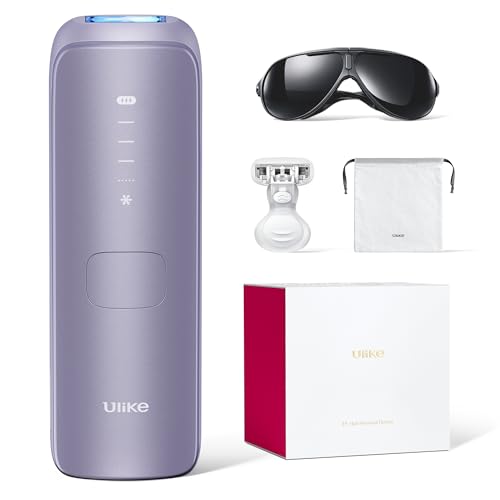
| Want cooling for sensitive-feeling skin | Ulike Air 10 | Built-in cooling and multiple energy settings | Cooling does not make every skin tone or hair color compatible |
| Small areas and true laser technology | Tria Hair Removal Laser 4X | Diode laser with a small, precise treatment spot | Much slower on legs and less convenient for large areas |
| Lowest long-term consumable cost | Any reputable IPL with a sealed lamp and a high flash rating | No cartridges or replacement lamps during normal ownership | Usually no serviceable battery or user-replaceable lamp |
Laser versus IPL: an important distinction
Most products marketed as home “laser hair removal” devices use intense pulsed light, or IPL. IPL emits a broad spectrum of light, while a diode laser uses a narrower wavelength. Both are designed to target pigment in the hair, but they are not interchangeable in power, treatment speed, or suitability.
The Tria Hair Removal Laser 4X is a genuine home diode-laser option, with an approximately 810-nanometre wavelength and a treatment spot of about 1 cm². It can be useful for the face, bikini line, or individual patches, but treating both legs takes substantially longer than with a wide-window IPL device. Most people choosing a home device will find IPL more practical for routine body coverage.
Energy levels matter more than a headline flash count
Energy density is commonly expressed in joules per square centimetre (J/cm²). A higher setting is not automatically better: the useful setting is the highest level that is appropriate for your skin tone and remains tolerable when used exactly as directed.
- Basic IPL models: commonly provide three to five manually selectable levels.
- More adaptable models: use a sensor to read skin tone and recommend or automatically select an intensity for each flash.
- Laser models: often use a smaller spot and a more deliberate pulse-by-pulse treatment style.
For a first session, use the device’s skin test procedure and begin conservatively. Do not raise the setting simply because hair has not disappeared after one treatment. Hair grows in cycles, so visible results depend on repeating sessions at the manufacturer’s interval rather than increasing energy unpredictably.
In practical terms, an automatic sensor is especially valuable when your skin tone varies across the body or changes with sun exposure. Manual controls can be useful for experienced users, but they also create more opportunity for selecting an unsuitable setting.
Skin tone and hair color compatibility
IPL and most home diode lasers work by being absorbed by pigment in the hair. Dark brown and black hair generally provide the strongest contrast with lighter skin. Light blond, red, gray, and white hair may contain too little of the relevant pigment for a home device to work reliably.
Compatibility depends on the exact device. Many consumer IPL products are intended for light to medium-brown skin, while some are unsuitable for the darkest skin tones because the skin itself absorbs more light. A sensor can prevent or limit flashes, but it cannot turn an incompatible device into a suitable one.
- Check the manufacturer’s skin-tone chart, not only the product photograph.
- Do not treat recently tanned, sunburned, or irritated skin.
- Expect different results on the same person’s dark body hair and pale facial hair.
- Never use a device over tattoos, very dark moles, or heavily pigmented marks unless the instructions specifically permit it; covering such areas may be required.
If your skin tone falls near the device’s exclusion range, or if you have a skin condition, photosensitivity, or medication that increases light sensitivity, ask a dermatologist or other qualified professional before use.
Comparison: speed, coverage, and ownership
| Product | Light source | Useful published specifications | Best coverage pattern | Typical 2026 market range |
|---|---|---|---|---|
| Braun Silk-expert Pro 5 | IPL | 400,000 flashes; three comfort modes; automatic skin-tone adaptation | Large areas such as legs, arms, and torso | $300–$450 |
| Philips Lumea 9000 Series | IPL | 450,000 flashes; five intensity levels; body, face, bikini, and underarm attachments on applicable kits | Full body with better access to curved or smaller areas | $350–$550 |
| SmoothSkin Pure Fit | IPL | Unlimited-flash lamp; automatic skin-tone sensing; three operating modes | Frequent full-body maintenance | $300–$450 |
| Ulike Air 10 | IPL | Five energy levels; contact cooling; large body-treatment window | Users who prioritize a cooler-feeling treatment | $250–$400 |
| Tria Hair Removal Laser 4X | Diode laser | 810 nm wavelength; approximately 1 cm² spot; rechargeable cordless design | Small areas and precise sessions | $450–$550 |
Specifications can vary by region and bundle, particularly the number of attachments and whether a storage case is included. Treat the flash rating as a lamp-life estimate, not a promise of permanent hair reduction. For perspective, 400,000 flashes is vastly more than most households will use: if one full-body session consumed 2,000 flashes and you performed 20 sessions per year, the theoretical lamp capacity would equal about 10 years. Actual lifespan can be affected by electronics, cooling fans, battery wear, and physical damage before the lamp is exhausted.
How treatment-area size changes the decision
A large IPL window is the biggest time saver for legs and the back. A window around 3–4 cm² can cover a large area quickly, whereas a 1 cm² laser spot requires careful placement and many more pulses. Small windows are not useless: they are easier to position around the upper lip, ankles, fingers, and bikini line.
Use a device with a flash-ready contact sensor. It should refuse to fire unless the treatment window is fully against the skin. This reduces stray-light exposure and helps you keep the device at the correct angle. Some devices also have a UV or skin-tone sensor; these features are more important than an app that merely records session dates.
What replacement costs really mean
Most current home IPL devices use a sealed lamp with hundreds of thousands of flashes and no routine cartridge replacement. Their ongoing costs are therefore mainly electricity, occasional cleaning, and eventual replacement of the whole handset. Devices advertised with an unlimited-flash lamp may have lower lamp-related ownership risk, but they can still fail outside the warranty period.
True laser devices may have higher purchase prices and rechargeable batteries that eventually lose capacity. Check whether the manufacturer sells the battery, offers a repair program, or expects the entire unit to be replaced. A cheaper handset with a short warranty can cost more over several years than a better-supported model.
Setup and maintenance that prevent common problems
- Patch-test first. Treat a small area at the intended setting and wait for the period specified in the instructions.
- Shave rather than wax or epilate immediately beforehand. The light needs to reach the follicle; removing the hair at the root can reduce the target.
- Clean and dry the skin. Avoid deodorant, oils, perfume, self-tanner, and heavy creams during treatment.
- Use consistent placement. Overlap slightly without repeatedly flashing the same spot in one session.
- Wipe the window after use. Use the method in the manual, usually a soft dry or lightly damp cloth; never immerse the handset.
- Store it cool and dry. Heat, moisture, and tangled cords are more likely to shorten ownership life than the flash count itself.
Do not treat more frequently than directed, and stop if you experience blistering, significant swelling, persistent pain, or a marked change in pigmentation. For concerning reactions, seek medical advice rather than trying a lower setting on your own.
Bottom line
For most buyers, the Braun Silk-expert Pro 5, Philips Lumea 9000, SmoothSkin Pure Fit, and Ulike Air 10 are practical IPL choices because they combine automated sensing with relatively fast body coverage. Choose the Tria Hair Removal Laser 4X when true laser technology and precision matter more than speed. Before buying, confirm your skin-tone and hair-color compatibility, compare the treatment window with the areas you plan to cover, and investigate warranty and replacement support—not just the advertised energy level or flash count.





Write Your Review
No reviews yet. Be the first to share your experience!