

Two years ago, an OLED gaming monitor under $800 meant a clearance 1440p panel with a short warranty and a prayer. In November 2026, $800 buys the good stuff: a 27-inch 4K QD-OLED at 240Hz, a 1440p QD-OLED at 360Hz, even a 500Hz panel on sale. The catch: almost nothing here sells for under $800 at list price — every pick only fits the budget on sale, and prices move weekly before Black Friday. Check the current price on Amazon before buying.
Quick Picks
| Monitor | Panel | Resolution / Refresh | Price (Nov 2026) | Best For |
|---|---|---|---|---|
| Samsung Odyssey OLED G8 G81SF 27″ | 4K QD-OLED | 3840×2160 / 240Hz | $629.99 on Amazon | Best overall |
| MSI MPG 271QRX QD-OLED | QD-OLED | 2560×1440 / 360Hz | $579.99 on Amazon | Best 1440p value |
| Samsung Odyssey OLED G6 G60SD | QD-OLED | 2560×1440 / 360Hz | $600 on Amazon | Best big-brand 360Hz |
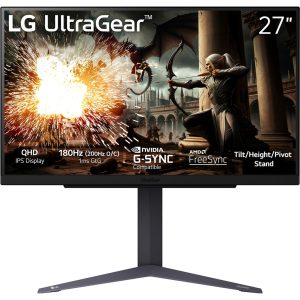
| LG UltraGear 27GR95QE-B | WOLED | 2560×1440 / 240Hz | $594.99 | Best WOLED |
| MSI MPG 271QR QD-OLED X50 | QD-OLED | 2560×1440 / 500Hz | $679.99 on Amazon | Fastest panel |
Prices are November 2026 snapshots from Amazon US listings and price trackers — check the current price on Amazon before buying.
How to Choose an OLED Gaming Monitor Under $800
QD-OLED vs WOLED is the one real panel decision. Four of the five picks use Samsung’s QD-OLED, which delivers richer color and brighter highlights than LG’s WOLED. WOLED counters with a matte anti-glare coating, cleaner text, and usually a lower price. For gaming, QD-OLED wins on image quality and WOLED on price and text clarity — but note the coating in a bright room: QD-OLED’s semi-gloss can show a faint purple tint under direct light, while the LG pick has a proper anti-glare coating.
Match the resolution to your GPU. A 4K 240Hz OLED needs an RTX 4070 Ti Super or RX 7900 XT at minimum — realistically an RTX 5080-class card with upscaling. A 1440p 360Hz panel is far kinder: an RTX 4070 or RX 7800 XT keeps it fed in most competitive titles. If your graphics card cost less than your monitor, buy the 1440p panel.
Burn-in warranty is non-negotiable. Modern OLEDs use pixel shifting, panel refresh cycles, and thermal management, so burn-in is far less of a problem than three years ago — but still check the warranty before the price. Samsung and MSI cover burn-in for three years; LG covers the 27GR95QE-B for two. Never buy a grey-market import to save $50: the warranty is usually void outside its region.
Beware the sale-price trap. The Samsung G81SF lists at $1,299.99 and sells for $629.99; the LG lists at $999.99 in some stores and $594.99 in others. A monitor that fits the budget on Monday can be $150 over it on Friday — set a price alert, and wait a week rather than settling for a worse panel.
Samsung Odyssey OLED G8 G81SF 27″ — Best Overall
Specs: 27″ QD-OLED, 3840×2160, 240Hz, 0.03ms GtG, DisplayHDR True Black 400, 1,000 nits peak (3% window), HDMI 2.1 ×2, DisplayPort 1.4, USB-C, FreeSync Premium Pro, G-Sync Compatible, 3-year warranty including burn-in
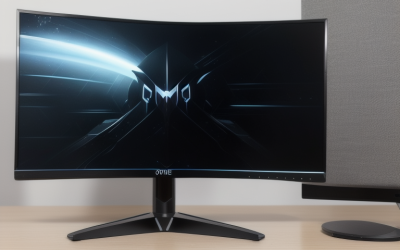
The G81SF is the most impressive monitor under $800: a 27-inch 4K QD-OLED at 240Hz with a 0.03ms response time, it cost $1,299.99 at launch and sells for $629.99 on Amazon as of mid-November 2026. At 166 ppi, text is razor sharp, and 4K on 27 inches needs no Windows scaling tricks.
Motion clarity is effectively perfect: no ghosting, no overshoot, no smearing. HDR is the real deal — small highlights hit 1,000 nits while blacks stay perfectly black, which is what makes HDR games look dramatically better than on any IPS or Mini LED panel. The Glare Free coating handles bright rooms better than earlier QD-OLED, though it still shows a faint magenta cast under direct light.
The honest caveat is the GPU, not the monitor: a 4K 240Hz panel is wasted on a mid-range card, and you will lean on DLSS or FSR upscaling without a flagship GPU. The stand is plain and the menu is annoying, but neither changes the verdict — if your PC can feed it, this is the best OLED gaming monitor under $800.
Pros: 4K QD-OLED at 240Hz for $629.99 on sale; superb HDR with true blacks; 0.03ms response with zero ghosting; 3-year burn-in warranty.
Cons: Needs a flagship GPU to shine; list price is $1,299.99, so the deal is everything; mediocre stand and menus.
Best for: Gamers with an RTX 4070 Ti Super or better who want the sharpest, prettiest OLED image under $800.
MSI MPG 271QRX QD-OLED — Best 1440p Value
Specs: 26.5″ QD-OLED, 2560×1440, 360Hz, 0.03ms GtG, DisplayHDR True Black 400, 1,000 nits peak (3% window), HDMI 2.1 ×2, DisplayPort 1.4, USB-C 90W with KVM, FreeSync Premium Pro, G-Sync Compatible, 3-year warranty including burn-in
The MPG 271QRX is the value king of 1440p OLED. At $579.99 on Amazon in November 2026, it delivers a 360Hz QD-OLED panel — the same panel class as monitors costing $200 more — plus 90W USB-C with a built-in KVM switch, so one cable charges your laptop and shares your keyboard and mouse, and MSI’s OLED Care 2.0 suite with a fanless graphene heatsink.
For competitive gaming, 360Hz at 1440p is the sweet spot: the gap to a 500Hz panel is measurable in a lab and invisible in a match, while 1440p is light enough for a mid-range GPU to push 300-plus frames in Valorant, Apex, and Counter-Strike 2. Color accuracy out of the box is excellent, and DisplayHDR True Black 400 means HDR genuinely pops.
The trade-offs are modest: the 26.5-inch viewable area is a hair smaller than a true 27-inch panel, and the semi-gloss coating reflects bright rooms more than a matte WOLED. At $579.99, none of that matters much — this is the best OLED gaming experience per dollar under $800.
Pros: 360Hz QD-OLED for $579.99; 90W USB-C with KVM; fanless graphene cooling; 3-year burn-in warranty; superb out-of-box color.
Cons: 26.5-inch viewable area, not a full 27; semi-gloss coating reflects bright rooms; stand is merely adequate.
Best for: Competitive gamers who want 360Hz OLED at the lowest honest price, and anyone who docks a laptop to their monitor.
Samsung Odyssey OLED G6 G60SD — Best Big-Brand 360Hz
Specs: 27″ QD-OLED, 2560×1440, 360Hz, 0.03ms GtG, DisplayHDR True Black 400, 1,000 nits peak (3% window), HDMI 2.1 ×2, DisplayPort 1.4, FreeSync Premium Pro, G-Sync Compatible, 3-year warranty including burn-in
The G60SD is Samsung’s own 1440p 360Hz QD-OLED — the pick for buyers who want the Samsung name, warranty, and anti-glare treatment on the same panel class as the MSI above. At $600 on Amazon (list $899.99), it costs about $20 more than the MPG 271QRX for a true 27-inch screen, a sleeker metal design, and Samsung’s OLED Safeguard+ burn-in protection with a 3-year warranty.
Image quality is effectively identical to the MSI — same QD-OLED generation, same 1,000-nit peaks, same perfect blacks. The Samsung pulls ahead on build and coating: its anti-glare finish handles bright rooms better than the MSI’s semi-gloss. It falls behind on connectivity, with no USB-C input at all, so laptop users get no single-cable docking.
Watch the model number: Samsung sells three monitors under the “Odyssey OLED G6” name — the 360Hz G60SD reviewed here (LS27DG602SNXZA), the 240Hz G61SH (from $399.99), and the 500Hz G60SF (around $699.99).
Pros: True 27-inch 360Hz QD-OLED; excellent anti-glare coating; premium metal build; 3-year burn-in warranty; $600 on sale.
Cons: No USB-C input; $20 more than the MSI for the same panel class; three confusingly similar G6 variants.
Best for: Buyers who want Samsung’s build quality and warranty on a 360Hz OLED, and bright-room setups.
LG UltraGear 27GR95QE-B — Best WOLED
Specs: 27″ WOLED, 2560×1440, 240Hz, 0.03ms GtG, DisplayHDR True Black 400, 1,000 nits peak (3% window), HDMI 2.1 ×2, DisplayPort 1.4, FreeSync Premium, G-Sync Compatible, 2-year warranty
The LG 27GR95QE-B is the only WOLED in this guide, earning its place on price, text clarity, and coating. At $594.99, it is the cheapest genuine OLED from a major brand, with the best matte anti-glare coating here for bright rooms and long desktop sessions, and a WOLED subpixel layout that renders text more cleanly than QD-OLED — important if this doubles as your work screen.
Gaming performance is strong but a step behind the QD-OLED picks: 240Hz is plenty for everything except top-tier competitive play, and the 0.03ms response keeps motion just as clean. The difference shows in brightness and color — lower full-screen brightness, slightly less saturated colors. In a dark room playing a moody game, you would struggle to tell them apart.
The two real compromises are warranty and age: two years is the shortest cover here, with less generous burn-in terms than Samsung’s or MSI’s three-year cover, and this 2023 design lacks the newer panels’ brightness and the MSI picks’ USB-C. Even so, at $594.99 it is the best-value OLED for mixed gaming and productivity.
Pros: Cheapest major-brand OLED here at $594.99; best anti-glare coating in the group; cleanest text of any OLED pick; proven, reliable panel.
Cons: Only 240Hz; 2-year warranty is the shortest here; lower full-screen brightness than QD-OLED; no USB-C.
Best for: Mixed gaming and work use, bright rooms, and buyers who want the lowest price from a major brand.
MSI MPG 271QR QD-OLED X50 — Fastest Panel
Specs: 27″ QD-OLED, 2560×1440, 500Hz, 0.03ms GtG, DisplayHDR True Black 500, 1,000 nits peak, HDMI 2.1 ×2, DisplayPort 2.1 (UHBR20), USB-C 98W with KVM, FreeSync Premium Pro, G-Sync Compatible, 3-year warranty including burn-in
The MPG 271QR QD-OLED X50 is the fastest monitor in this guide and one of the fastest on sale at any price: a 500Hz QD-OLED panel with full-bandwidth DisplayPort 2.1, DisplayHDR True Black 500, and a 98W USB-C port with KVM. It lists at $799 and has sold on Amazon for around $679.99 in November 2026 (Best Buy: $763.99) — it fits under $800, but only just, and the price moves more than any other pick here. Check the current price on Amazon before buying.
Is 500Hz worth it over 360Hz? For most gamers, no. The jump from 240Hz to 360Hz is noticeable; from 360Hz to 500Hz it is subtle, and only in fast esports titles with a GPU that can push 500 frames per second — a high-end card with lowered settings at 1440p. What you are really paying for is the complete package: a newer, brighter True Black 500 panel, DP 2.1, and MSI’s AI Care sensor that dims the screen when you walk away.
The X50 is also the easiest pick to buy wrong: MSI sells a cheaper MAG version — the MAG 272QP QD-OLED X50 — with the same 500Hz panel but a trimmed feature set. The MPG reviewed here adds 98W USB-C, the KVM, and the better stand; if you do not need USB-C, the MAG saves you money. Either way, match the model number: “271QR” is the MPG, “272QP” is the MAG.
Pros: 500Hz — the fastest panel under $800; DisplayPort 2.1 UHBR20; True Black 500 HDR; 98W USB-C with KVM; 3-year burn-in warranty.
Cons: $679.99–$763.99, the priciest pick here and the most volatile price; 500Hz needs a high-end GPU to matter; easy to confuse with the cheaper MAG version.
Best for: Esports players chasing the highest refresh rate available, and buyers who want DP 2.1 future-proofing.
What to Avoid
The 32-inch Samsung G81SF. The 27-inch G81SF is our top pick at $629.99. The 32-inch version (LS32FG810SNXZA) lists at $1,299.99 and has sold for $899.99 and up on Amazon — over budget.
LG UltraGear 32GX870A-B. A superb 32-inch 4K 240Hz WOLED at $819.99 on Amazon in November 2026 — just over budget. Wait for a sale or buy the 27-inch Samsung instead.
“OLED” monitors that are not OLED. The Samsung Odyssey G8 G80HF is a 27-inch 5K IPS monitor, not an OLED. Read the panel type on the spec sheet, not the marketing name.
FAQs
Is OLED burn-in still a problem in 2026?
Much less of a problem than it was, but not zero. Modern OLEDs use pixel shifting, panel refresh cycles, and thermal management, and three-year burn-in warranties are standard from Samsung and MSI. Vary your content, let the panel run its refresh cycle, and do not leave a static desktop up all day. For normal gaming, the warranty terms should decide the purchase, not burn-in fear.
Should I buy a 4K OLED or a 1440p OLED under $800?
Buy the 4K Samsung G81SF if you own an RTX 4070 Ti Super, RX 7900 XT, or better and play cinematic single-player games. Buy a 1440p 360Hz panel for competitive games or a mid-range GPU. The 1440p panels are the better gaming choice for most people; the 4K panel is the better screen.
Do I need DisplayPort 2.1 for these monitors?
No — except for the 500Hz MSI, which has it. DisplayPort 1.4 with DSC handles 4K 240Hz and 1440p 360Hz with no visible quality loss. DP 2.1 matters for 4K 240Hz without compression, or if you plan to keep the monitor through your next two GPU upgrades.
Is 500Hz actually better than 360Hz?
Measurably, yes; noticeably, barely. Most players cannot tell 360Hz from 500Hz blind, and both need a powerful GPU. Buy the 500Hz MSI for its brighter panel, DP 2.1, and USB-C — not for the refresh rate number alone.
Verdict
The best OLED gaming monitor under $800 in November 2026 is the Samsung Odyssey OLED G8 G81SF 27″. A 4K 240Hz QD-OLED panel for $629.99 would have been unthinkable two years ago, and it is the only pick here that is the best at its size and resolution rather than the best value. Buy it if your GPU can feed it.
If your GPU cannot — the honest answer for most gamers — buy the MSI MPG 271QRX QD-OLED at $579.99: the best 1440p OLED value on the market, with 360Hz, a 90W USB-C KVM, and a 3-year burn-in warranty.
The Samsung G60SD suits Samsung loyalists and bright rooms, the LG 27GR95QE-B suits mixed gaming and work, and the MSI MPG 271QR X50 suits esports players chasing the fastest panel. Whichever you choose, buy it on sale, match the exact model number, and check the current price on Amazon before checkout.
As an Amazon Associate, we earn from qualifying purchases.
Suggested Internal Links
- Best 4K Gaming Monitor Under $800
- Best 4K Gaming Monitor Under $700
- Best 1440p Gaming Monitor Under $500
More from Amazon
Programs that pair well with the guide above. Offers and eligibility are set by Amazon and may change.
Free shipping on eligible items, Prime Video and more. Eligible new members can start with a free trial.
Start a Prime free trialAudiobooks and podcasts to listen to on the go. Eligible new members can start with a free trial.
Try Audible freeAd-free music streaming. Eligible new subscribers can start with a free trial.
Try Music Unlimited freeA free business account with business pricing and bulk-buying tools for work, shop or home office.
Create a business accountAs an Amazon Associate we earn from qualifying purchases.
Write Your Review
No reviews yet. Be the first to share your experience!