

Key takeaways
- Compare five non-prescription blue light glasses for desk work, from a budget TIJN square frame to a clear Felix Gray pair, using published specs only.
- Top Pick: TIJN Blue Light Blocking Glasses, Square Frame
- Runner-up: ANRRI Blue Light Blocking Glasses, AR0103
- Also consider: Cyxus Blue Light Glasses, 8001
Long desk days mean long screen hours, and blue light glasses are the simplest desk accessory aimed at that load: non-prescription frames whose lenses filter part of the blue end of the spectrum. Makers pitch them for computer, phone and tablet use, but what each brand publishes to back the pitch varies a great deal, from a measured figure at a named wavelength to no number at all.
This guide compares five pairs sold on Amazon, from a budget square frame to a premium clear-lens pair, using published specs only: frame measurements, weights, lens claims as the makers state them, and what arrives in the box. Where a maker prints no filtering figure, the guide says so rather than filling the gap, so you can weigh a hard number against a plain promise.
As an Amazon Associate, we earn from qualifying purchases.
Quick answer
For most desk workers, the ANRRI AR0103 is the easy default: an 18 gram clear-lens frame with a case in the box. Choose the GUNNAR Intercept if you want a published filtering figure and can accept an amber tint, the Felix Gray pair for a premium clear lens, and the TIJN or Cyxus frames at the lower tiers.
The five pairs, compared
TIJN Blue Light Blocking Glasses, Square Frame

The TIJN square frame is the fashion-led end of this category: a retro squared front in a clear finish, with a tortoise finish sharing the same listing, that reads as ordinary eyewear rather than desk gear. TIJN publishes a full measurement set for it, which is not a given at this tier: a 53 mm lens, an 18 mm bridge and 140 mm temples. The hinges are metal rather than molded plastic, a detail that matters on a frame opened and folded many times a day.
TIJN states that the lens blocks UV light alongside its blue light filtering, but it publishes no filtering percentage, so the lens is best read as a comfort measure rather than a measured one. At this tier it also makes sense as a second set for a bag or a spare desk.
Specs:
– Frame shape: Square, clear finish (tortoise finish also listed)
– Lens width: 53 mm
– Bridge width: 18 mm
– Temple length: 140 mm
– Hinges: Metal
– Lens claim: Blue light filtering with UV blocking, per the maker; no filtering percentage published
– Weight: Not stated
– Included case: Not stated
ANRRI Blue Light Blocking Glasses, AR0103
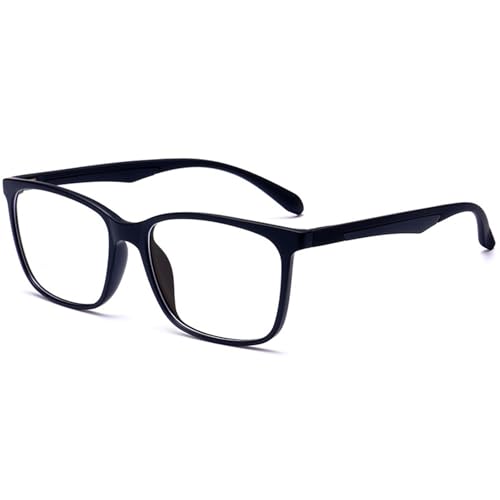
The AR0103 is ANRRI’s long-running lightweight design, and weight is its headline figure: the published weight is 18 grams, the lightest number in this guide. The frame is TR90, a flexible nylon-family material the brand markets under its own Areolite name, and the published frame width is 143 mm with a medium fit.
The lens is clear, and ANRRI describes an anti-reflective coating that cuts screen glare while keeping colors natural. The brand publishes no filtering percentage for this model in the listing copy, so the claim rests on the filter and coating rather than a number; buyers who need a figure should look at the GUNNAR below. The box is unusually complete for the tier: a case, a soft cleaning cloth and a blue light test card are all listed as included.
Specs:
– Frame material: TR90
– Frame width: 143 mm, medium fit
– Weight: 18 g
– Lens: Clear blue light filtering lens with anti-reflective coating, per the maker
– Filtering percentage: Not published for this model
– Magnification: None (non-prescription)
– Included: Case, soft cleaning cloth, blue light test card
– Model number: AR0103
Cyxus Blue Light Glasses, 8001
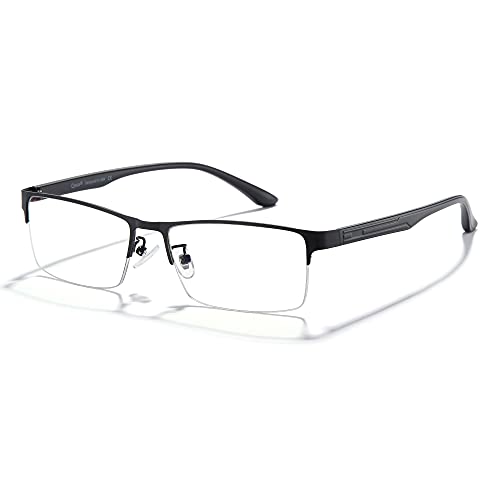
The Cyxus 8001 takes a different shape from the full frames around it: a semi-rimless front that leaves the lower edge of each lens open, giving a lighter look on the face and a less interrupted downward view toward a keyboard. The frame mixes TR90 with metal, and the lenses are polycarbonate. The black colorway is the one tied to the listing used here.
Cyxus publishes the boldest lens claim in this guide: its copy states that the lens coating filters 99 percent of blue light. That figure is the maker’s own, and the listing copy read for this guide prints no wavelength and no method beside it, so it cannot be lined up directly against GUNNAR’s wavelength-specific rating below. The offsetting gap is fit data: Cyxus publishes no frame measurements and no weight for this model in the sources read.
Specs:
– Frame: Semi-rimless (half frame), TR90 and metal hybrid
– Lens material: Polycarbonate
– Lens claim: Maker states the coating filters 99 percent of blue light; no wavelength or method published with the figure
– Color: Black
– Frame dimensions: Not stated
– Weight: Not stated
– Included case: Not stated
GUNNAR Intercept, Onyx with Amber Lens

The Intercept is the measured pick in this guide. GUNNAR publishes a Blue Light Protection Factor for its lenses, and for this amber lens the figure is 65 percent of blue light blocked at 450 nanometers, the peak wavelength the brand measures against. The lens technology is patented, and the listing copy also notes a slight magnification of 0.2 in the lens, aimed at dense text but worth knowing about before buying.
The trade for the stronger published filtering is tint: an amber lens warms every color on screen, which document and spreadsheet work tolerates and color grading does not. The published measurements run wide, with a 58 mm lens, a 17 mm bridge and 135 mm temples, and the published weight is 33 grams, the heaviest figure here. A microfiber pouch and a microfiber cleaning cloth are listed as included.
Specs:
– Lens width: 58 mm
– Bridge width: 17 mm
– Temple length: 135 mm
– Weight: 33 g
– Fit: Medium to large, per the maker
– Lens tint: Amber
– Lens claim: Maker rates the lens at 65 percent of blue light blocked at 450 nm on its Blue Light Protection Factor scale; maker also states UV blocking
– Magnification: Slight, published as 0.2 in the listing copy
– Included: Microfiber pouch, microfiber cleaning cloth
Felix Gray Filtered Blue Light Blocking Glasses

Felix Gray sells this pair through its own Amazon store as the entry point of its line: a plain black square frame with a clear filtered lens and no amber cast, pitched at gaming, computer and phone screens alike and filed as unisex adult. The appeal is invisibility: on a video call the pair reads as ordinary glasses.
The gap is data. On this listing, Felix Gray publishes no filtering percentage, no frame measurements and no weight, so the purchase rests on the brand’s filtered-lens approach rather than on a spec sheet. That suits buyers who want clear lenses and a simple black frame from an eyewear brand. Buyers who want a published number behind the claim, or who need measurements to judge fit, are better served by the GUNNAR or the TIJN above.
Specs:
– Frame shape: Square, black
– Lens: Clear filtered blue light lens, no amber tint
– Fit: Unisex adult
– Filtering percentage: Not published on this listing
– Frame material: Not stated
– Frame dimensions: Not stated
– Weight: Not stated
– Included case: Not stated
How to choose
Decide on tint first. Clear lenses, like the TIJN, ANRRI and Felix Gray pairs here, keep screen colors honest and suit video calls and any work where color judgment matters. Amber lenses, like the GUNNAR Intercept, carry the strongest published filtering figures and suit long text-heavy sessions after dark, with a warm cast over everything you look at as the trade. Neither route is wrong; they serve different desks.
Next, read the filtering claims with care. A percentage only means something beside the wavelength it was measured at, and brands do not share one method. GUNNAR names a wavelength and its own scale. Cyxus prints a larger percentage with no wavelength attached. ANRRI, TIJN and Felix Gray publish no percentage at all on these listings. Treat the numbers as each maker’s own framing, not as a league table; the claims are comfort claims, stated by the brands.
Then judge fit from the published measurements. Lens width, bridge width and temple length, in that order, describe most frames; the same three numbers are printed inside the temple arm of a frame you already own, which gives a direct comparison. Where a listing publishes none of them, as with the Cyxus and Felix Gray pairs here, fit is a guess. Finally, weigh the small things: an 18 gram frame disappears during a long day, metal hinges outlast molded ones, and an included case keeps a pair alive in a bag.
Who should skip
Skip all five pairs if you need vision correction. Every pick here is non-prescription, and none of them will do the work of a prescribed lens. GUNNAR and Felix Gray both sell prescription lines through their own stores, but those routes sit outside this guide.
Skip the category, for now, if you are chasing relief from persistent headaches, blurred vision or other ongoing symptoms. These are comfort accessories sold on maker claims, and ongoing symptoms call for an eye examination rather than a different frame. Also skip the amber Intercept if your work is color grading or photo editing.
FAQ
Do blue light glasses need an amber tint to work?
No. Amber is one route to stronger filtering, and it carries the highest published figures, but clear lenses use a filter built into or coated onto the lens and are the default for office wear. The clear pairs here publish lower figures or none at all.
What does a blocking percentage actually mean?
It is the share of blue light a maker says its lens blocks, ideally at a named wavelength. GUNNAR, for example, quotes its figure at 450 nanometers. A percentage printed with no wavelength, or measured on a brand’s own scale, cannot be compared cleanly with a rival’s number, so treat percentages as guidance from each maker.
Can I wear these over my prescription glasses?
These five are standalone frames, not fit-over designs, and wearing two frames at once is rarely workable. If you need correction, look at the prescription lines the same makers sell through their own stores, or at clip-on and fit-over styles.
How do I pick the right frame size?
Compare the three published numbers, lens width, bridge width and temple length, with a pair you already own; the same figures are printed inside the temple arm of most frames. Where a listing publishes no measurements, expect some uncertainty.
Final verdict
For a single recommendation, take the ANRRI AR0103: it is the lightest pair here, its fit is published, and the case and cloth in the box make it the easiest pair to live with. Take the GUNNAR Intercept when a published filtering figure matters more than color accuracy, and the Felix Gray pair when clear lenses and a plain black frame matter more than published data. The TIJN is the low-commitment way in, and the Cyxus 8001 suits anyone who prefers a semi-rimless look.
More from Amazon
Programs that pair well with the guide above. Offers and eligibility are set by Amazon and may change.
Free shipping on eligible items, Prime Video and more. Eligible new members can start with a free trial.
Start a Prime free trialAudiobooks and podcasts to listen to on the go. Eligible new members can start with a free trial.
Try Audible freeAd-free music streaming. Eligible new subscribers can start with a free trial.
Try Music Unlimited freeA free business account with business pricing and bulk-buying tools for work, shop or home office.
Create a business accountAs an Amazon Associate we earn from qualifying purchases.





Write Your Review
No reviews yet. Be the first to share your experience!